How beach grains get their shapes
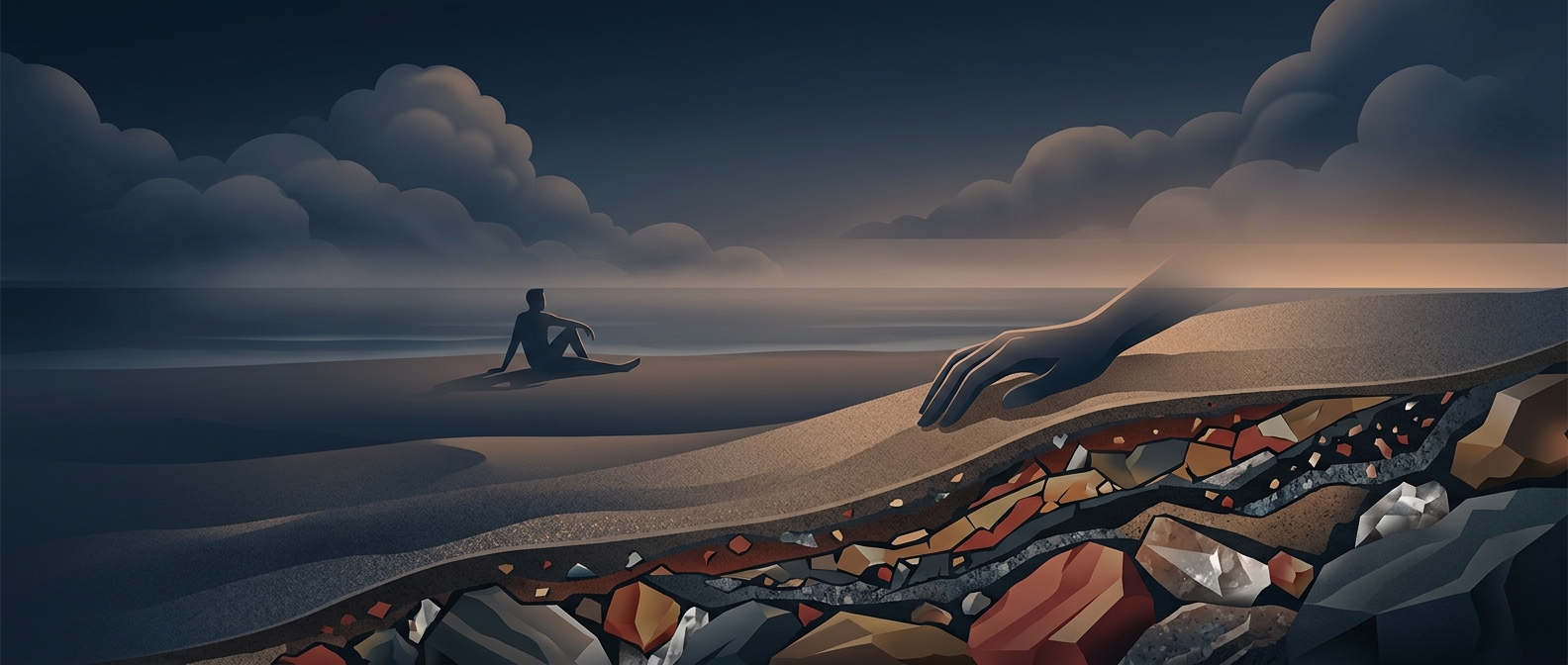
A grain of sand is usually a fragment, not a miniature crystal formed just for the beach. Waves, rivers, wind, and weathering break larger rocks and shells into smaller pieces. As those fragments travel, they collide with one another and with the shore. The repeated impacts chip sharp edges, while currents sort grains by size and weight.
Quartz is common because it resists weathering: many other minerals break down or dissolve sooner, while quartz can survive long journeys. Its grains may therefore arrive from inland rocks through rivers or from older deposits already along the coast. On other shores, grains come largely from nearby sources, such as eroding cliffs or reefs.
A grain can record a living source
Not every pale particle is mineral. Shells and coral skeletons are built largely from calcium carbonate, and waves can break them into sand-sized fragments. Under magnification, those pieces may retain curves, pores, or layered structures that hint at their biological origin. Tiny remains of other marine organisms can also contribute, depending on the local environment.
This is why two beaches can look similar from a distance yet contain very different material. A coast backed by quartz-rich rock may accumulate durable mineral grains; a reef environment can supply abundant carbonate fragments. The balance depends on what is available nearby and what survives the trip.
The shoreline keeps sorting the evidence
Waves do more than deliver grains: they repeatedly move and sort them. Strong water can carry fine particles farther away while heavier or coarser grains settle sooner; calmer conditions allow different mixtures to accumulate. The result is not a perfectly uniform blanket but a changing patchwork shaped by source material, transport, and wave energy.
Look closely at a handful of sand, and its variety becomes a small record of the coast: what eroded, what once lived there, and how the water moved it into place.