The Clown as the Act’s Comic Target
A clown’s job was often not simply to tell jokes, but to look foolish in public. In circus and variety performance, clowns could imitate the skilled acts around them—then bungle the trick, lose control of a prop, or take a pratfall. The contrast made the original feat look more impressive while giving the audience a second pleasure: watching someone fail spectacularly.
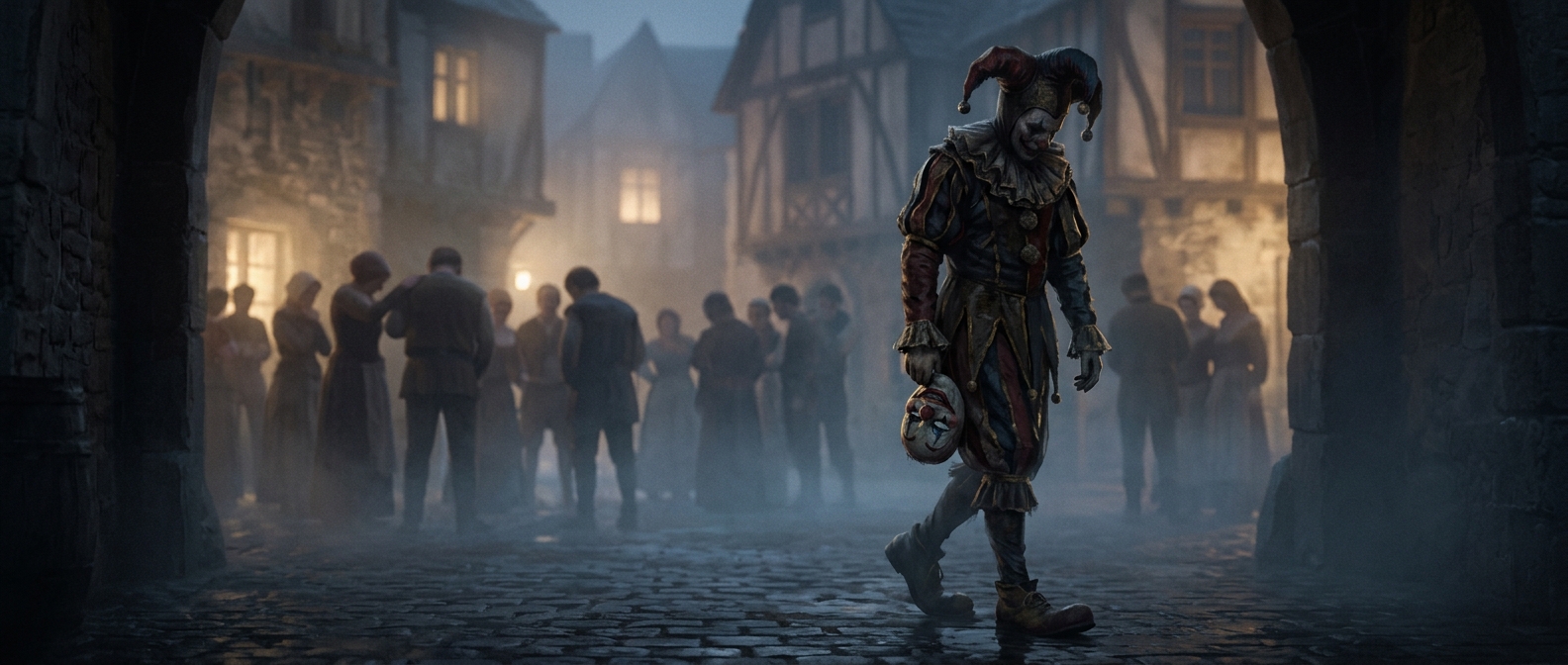
The painted face helped make that failure readable. Bold features and a fixed-looking smile could register across a large venue, where subtle expressions might disappear. A costume that seemed awkward or overdone also made the performer’s body part of the joke, before a single mishap occurred.
Mockery With Rules
Clowning gave audiences permission to laugh at a figure who appeared to invite it. The clown could be chased, fooled, or publicly corrected; sometimes the performer also played back against the crowd or another character. That exchange made ridicule feel like part of the act rather than an ordinary insult.
The role depended on a useful imbalance: the clown had to seem vulnerable enough to be mocked, but skilled enough to control the timing. A stumble that looks accidental is carefully performed. The audience laughs at the loss of dignity, while the performer keeps the scene moving—and often turns the next failure into the punchline.