How a Bank Counter Reached the Curb
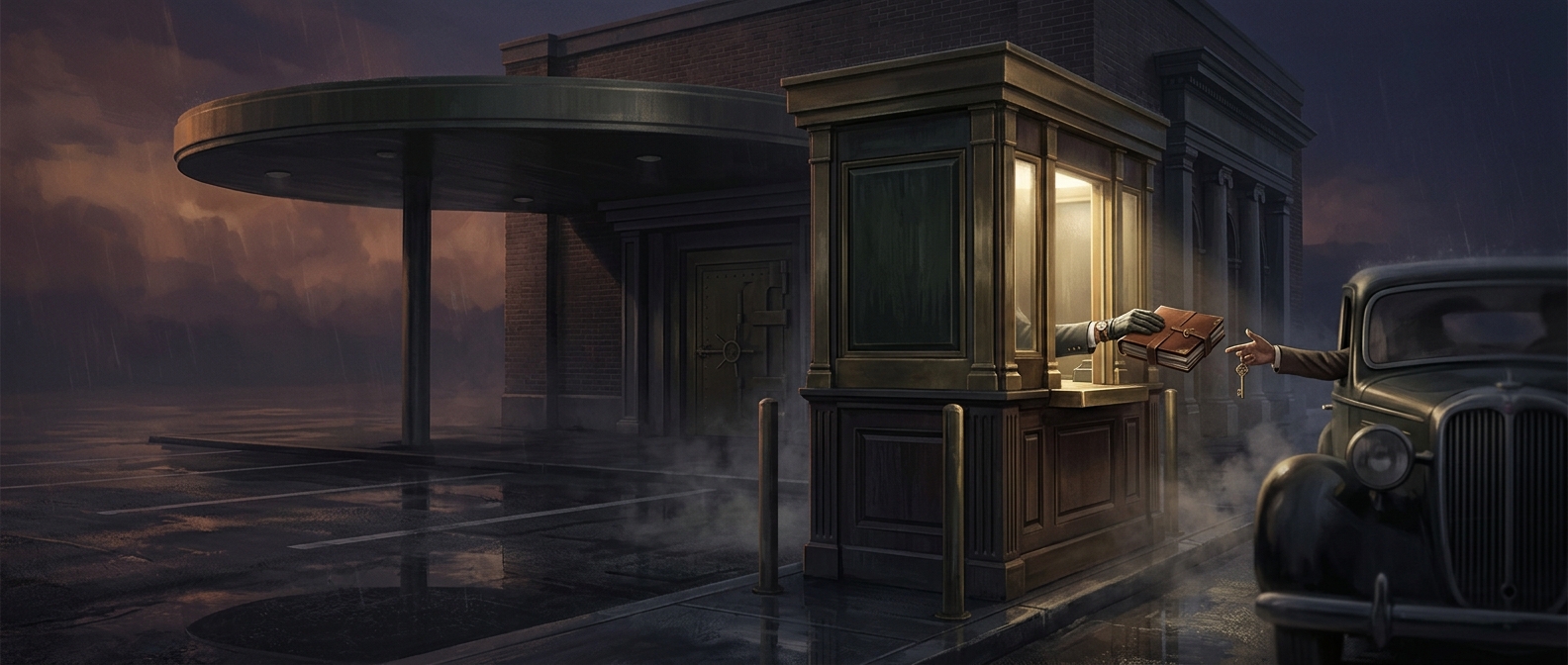
A drive-through bank had to solve a simple but awkward problem: how could a teller serve someone in a car without bringing the teller—or the customer—outside? Pneumatic tubes offered a mechanical answer. A teller placed cash, checks, or paperwork inside a small carrier, then sent it through an enclosed tube to a station beside the customer’s car.
The carrier moved because of a pressure difference. A blower pushed air behind it or drew air from ahead, propelling the capsule along the tube. At the customer’s station, the carrier could be opened, filled with the customer’s materials, and sent back. The teller stayed at the indoor counter and handled the transaction at a distance.
A Window Without an Outdoor Teller
The tube did more than save a walk. It let banks serve motorists while keeping staff, records, and cash inside the building. The customer could remain in the car, while the teller used the usual desk and secure interior as the transaction’s home base. Communication equipment helped bridge the gap, but the physical exchange still depended on the capsule making the trip out and back.
That arrangement also imposed limits: the tube had to connect the teller’s area to a reachable curbside station, and the carrier could hold only what fit inside it. The striking part of the design is its division of labor: the teller did not travel to the car; the counter’s contents did.