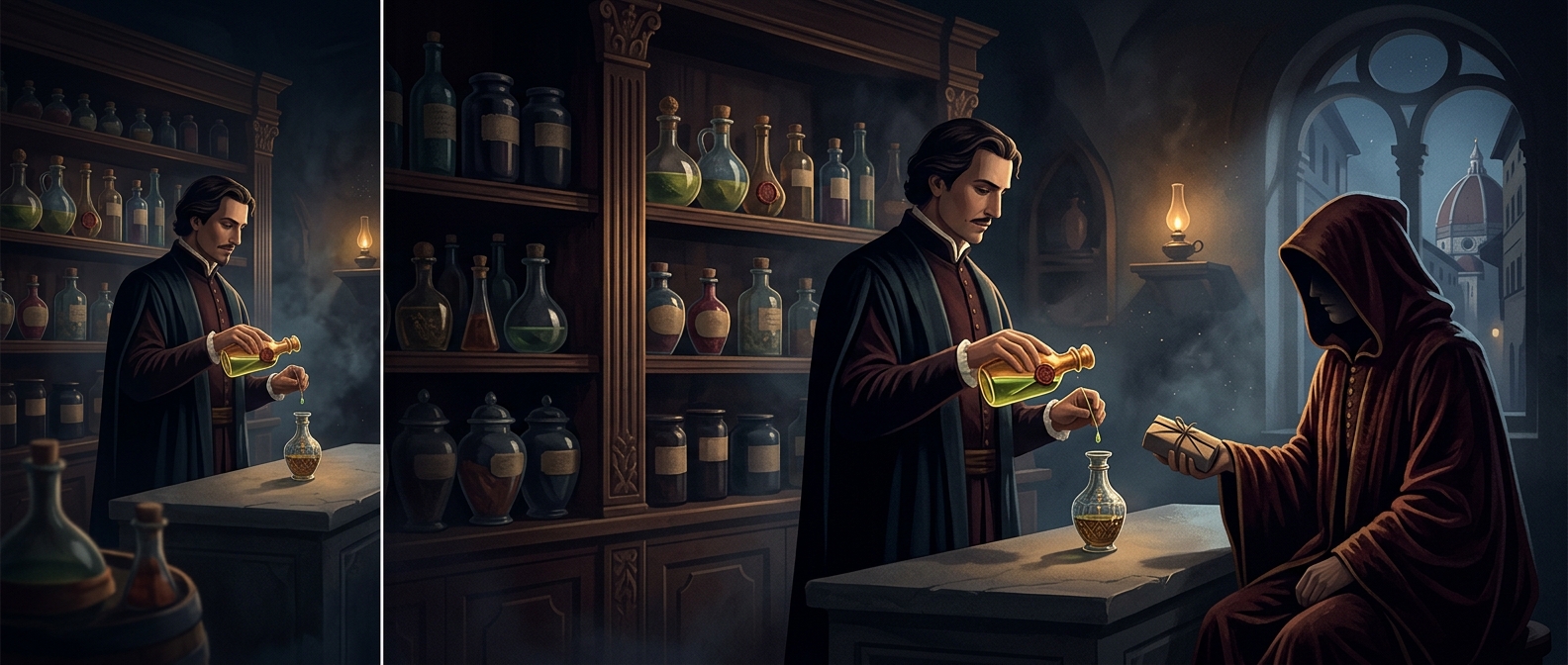
The Apothecary’s Counter Was a Place of Transformation
A Renaissance apothecary did more than sell finished medicines. The shopkeeper might dry, grind, mix, or otherwise prepare ingredients before they reached a customer. A plant, mineral, or other substance could become a powder, tincture, ointment, or compound through that work. The shop was therefore part pantry, part workshop—and the apothecary’s judgment mattered as much as the raw materials.
That judgment could have serious consequences. A substance’s effect depended on what it was, how it was prepared, and how much was used. Some ingredients valued in remedies could also harm or kill at a different amount or in a different preparation. The boundary between medicine and poison was not always a boundary between two separate shelves; it could depend on handling and use.
Why Guild Oversight Mattered
Guilds were associations that organized a trade and set expectations for its practitioners. By regulating apothecaries, a guild could help control who was permitted to prepare and sell these products. Oversight mattered because customers often could not inspect a compound’s ingredients or judge its preparation for themselves. The person behind the counter held practical knowledge—and the power that came with it.
This arrangement did not make every remedy safe or guarantee that every shop followed the same standards. It did, however, place the responsibility for both beneficial and dangerous substances within a recognized profession. The same expertise that made an apothecary useful also made the shop a point of risk: a small change in a prepared compound could turn a hoped-for cure into a harmful dose.