Why Port Royal’s ground gave way
Port Royal stood on a narrow spit of sand at the entrance to Kingston Harbour in Jamaica. Its position made it a valuable port—and left it built on loose, waterlogged sediment rather than solid bedrock. When a powerful earthquake struck on June 7, 1692, the shaking disturbed that saturated ground.
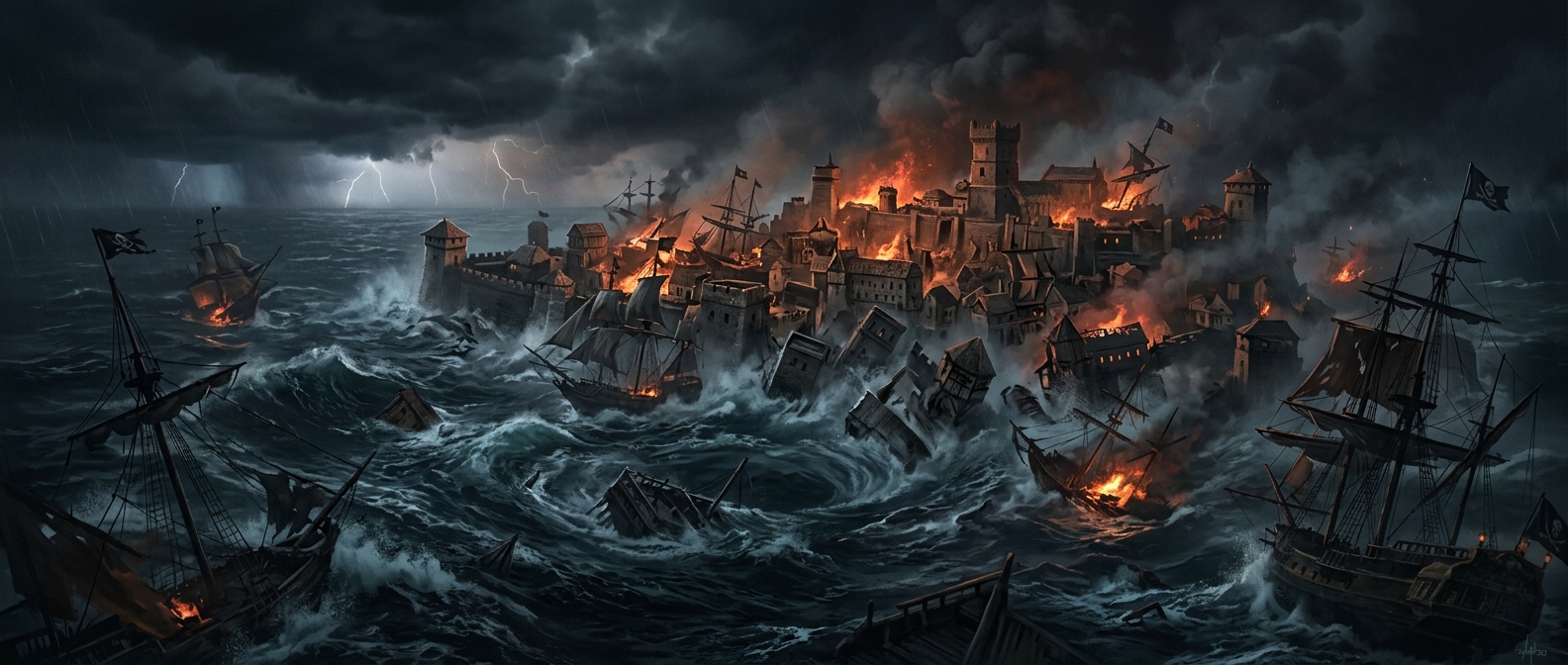
In soil liquefaction, grains of sand lose their firm contact as water pressure rises between them. The ground can briefly behave more like a fluid than a stable foundation. Buildings then tilt, crack, or sink, while sections of shoreline can slump into the water. That is why the destruction was not simply a matter of walls shaken down: parts of the town itself subsided.
A busy port became a disaster site
Port Royal was a crowded English colonial center, with merchants, sailors, soldiers, and privateers passing through. Its reputation as a pirate haven was part of its history, but the town’s importance also came from its harbor and trade. Dense construction on unstable ground meant the earthquake could turn a thriving waterfront into a mass of wreckage and flooded streets within moments.
The disaster altered the geography as well as the town’s fortunes. Survivors faced the loss of homes, businesses, and familiar streets, and the settlement never regained its former prominence. The episode is remembered not only because an earthquake struck a notorious port, but because the earth beneath that port failed: the ground that had supported Port Royal’s wealth became the force that carried much of it into the Caribbean.