The shortcut behind a sudden arrest
In an open-world game, a police response seems straightforward: officers receive an alert, travel through the streets, and reach the player. But that sequence depends on several systems working together. Vehicles need to find a route through the city, handle intersections and obstacles, and arrive near a moving target—all while the game keeps the action running.
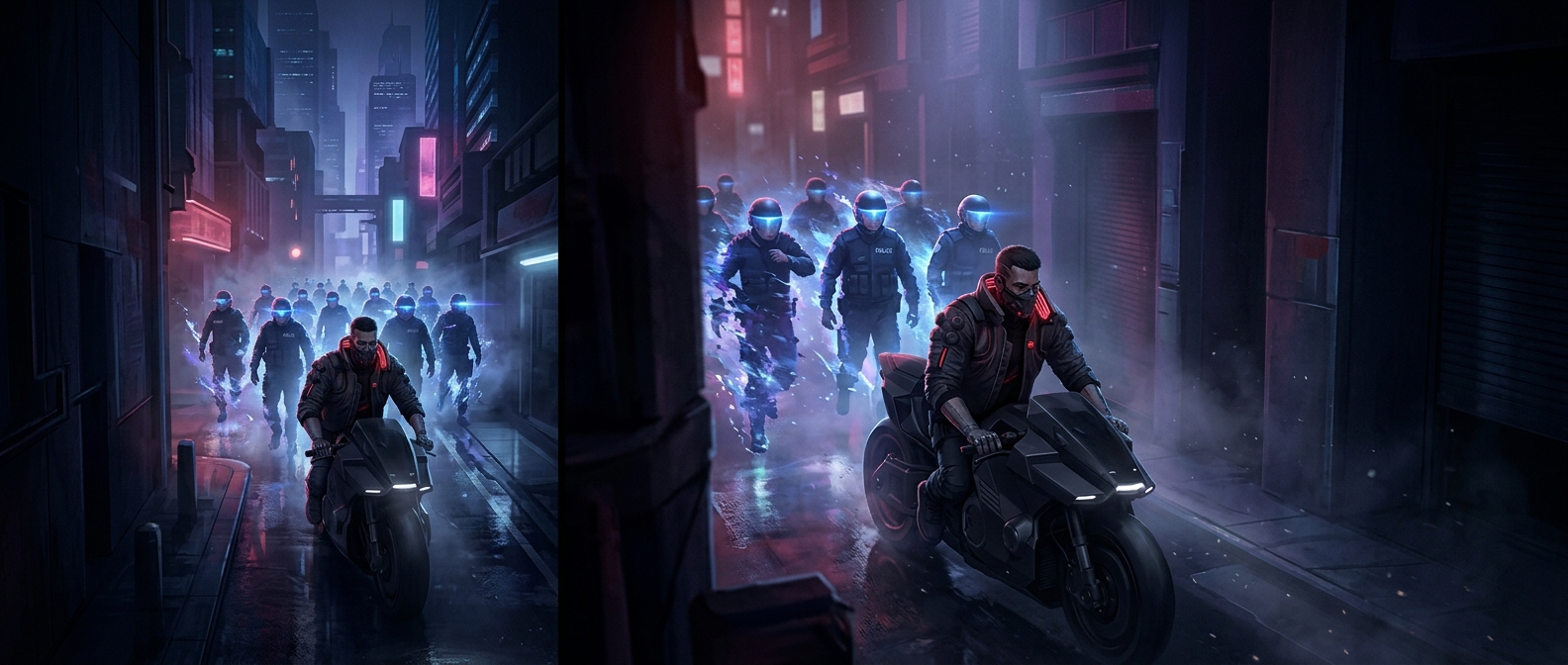
At Cyberpunk 2077’s launch, police vehicles could not reliably complete that trip to a crime scene. The game sometimes skipped the journey and placed armed officers close behind the player instead. It kept the response immediate, but made the underlying workaround visible: officers appeared where the chase should have brought them, not where the city’s streets could plausibly take them.
A game-world problem becomes a player-facing one
Spawning characters is a normal tool in games. It can keep distant areas from consuming resources and put enemies where an encounter needs them. The trick is making the arrival feel consistent with the world. A vehicle that drives up from a nearby road signals a response; a squad appearing almost at the player’s heels feels more like the game has skipped a step.
That difference matters because a police chase asks players to read space: which street to take, where to turn, and whether they have time to escape. If officers can appear directly behind them, the city’s roads matter less to the pursuit. The navigation limitation therefore affected more than traffic behavior—it changed how the chase felt and how much the player could trust the world’s geography.