The camera changes what counts as a good deal
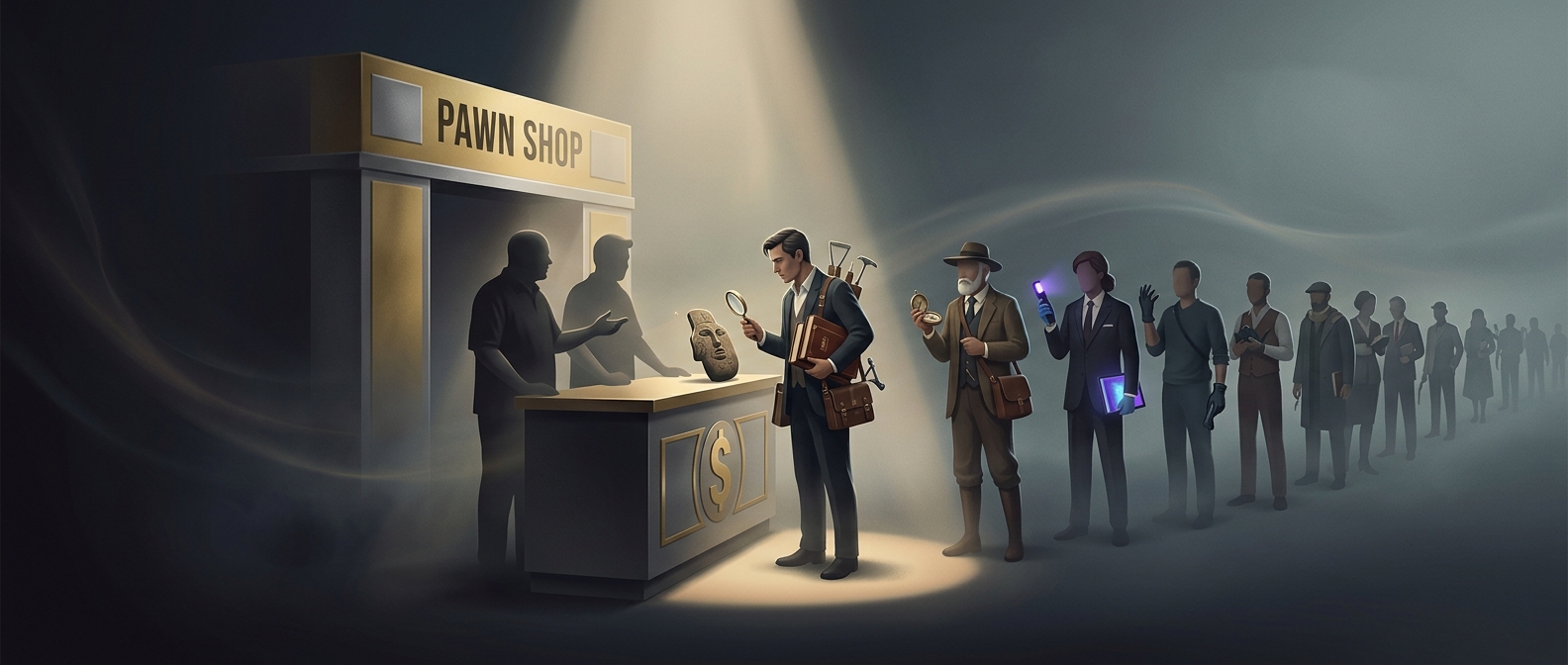
A working pawn shop handles a steady stream of ordinary transactions: people bring in items they no longer need, and the shop weighs their resale value against the cost and risk of buying them. Most of those exchanges have little of the surprise or backstory that makes compelling television. A routine offer and acceptance may be useful business, but it gives a viewer little reason to keep watching.
A production can’t simply point a camera at the counter and expect an episode to take shape. By screening transactions ahead of time, producers can look for objects with an unusual history, a distinctive design, or an uncertain value—and for sellers willing to discuss them on camera. That preparation turns a shop’s unpredictable daily flow into a set of encounters with clearer stakes.
Selection shapes the story viewers see
An unusual object creates a natural question: What is it worth, and will the shop buy it? The seller’s asking price, the shop’s assessment, and the possibility of a deal give the scene a beginning and an outcome. An everyday item may be perfectly representative of pawn-shop business, but it is less likely to supply that built-in arc.
The result is a curated slice of shop life, not a typical day in miniature. The transactions can be real while still being chosen because they are unusually watchable. Viewers see the exceptions that make good stories; the ordinary stream of goods that keeps a shop running mostly stays offscreen.