How Prussia made military readiness a governing principle
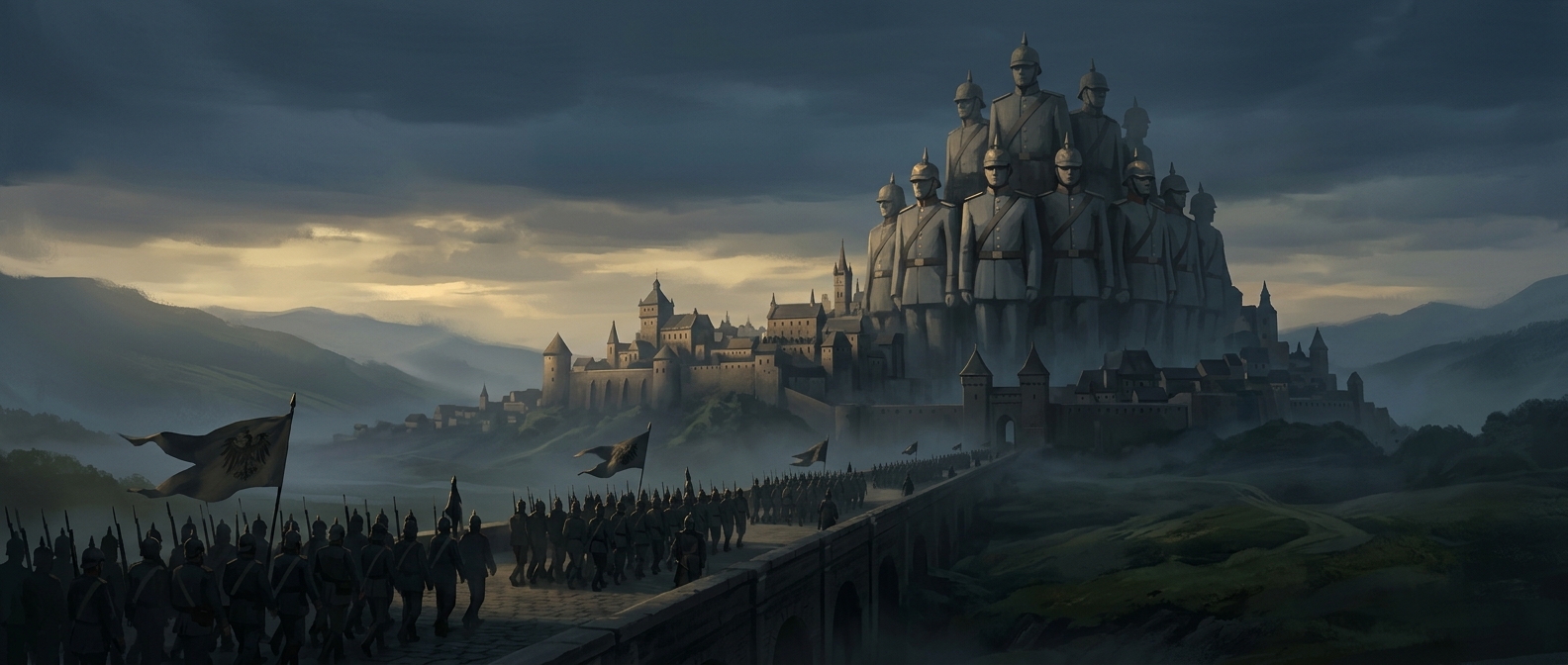
Prussia’s military strength depended on more than soldiers. Its rulers built administrative systems that could identify taxable resources, collect revenue, and organize men for service. The army was therefore not a separate institution maintained only in wartime: it shaped how the state counted, funded, and governed its population.
This arrangement developed under the Hohenzollern rulers, especially as they sought to defend and consolidate a territory spread across separated lands. A capable bureaucracy helped make that territory governable. Revenue supported the army; administrative records and local officials helped supply recruits. In turn, the army gave the state a powerful instrument for protecting its position and pursuing influence.
The bargain behind the system
Military service and social rank were intertwined. Landed nobles, often called Junkers, held many officer roles and retained influence in rural society. The monarchy gained a dependable source of leadership for the army, while the nobility preserved status within a state increasingly organized around royal authority. It was a partnership, not an equal one: the crown sought to direct the military system, while established elites helped administer it on the ground.
The emphasis on discipline and service also gave military careers unusual prestige. That did not mean every part of Prussian life was simply controlled by the army. Rather, civilian institutions and social hierarchies were arranged in ways that made military power easier to sustain.
Influence beyond its size
A well-organized state could turn limited territory and population into considerable military capacity. That advantage helped Prussia become a major force in European politics, but it also carried a cost: public resources and social standing were closely tied to readiness for war. The striking legacy is not just a famous army, but a government whose paperwork, taxes, and elite careers all helped keep that army supplied.