What the “alchemical wedding” brings together
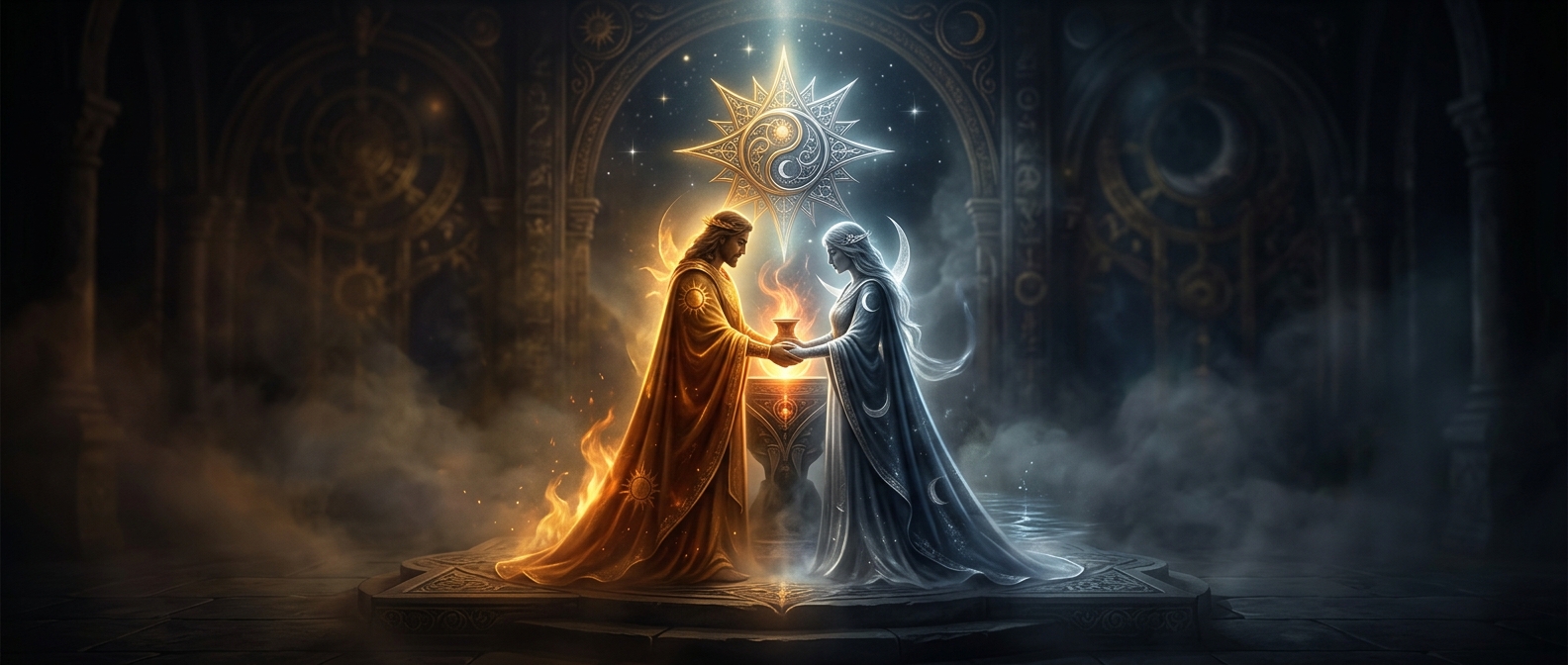
In alchemical writing and imagery, a wedding can stand for more than a marriage between people. It depicts unlike forces joined into a new whole. The pairing might be shown as the sun and moon, or as sulfur and mercury—symbolic principles in alchemical thought, not simply the familiar substances in a laboratory bottle.
The opposites are not meant to cancel each other out. Their union represents a transformation in which each contributes something the other lacks. Images of a royal couple, an embrace, or a shared vessel make an abstract idea visible: change comes through bringing tensions into relation, rather than choosing one side and rejecting the other.
Why the union matters
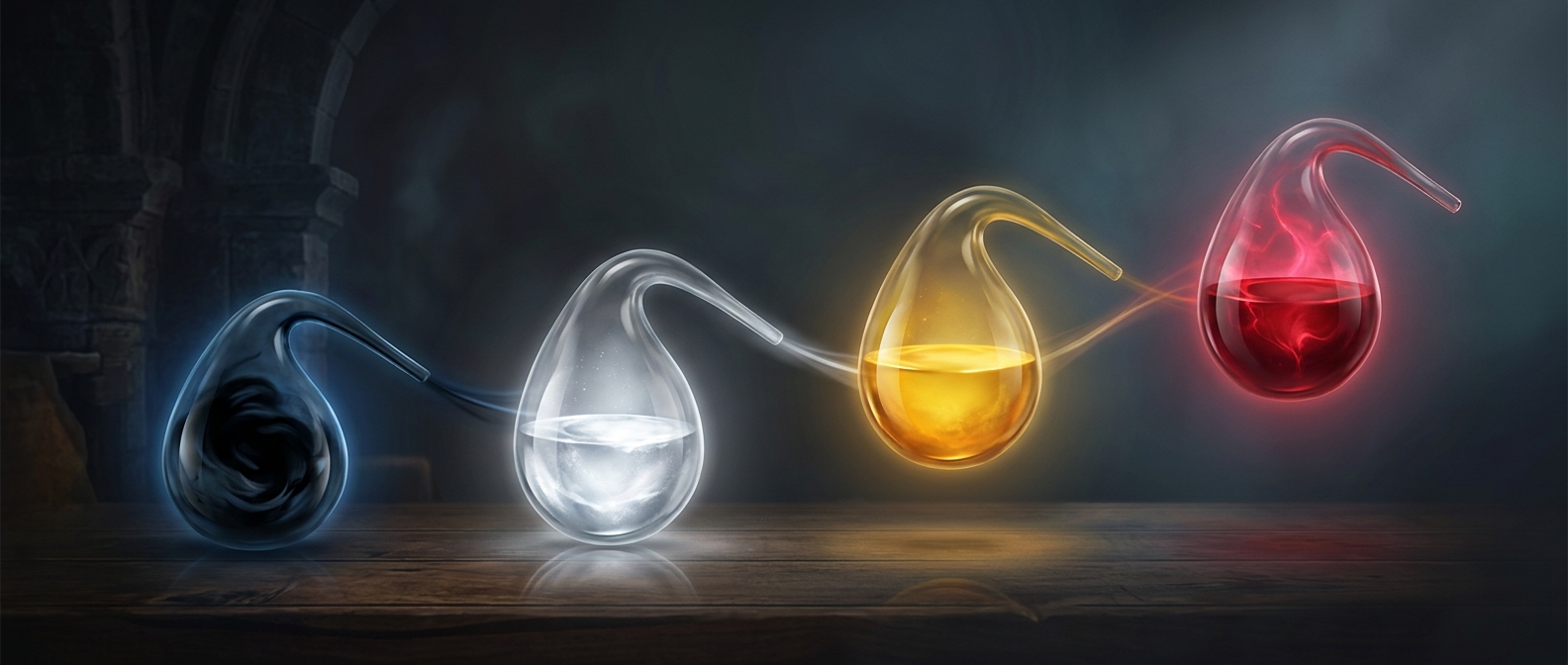
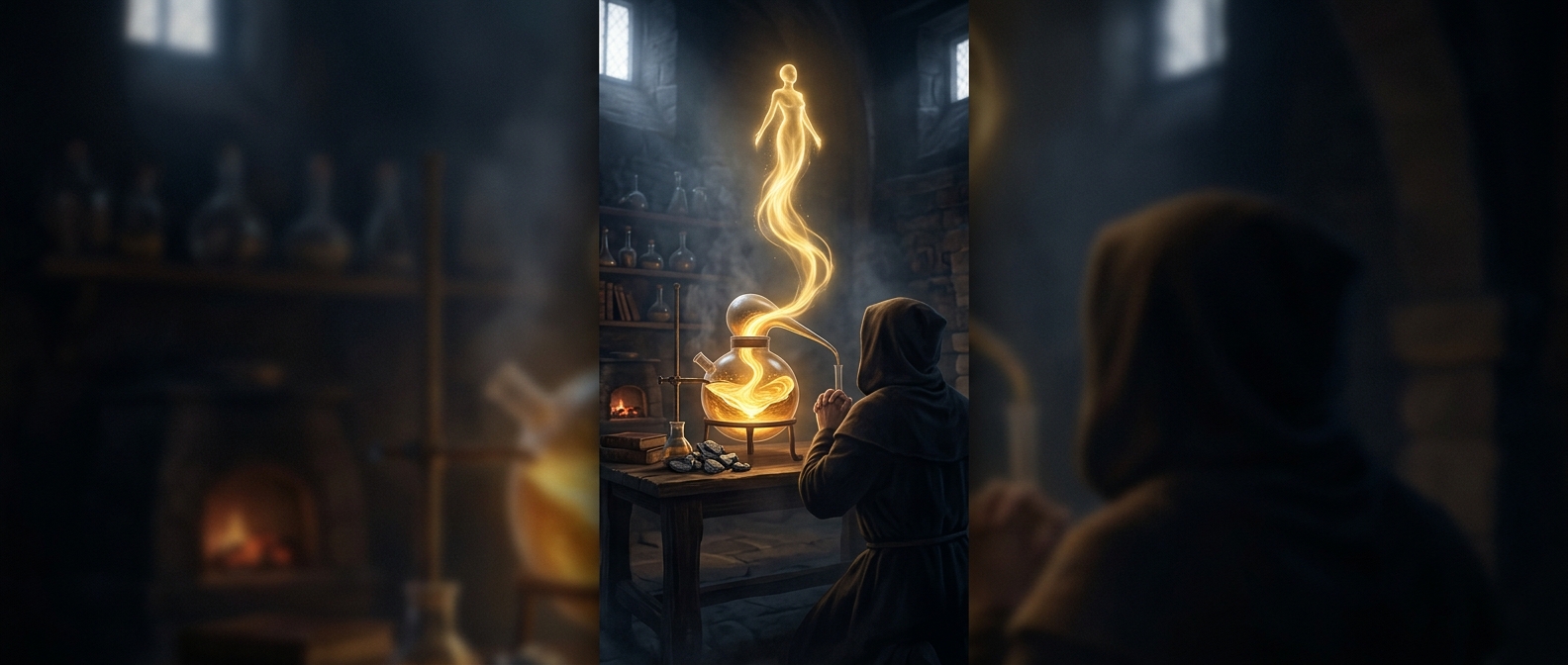
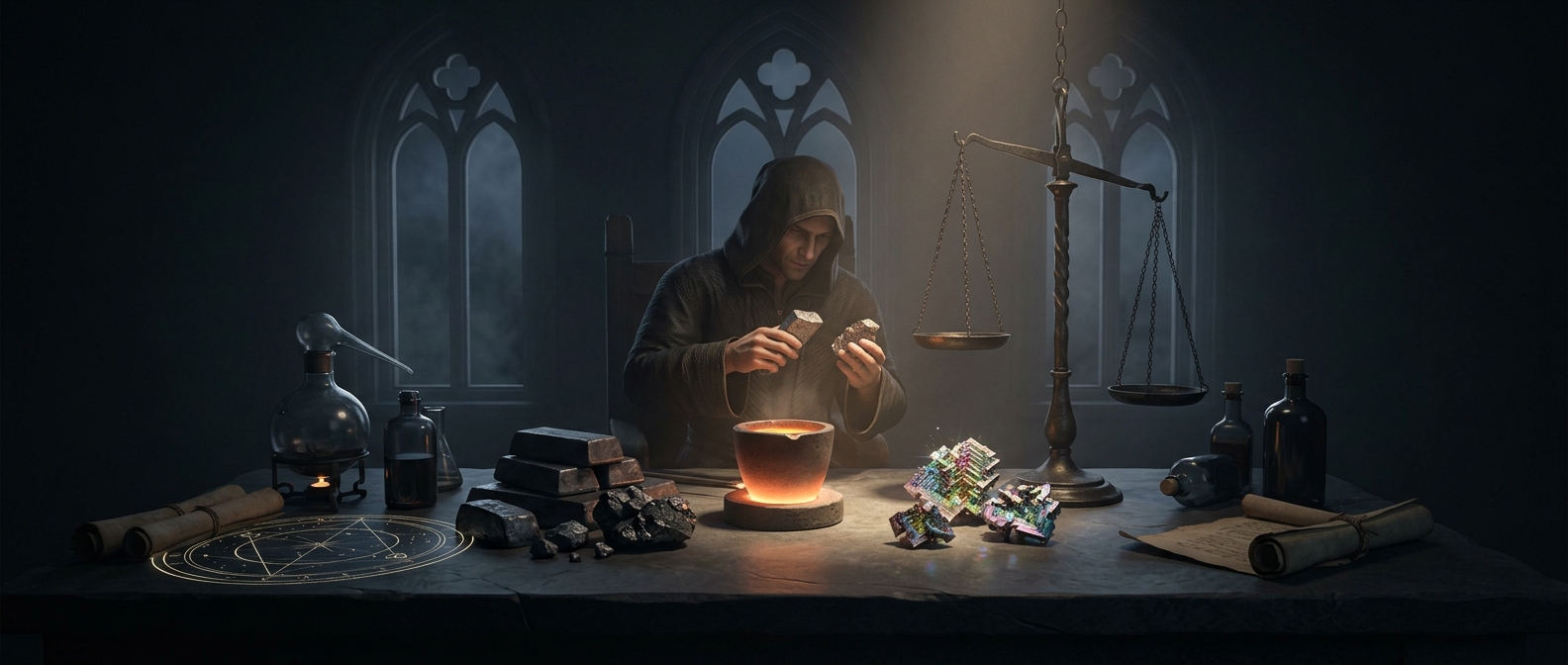
Alchemy used practical language—mixing, heating, separating, recombining—to describe both material work and inner change. The wedding image connects those levels. Just as substances were imagined to undergo a profound alteration in the alchemist’s vessel, the symbolic union suggested that a person, too, could be remade through the reconciliation of opposing qualities.
The exact pairings and interpretations vary across alchemical texts and traditions. The recurring point is the movement from division toward integration. The wedding is a picture of transformation, not a claim that opposites become identical. Their differences remain part of the newly formed whole—making the image a compact way to express how conflict or imbalance might become the beginning of change.