What “Cusp” Means in Astrology
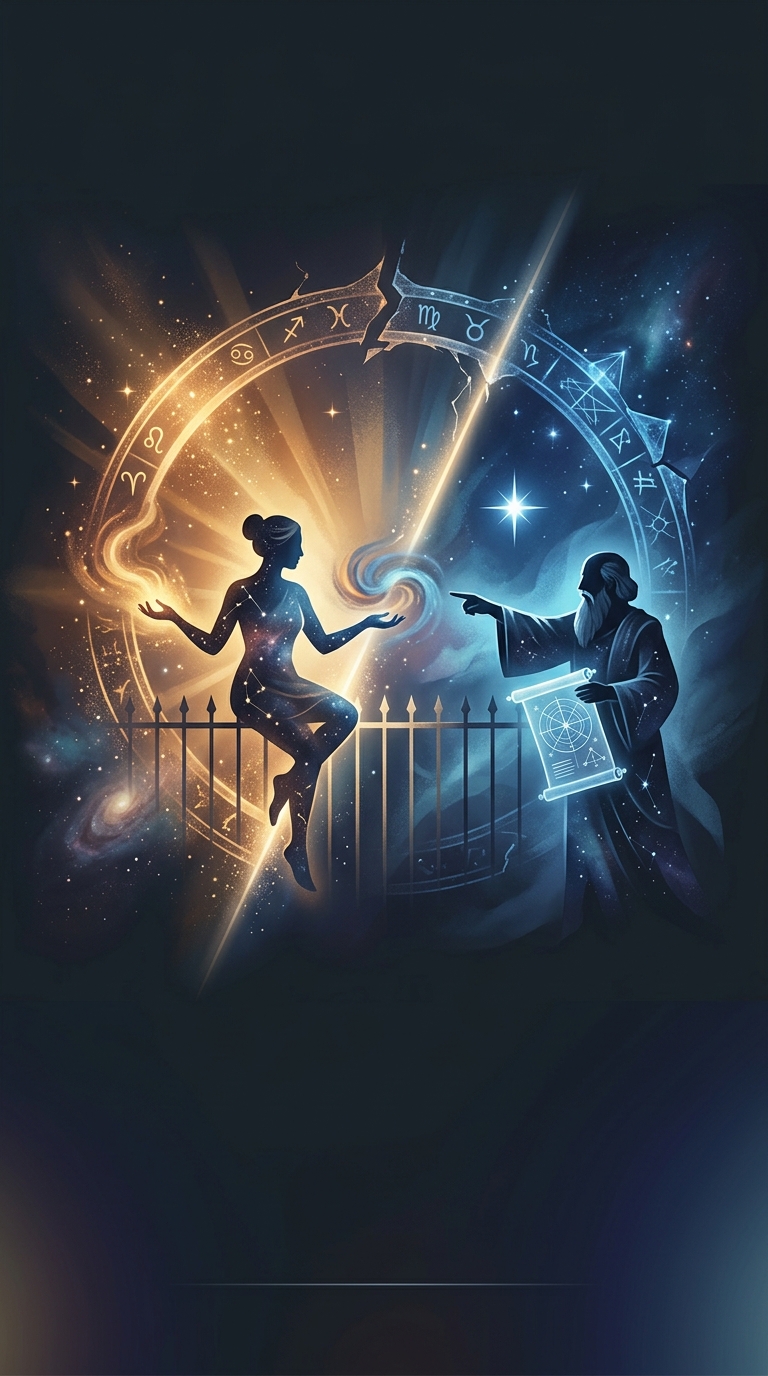
In astrology, the zodiac is divided into 12 signs, each covering 30 degrees of the Sun’s apparent path across the sky. As the Sun moves from one sign’s section into the next, it crosses a precise boundary. The crossing happens at a particular moment—not over several days—so a person born near it may be assigned different signs depending on the exact birth time and the zodiac system being used.
That is why a birthday alone can be misleading. The Sun’s sign at midnight may differ from its sign later that same day, and the calendar date of a transition can vary from year to year. Astrologers who calculate a birth chart use the birth time, date, and location to determine where the Sun was.
Why People Claim Both Signs
“Cusp” is a popular way to describe being born close to a sign change. Some astrologers treat that closeness as meaningful and interpret the person through the neighboring sign as well. Others say the Sun is in one sign at a time: being near the boundary does not make it partly occupy both. In that view, the chart’s other placements—not a blended Sun sign—may account for traits people associate with the adjacent sign.
The appeal is easy to understand. A cusp identity can offer a flexible story about why someone recognizes qualities linked to two different signs, without having to choose just one. But it is an interpretive label, not an extra sign or a separate astronomical zone.
The practical takeaway is that someone born on a commonly listed “cusp date” may need an exact birth time to know which side of the boundary the Sun fell on. The dividing line is a moment; “cusp” is the meaning people choose to give being born near it.