A Water Spirit Belongs to the Water
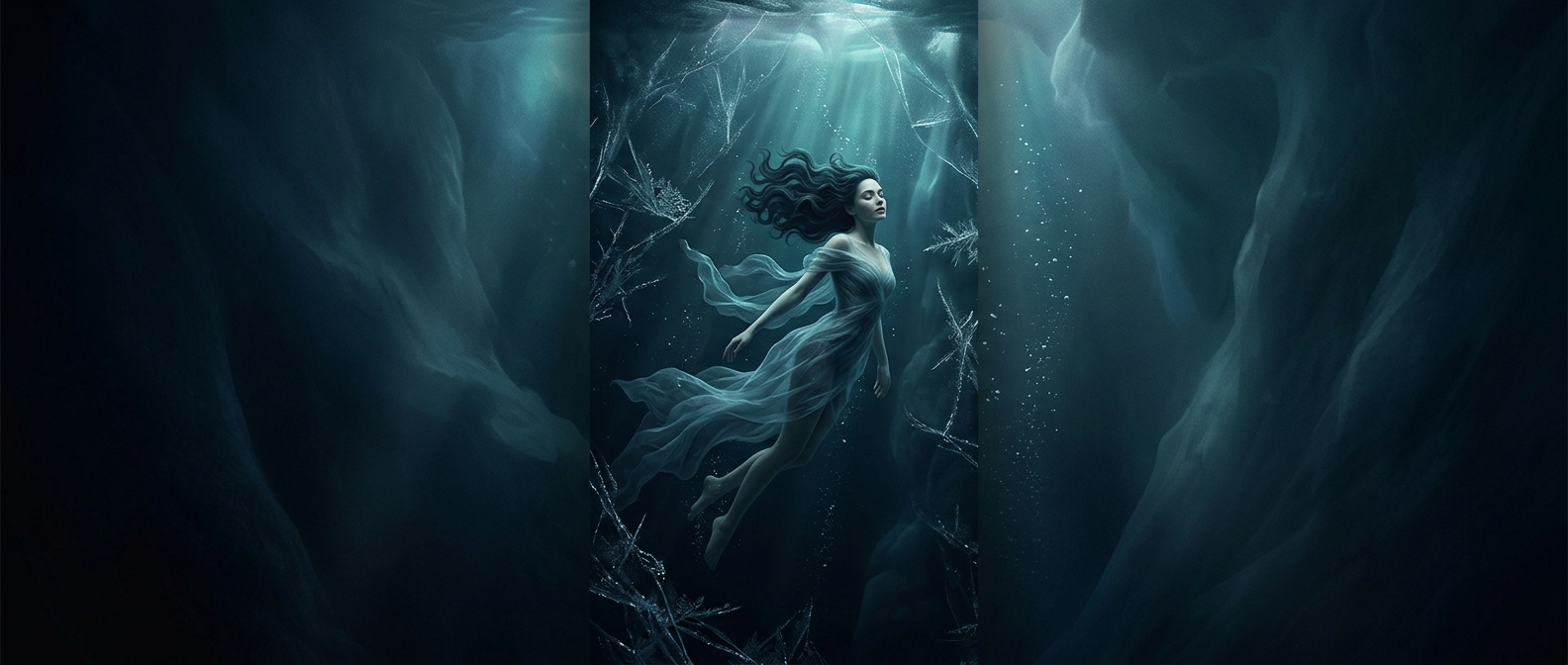
In European folklore, an undine is imagined as a being of lakes, rivers, and waterfalls—not as a person who happens to live beside them. That distinction makes cold water part of the creature’s natural world. A winter stream may be dangerous or painful for a human, but the story does not give an undine a human body with human limits. Its comfort in freezing water follows from its identity as a spirit of that element.
The Boundary Between Water and Human Life
Some tales make that boundary matter in another way: an undine may gain a human voice only through marriage to a human. The detail turns speech into more than a practical ability. It marks entry into human relationships and ordinary social life, while leaving the undine’s original home—and its difference from people—intact.
That contrast gives the folklore its quiet tension. Humans experience water as a place to enter cautiously and leave; an undine’s existence is rooted there. The image of a spirit at ease in icy water is therefore not a claim about cold tolerance, but a way of making the divide between human and otherworldly life visible.