A clipping could stand for the person who left it
In some folk beliefs, a person’s connection to their body did not end neatly at death. Hair and fingernails, which remain recognizable after they are cut, could be treated as more than rubbish: they were pieces still linked to the person they came from. This idea is sometimes called sympathetic magic—the belief that contact or resemblance can preserve a connection between two things.
That made a mourner’s own clippings symbolically useful. If the dead were thought able to wander or return, the living could imagine that a piece of the mourner offered a tether to the household: a reminder of where the person belonged, or a way to keep the relationship anchored in familiar surroundings.
Why put them in a jar?
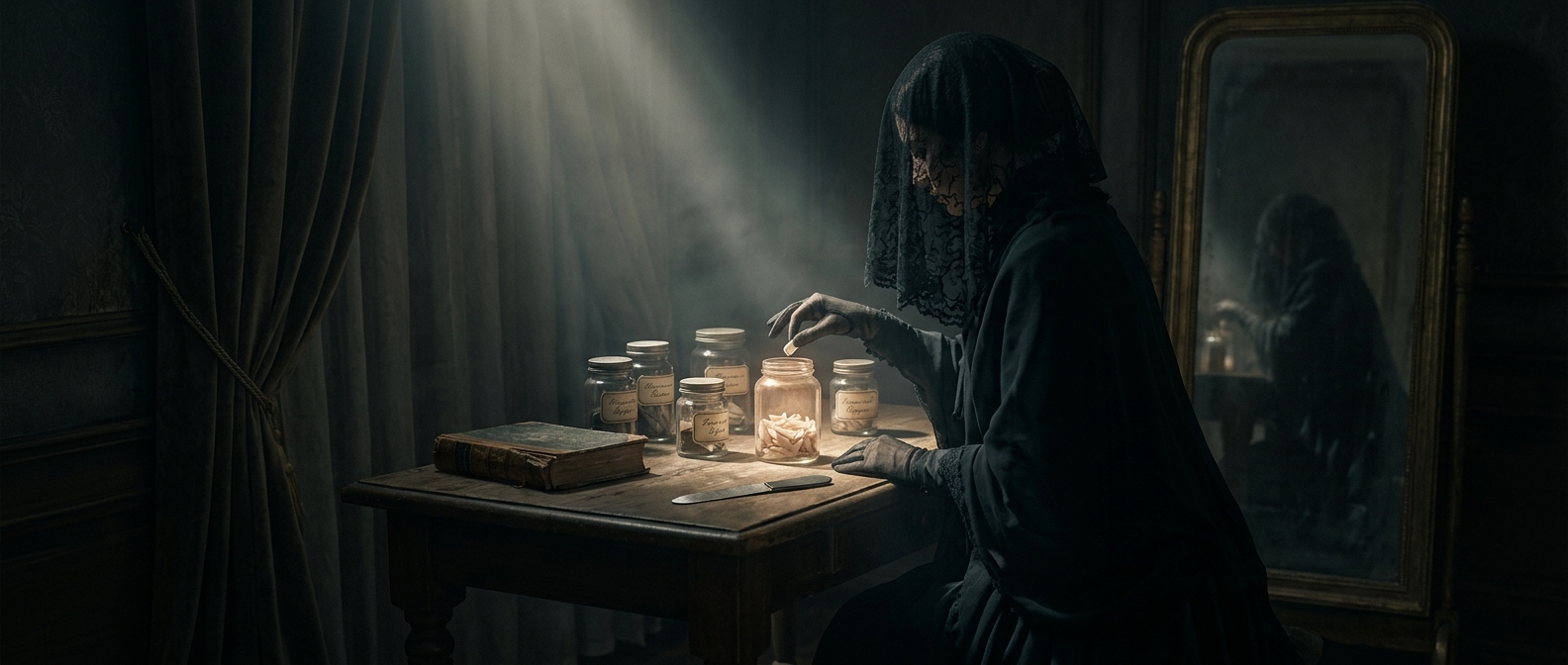
A jar gave the loose clipping a definite place. It could be kept, enclosed, and set aside rather than left to scatter. In that sense, the container mattered as much as the nail: it turned a fragile bodily remnant into a small, durable object with a home of its own.
The practice was not necessarily the same everywhere, and keeping a clipping does not by itself reveal exactly what a particular mourner believed. But the underlying logic is recognizable: if a small piece of someone could retain a connection to them, then keeping it close might help keep the dead close to home, too. A jar made that hope tangible enough to hold.