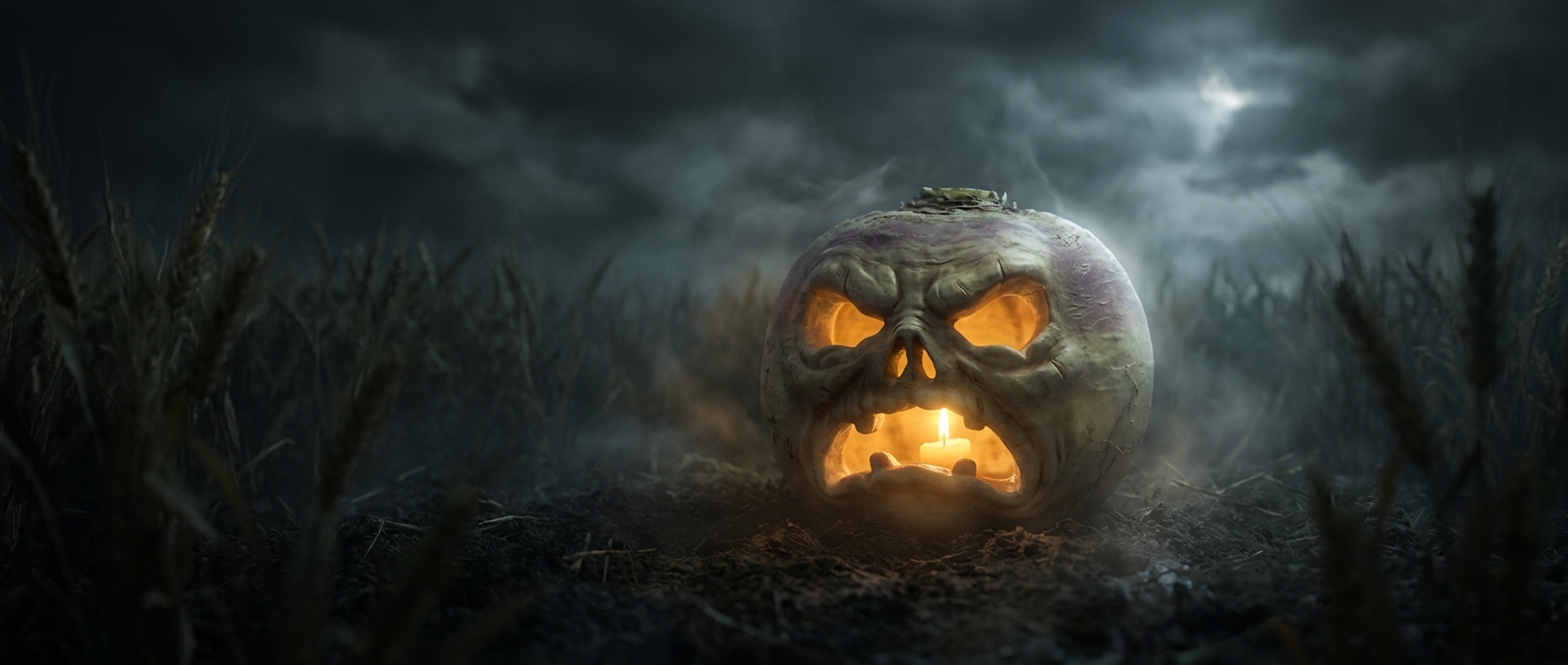
Why early jack-o’-lanterns were made from turnips
In Ireland, people carved faces into turnips and other root vegetables for Halloween lanterns. A turnip’s thick, dense flesh made it a very different material from the big orange pumpkins now associated with the holiday: it was smaller, tougher to hollow out, and less forgiving to carve. The resulting lanterns were compact, with the vegetable’s pale interior helping a candlelit face stand out in the dark.
The practice traveled with Irish immigrants to the United States. There, the familiar Halloween object met a crop that changed how it could be made.
The pumpkin changed the scale
Pumpkins were already grown in North America, and their size gave carvers room to make larger faces. Their broad, rounded shells were also easier to scoop out than a small, hard turnip. Instead of painstakingly cutting features into a dense root, a carver could remove the pumpkin’s soft interior and carve a face into its wall.
That practical difference helped turn the lantern into a more visible, easily recognizable decoration. The tradition remained recognizable—the hollow vegetable, the carved face, the light inside—but the pumpkin made it simpler to produce and display at a larger scale.
The switch was more than a change in color: a local crop reshaped an immigrant custom into the oversized Halloween lantern familiar today.