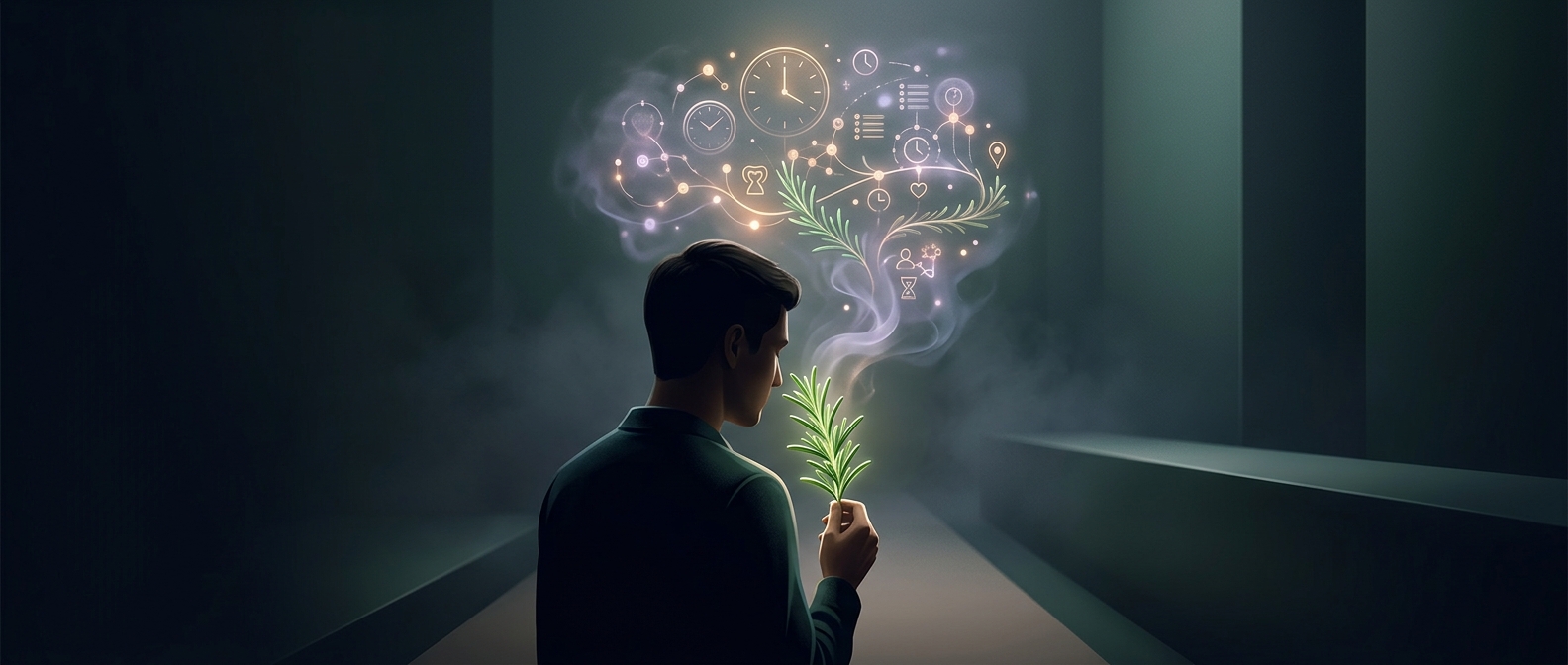
Why a conversation leaves a gist behind
After a conversation, you may retain its main point—someone objected to the timing, for example—more readily than the exact sentence they used. Memory does not preserve every word equally. Attention, repetition, and what seems important help determine which details stick; the rest may fade while the central meaning remains.
That meaning can act like a sketch when you later recall the exchange. Your mind uses the remembered gist and the surrounding context to rebuild a plausible version of what happened. If you recall that a coworker was frustrated about the schedule, a sentence expressing frustration may feel familiar even if you cannot retrieve the original wording.
How a plausible sentence becomes a remembered one
Reconstruction is not the same as deliberate invention. It is a normal consequence of recalling an event from incomplete traces. As you assemble the scene, details that fit its meaning can become mixed with details you actually heard. Psychologists call the challenge of distinguishing where a detail came from—something you heard, inferred, or later imagined—source monitoring.
Confidence does not reliably reveal that a sentence is exact. A clear, coherent recollection can still preserve the speaker’s point while smoothing over pauses, qualifiers, or phrasing. This is especially important when retelling an argument: “She was upset about the schedule” may be a sound summary, but quotation marks make a stronger claim about the words themselves.
When the distinction matters
For everyday conversation, remembering the gist is often useful: it lets you carry forward what mattered without storing a transcript. But when wording has consequences—during a disagreement, an interview, or a formal record—it helps to separate what you remember verbatim from what you understood the person to mean. The sentence that comes back most naturally may be your mind’s best reconstruction, not a recording of the original.