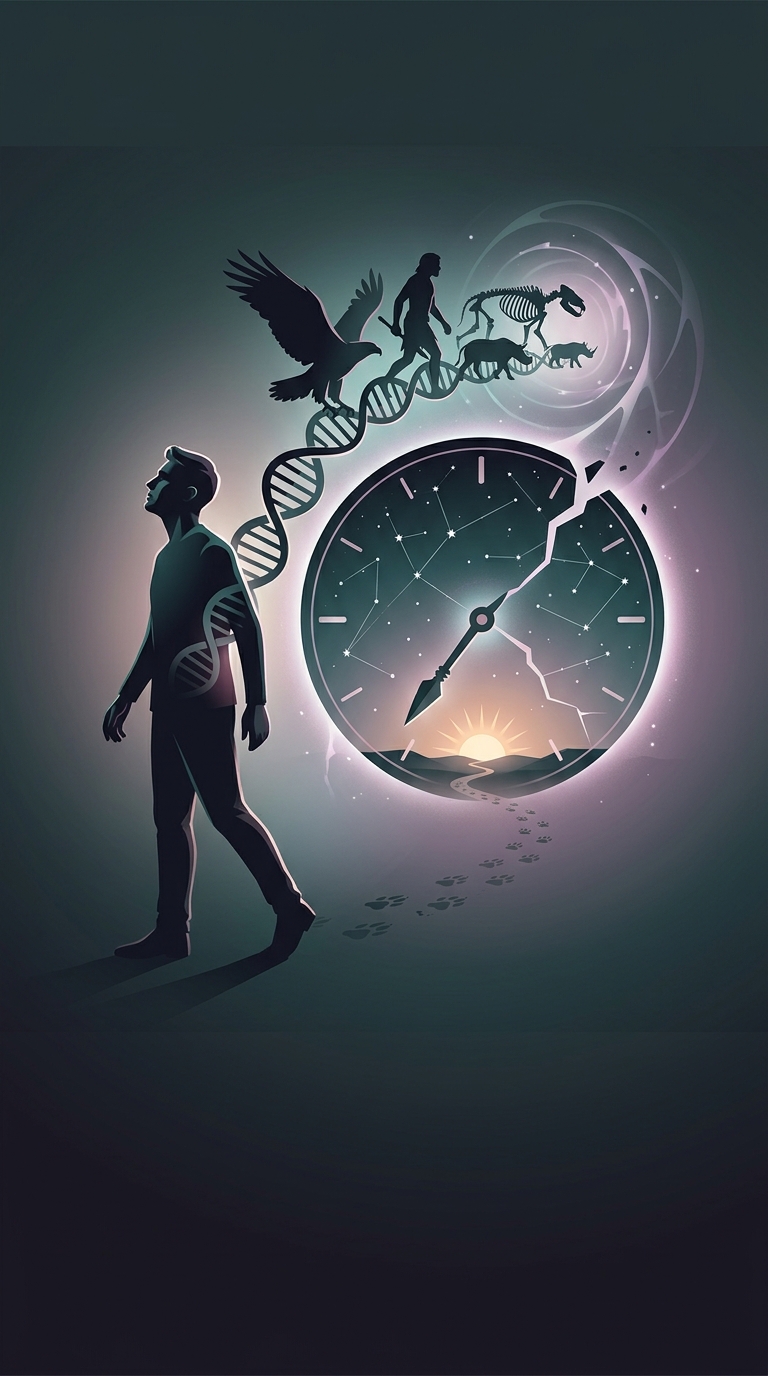
Why Some People Are Naturally Morning-Oriented
A strong preference for early mornings can run in families because sleep timing is partly shaped by genes inherited from parents. These genes help regulate the body’s circadian rhythm—the roughly 24-hour internal timing system that coordinates sleepiness, alertness, and other daily changes.
That clock does not make everyone feel ready for bed or wakefulness at the same time. In people with an earlier chronotype, its signals tend to line up earlier: sleepiness arrives sooner in the evening, and alertness rises earlier in the morning. The inherited influence is not a single “early bird” gene; many biological factors contribute to where someone falls on the morning-to-evening range.
Genes Set a Tendency, Not a Schedule
An inherited tendency can help explain why one person wakes refreshed at dawn while another struggles to feel alert at the same hour. But genes do not dictate an exact wake-up time. Light exposure, routines, age, work or school demands, and sleep habits also affect when the body settles and wakes. A naturally early pattern is most apparent when someone can sleep on a schedule that suits their internal clock.
That distinction matters: waking early by choice or necessity is not the same as being naturally morning-oriented. The revealing clue is whether the timing feels easy and sustainable without an alarm or forced schedule. For someone whose early rhythm is inherited, dawn may feel less like an imposed start and more like the point when the body is already ready to begin the day.