A Penny Made by Hand
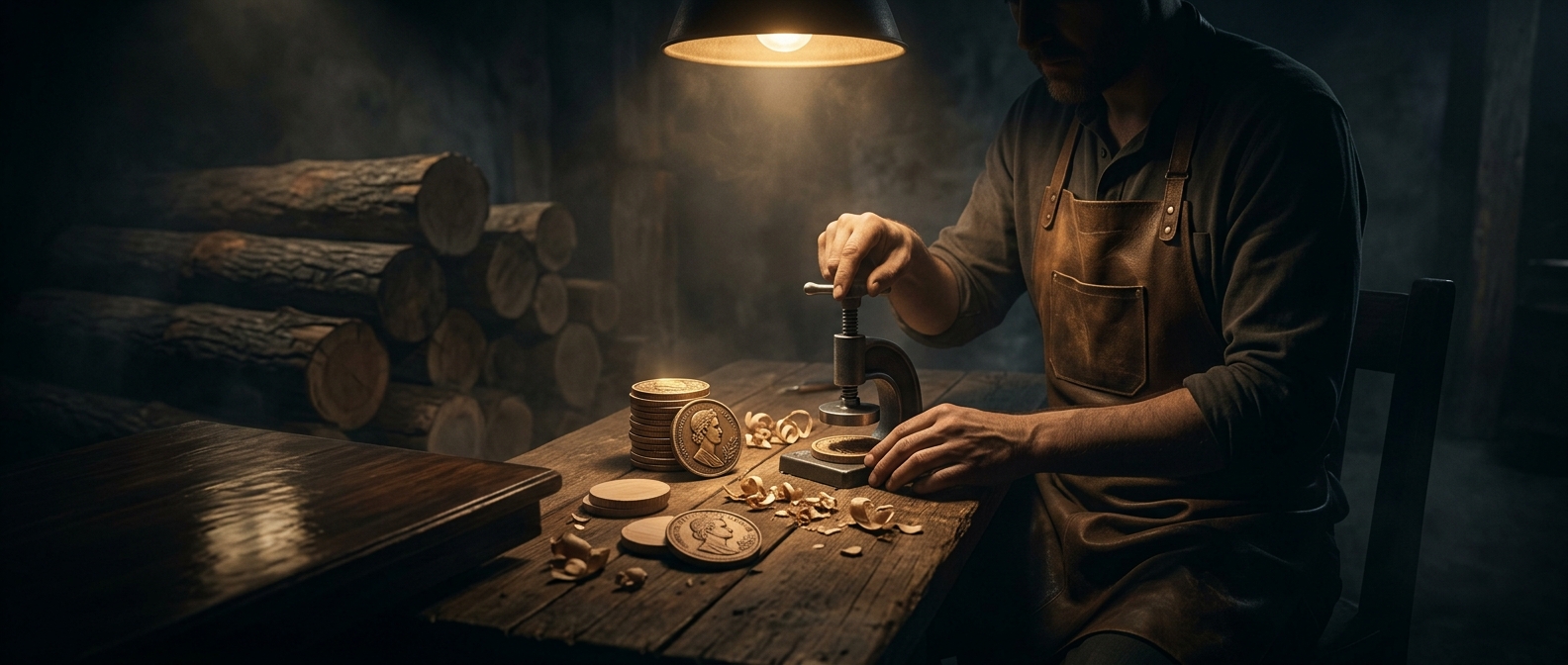
A wooden penny could buy candy only if the shopkeeper agreed to treat it as a penny. Unlike official coins, a carved token had no general guarantee of value; its worth came from a seller’s willingness to accept it. In that small transaction, the wood mattered less than the agreement behind it.
Why the Token Cost More Than It Bought
Making one by hand meant spending time selecting and shaping a piece of timber, then marking it so it could pass as the promised amount. That labor could easily outweigh the value of a little candy. The exchange made sense only for reasons beyond efficiency—perhaps the maker valued the treat, enjoyed the task, or had no ordinary coin available. The fact alone does not tell us which motive applied.
Official money avoids this problem through standardization: many coins can be produced to the same specification, and people recognize the denomination without negotiating each one. A homemade wooden penny had no such built-in acceptance. It was less a cheap substitute for a coin than a tiny, local bargain: one person’s work became candy because another person chose to honor the token.