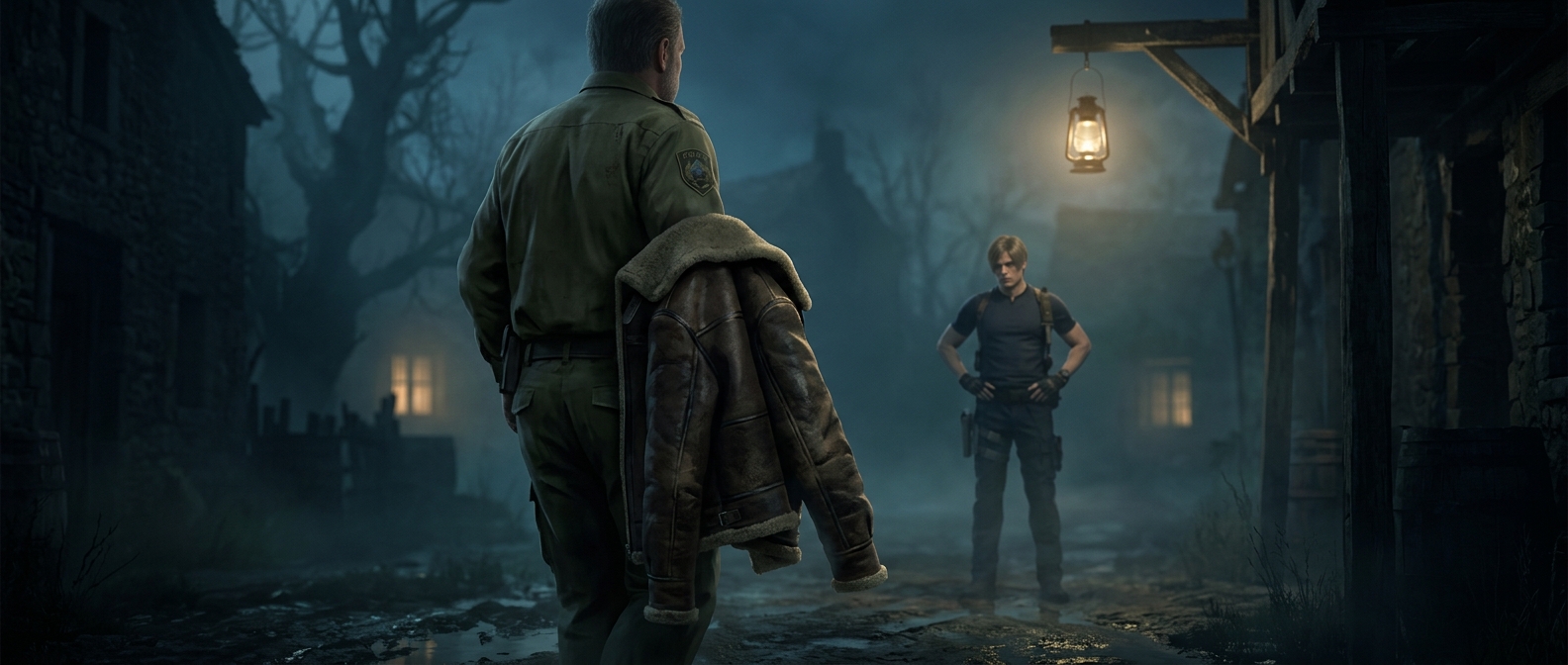
When Resident Evil 4 Became Too Stylish to Stay Resident Evil
In the early 2000s, director Hideki Kamiya and a team at Capcom were developing a new entry in the Resident Evil series. Their prototype kept the familiar setup—one hero moving through dangerous spaces—but pushed the action in a very different direction. The protagonist, Leon Kennedy, was designed to move with unusual speed and flair, while combat emphasized acrobatic attacks and dramatic encounters rather than the series’ slower, more vulnerable survival-horror rhythm.
That shift created a problem of identity. Resident Evil depends on making players feel constrained: scarce resources, threatening enemies, and movement that makes escape feel precarious. A hero who could stylishly overpower opponents changed the emotional contract. The prototype’s action could work, but it no longer served the kind of tension the series was built around.
A Split That Made Room for Two Games
Rather than force the action-heavy design back into the Resident Evil framework, Capcom separated it from the project. The prototype was developed into Devil May Cry, with its combat and gothic demon-hunting world treated as the foundation of a new series. The Resident Evil 4 project continued separately, free to pursue a different approach to horror and combat.
The split mattered because it let each game commit to its own promise. Devil May Cry could reward expressive, stylish fighting; Resident Evil could keep asking how players survive when they cannot simply dominate every encounter. One project’s mismatch became the creative starting point for another.