Why the Train Fight Keeps Moving
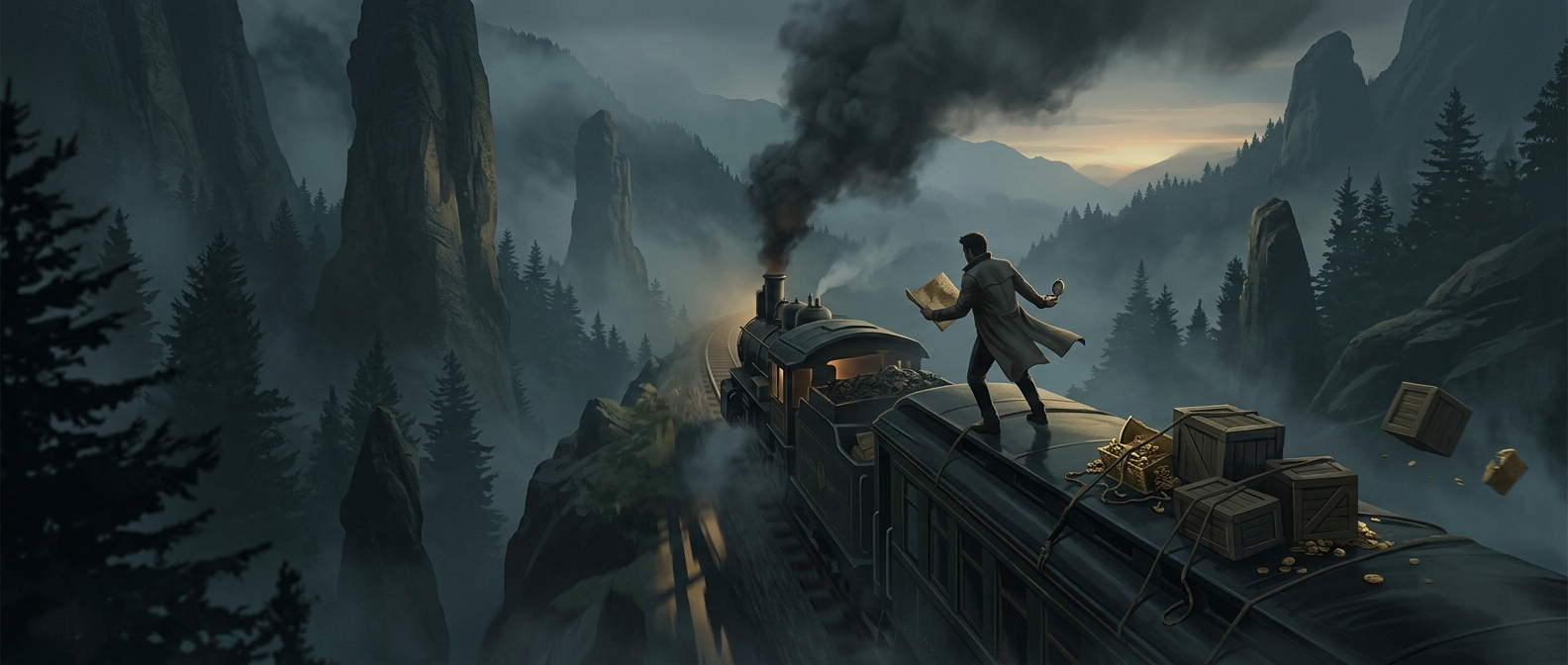
In Uncharted 2: Among Thieves, the train sequence is built around a simple constraint: the player cannot stop to clear a room, take cover, and plan the next move. The battlefield itself is sliding past. Enemies arrive from ahead and behind, while the narrow cars leave little room to dodge or circle around them.
That turns ordinary combat into a problem of position. Nathan Drake has to move between cars, avoid incoming fire, and keep his footing as the train jolts and breaks apart. A missed step or badly timed move can matter as much as a missed shot.
Scenery Becomes Part of the Challenge
The moving landscape is not just decoration. Each car offers a different patch of cover, and gaps between cars create brief, exposed crossings. As the train climbs through the mountains, wreckage and changing scenery signal that the route is becoming more dangerous. The player is not simply fighting on a train; the train’s motion and deterioration keep reshaping the fight.
This is a form of set-piece design: a carefully staged sequence that combines combat with a dramatic event. The developers could control the train’s route and the timing of its destruction, letting the scene escalate in a way a freely explored level could not. The tradeoff is that the player has less freedom to choose where to go—but the fixed route makes it possible to choreograph a sustained action scene.
A Fight With an Ending Built In
Because the train cannot keep going forever, every encounter points toward a physical consequence: cars are damaged, the route grows more hazardous, and the escape becomes part of the combat. The sequence makes the environment feel like an opponent with its own momentum. Even when Drake wins a firefight, he still has to survive the next stretch of track.