What a Playtime Counter Actually Measures
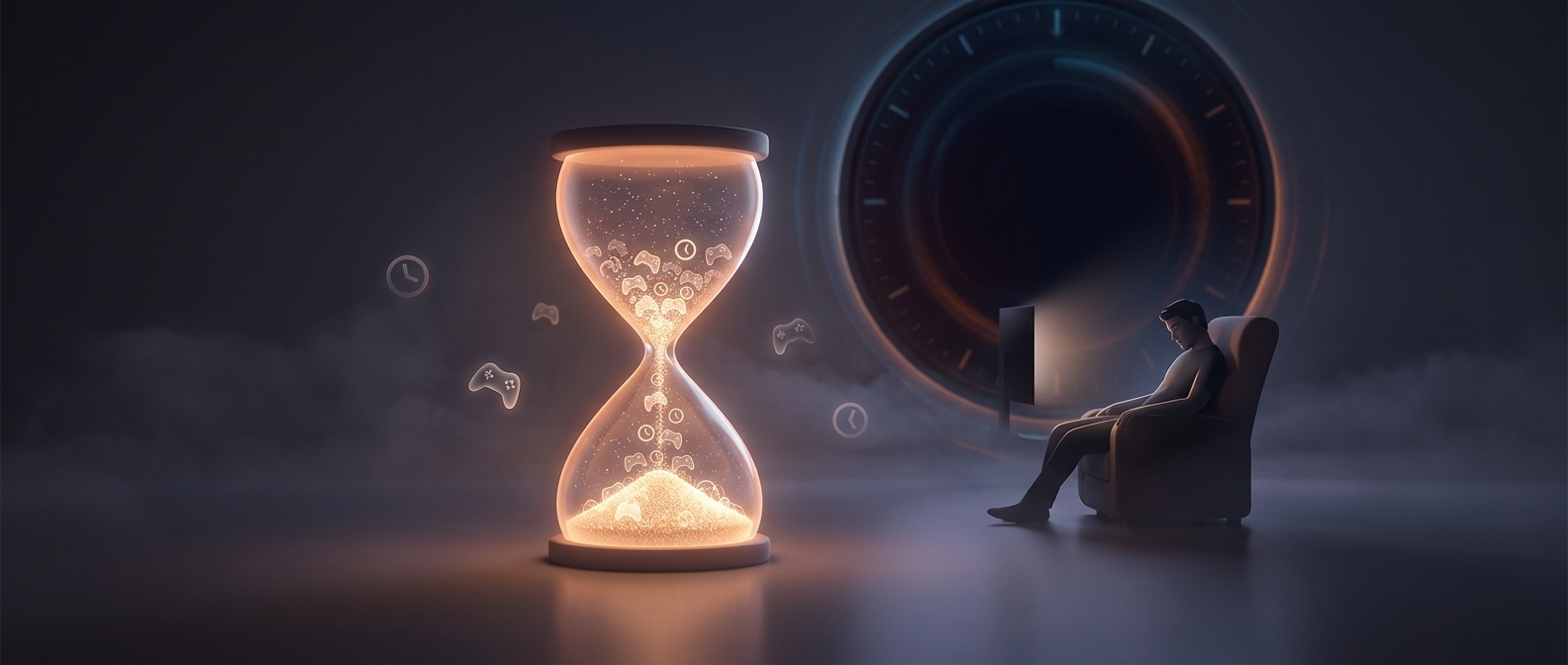
A game launcher usually records time by noting when a game starts and when it closes. If the program remains open, the counter may keep running whether you are actively playing, sitting at the pause screen, or away from the keyboard. The number is therefore often a measure of how long the application stayed open, not a precise record of hands-on play.
Why the Distinction Matters
Games and platforms use playtime for different purposes, but a simple timer cannot reliably tell what a person is doing. A game may be open in the background while its owner cooks dinner, takes a call, or falls asleep. Some games also leave menus or waiting screens running for long stretches. Those hours can make a profile look like evidence of intense play even when much of the time involved no interaction.
More sophisticated systems could try to distinguish active play from idling—for example, by tracking input or in-game activity—but that creates its own complications. A player may spend meaningful time thinking through a strategy, watching a cutscene, or waiting for a match without pressing buttons. A timer based on keyboard or controller activity could misclassify those moments.
A Number, Not a Play Diary
Playtime is still useful for rough comparisons and personal records, especially when the same platform tracks every game in the same way. But it should not be read as a minute-by-minute account of attention or effort. A displayed 1,000 hours may describe a game that was left open for that long—not 1,000 hours spent actively playing.