How unfamiliar symbols became part of Evangelion’s visual language
In Neon Genesis Evangelion, crosses, angels, and Kabbalistic diagrams help make a crisis feel larger and stranger than an ordinary science-fiction battle. Their immediate job is visual: they signal that the world on screen is governed by forces the characters—and viewers—cannot easily understand.
That effect depended on the symbols’ distance from everyday Japanese experience. Christian crosses and Jewish Kabbalistic imagery carried associations with old religions and hidden knowledge, but were relatively unfamiliar to much of the intended audience. As director Hideaki Anno explained, their appeal lay less in theological precision than in their exotic, mysterious appearance.
Meaning can come from the image, not the doctrine
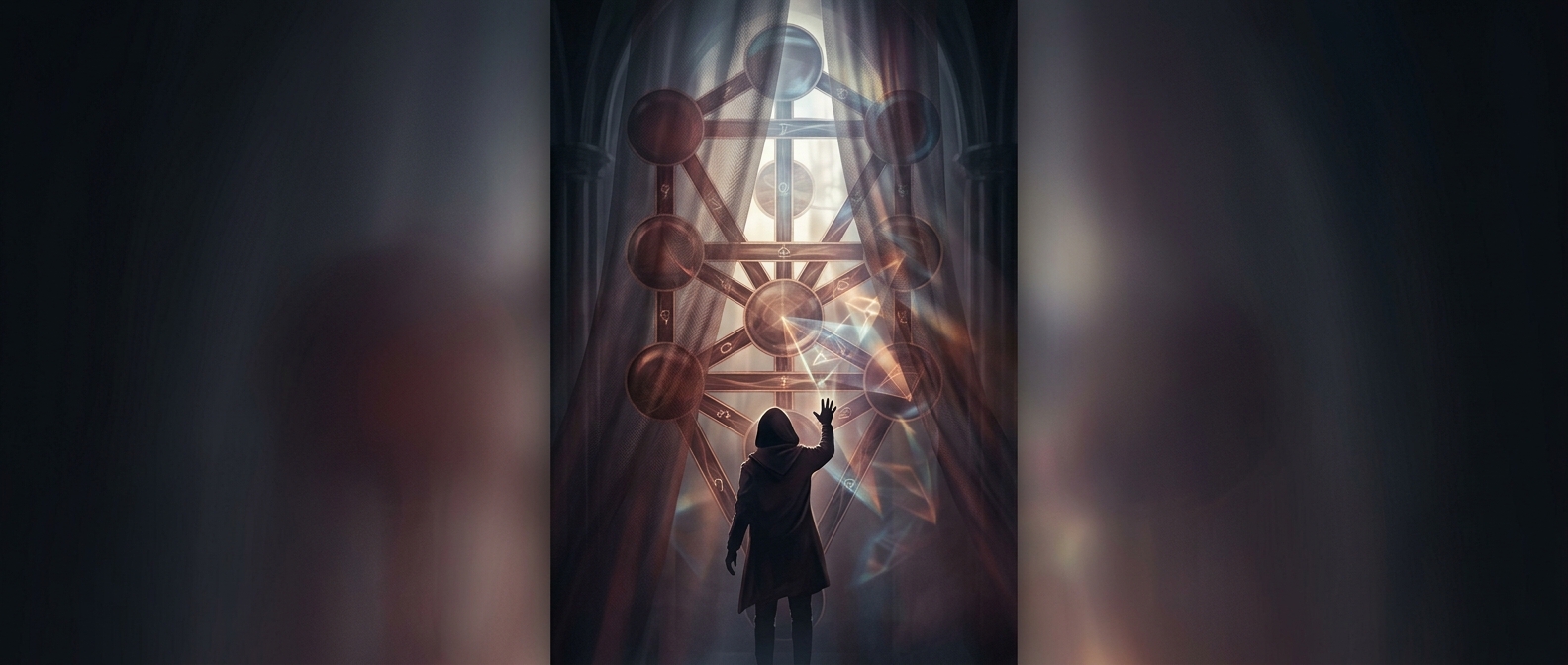
Kabbalah is a Jewish mystical tradition, and its diagrams have specific religious and intellectual contexts. In the series, however, such imagery is used primarily as a design resource, not as a lesson in Jewish belief. The distinction matters: a symbol can evoke secrecy, antiquity, or spiritual danger for viewers without the story accurately explaining its original meaning.
A cross works similarly. Its familiar outline is instantly legible, while its religious associations lend a scene weight. Combined with unfamiliar diagrams and cryptic terminology, it creates an atmosphere of ritual and forbidden knowledge—an efficient visual shorthand when the story is deliberately withholding explanations.
Mystery as a design decision
The symbols therefore contribute to Evangelion’s central experience of uncertainty. They make its organizations and events look as though they belong to an ancient, carefully arranged system, even when the audience is still trying to work out what that system is. The imagery promises depth before it supplies answers. That gap—between the authority a symbol seems to carry and what the series actually explains—is part of the show’s unsettling visual appeal.