Cyberpunk’s future runs on private systems
Cyberpunk’s central tension is not simply that technology becomes powerful. It is that access to powerful technology expands while control over it remains concentrated. A person may carry advanced computing in a pocket, yet depend on companies to provide the networks, software, storage, and digital marketplaces that make it useful. That arrangement gives corporate power a practical route into daily life: control the systems people rely on, and you can shape what they see, buy, and are allowed to do.
Why the setting feels familiar
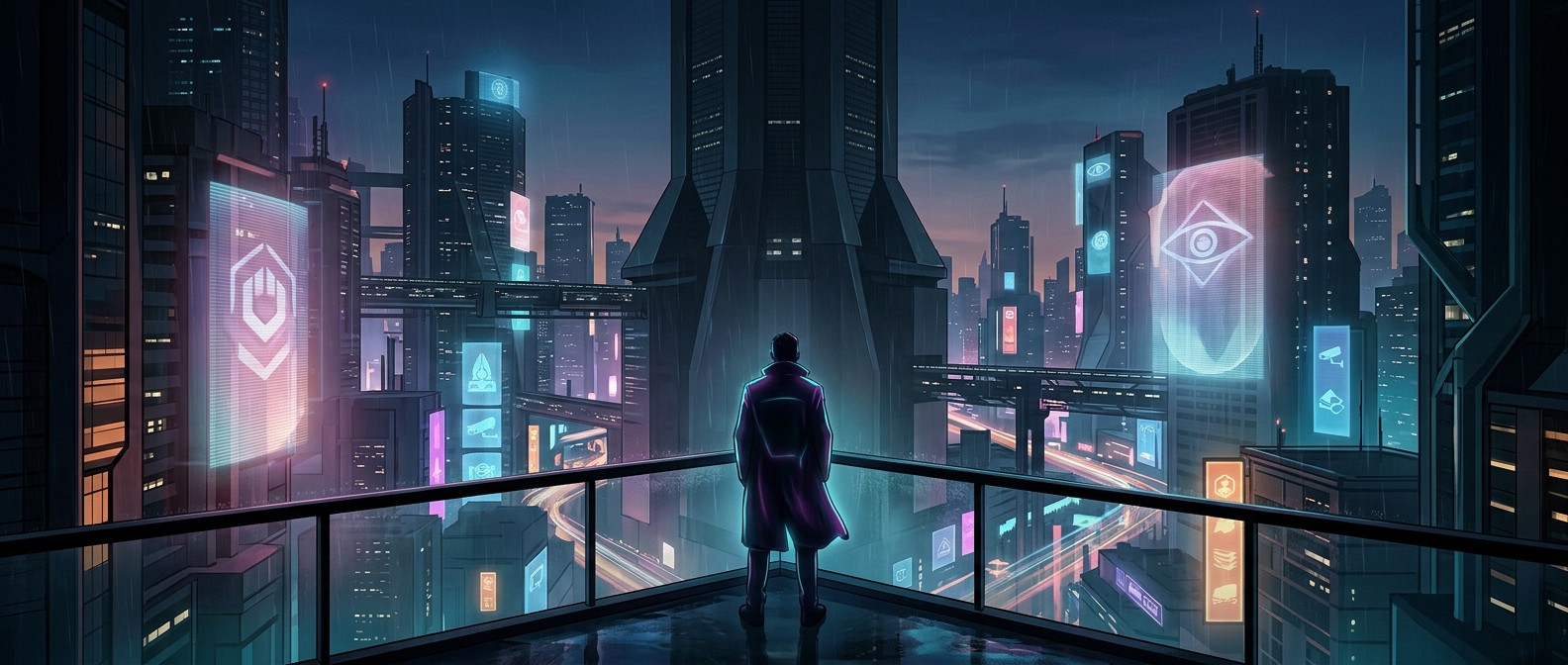
The genre often makes that dependence visible through dense cityscapes and conspicuous machinery. In real life, the infrastructure is easier to overlook: data centers, payment networks, recommendation systems, and apps operate behind a clean screen. The visual excess of cyberpunk turns an invisible dependency into scenery. Its imagined streets ask who owns the systems beneath the convenience—and what happens when opting out is difficult.
Digital immersion adds another layer. When work, entertainment, communication, and identity all pass through screens, the boundary between the physical world and the digital one can feel thinner. Cyberpunk pushes that shift toward the extreme, making virtual life a place to escape, earn status, or exert control. The point is less that a particular gadget was predicted than that technology can reorganize ordinary relationships and concentrate influence.
A warning built from tradeoffs
That is why cyberpunk is better understood as a social extrapolation than a checklist of forecasts. It takes appealing promises—speed, connection, convenience—and follows their costs when institutions fail to share power or protect people from dependence. The unsettling question it leaves behind is concrete: if a service becomes essential, who gets to set its terms? In a cyberpunk future, the answer is often written into the system before the user ever logs in.