How a copied paragraph becomes community folklore
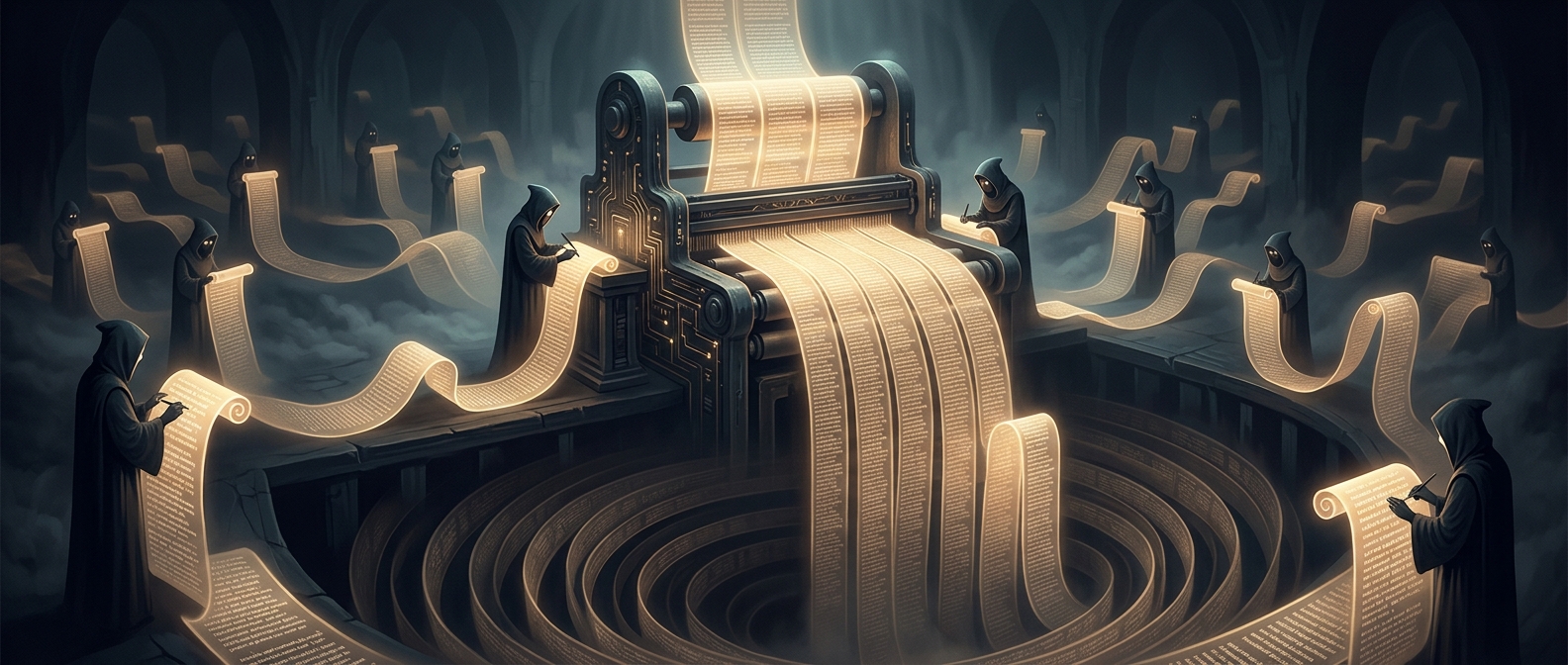
Copypasta is a block of text people copy and repost, often as a joke, a reaction, or a deliberately over-the-top performance. The name blends “copy” and “paste,” but the important part is what happens after the paste: each person can preserve the familiar core while changing a word, detail, or punchline to suit a new situation.
That makes it resemble oral folklore, even though its versions travel through screens rather than being retold aloud. A story or saying survives because people recognize it and find it worth passing on; online, recognition can come from the wording itself, the moment it appears, or the shared knowledge needed to understand the joke. Repetition gives the text a history within a group.
Small edits carry social meaning
A copied block can be altered to fit a new forum, fandom, or conversation. Some readers repeat it nearly unchanged to signal that they know the reference. Others modify it, inviting fellow participants to notice the variation. The text becomes a flexible template: familiar enough to be recognized, but open enough to be reused.
Digital copying also leaves a different kind of trail from spoken folklore. The same passage may appear in multiple posts, while edits and reposts make it difficult to identify one definitive version. That instability is not simply a flaw in transmission; it is part of the format. The community keeps the reference alive by repeating it—and keeps it relevant by changing it.