Two different ways to put a face in text
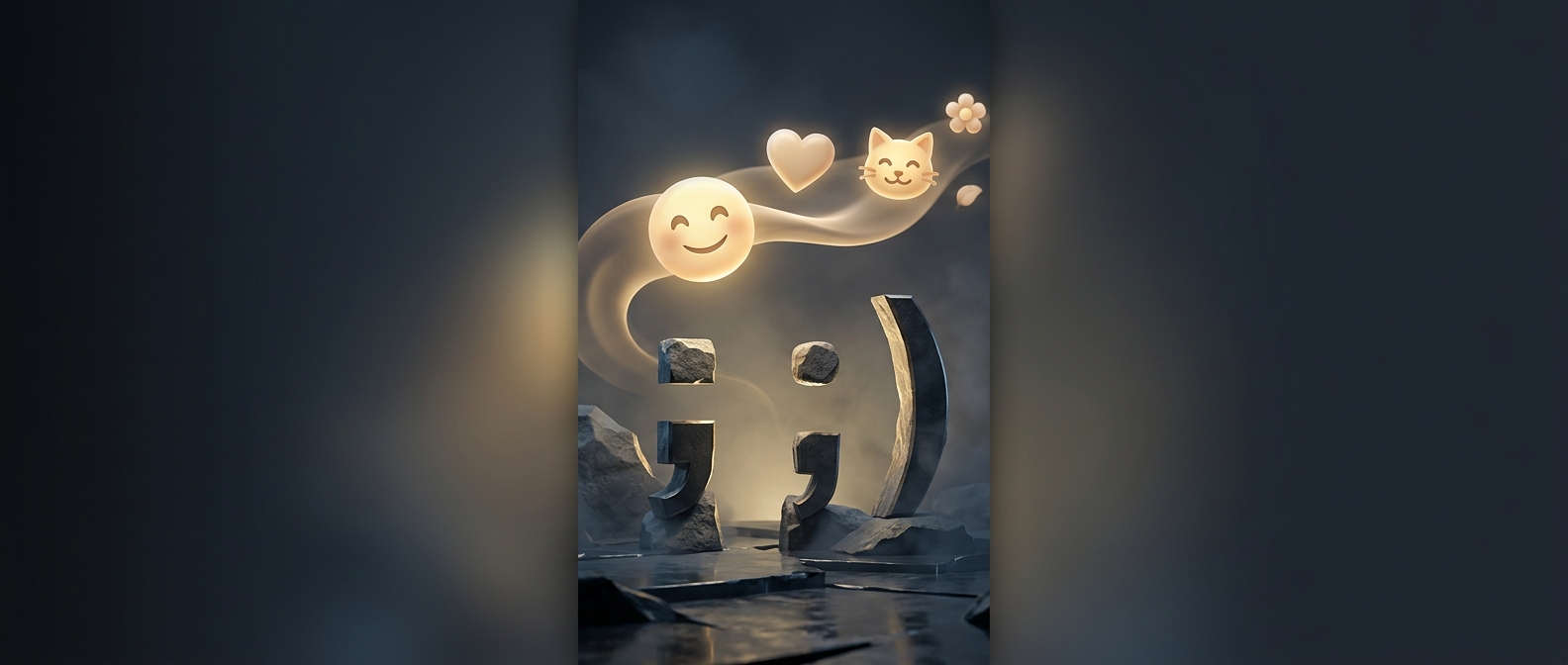
An emoticon is built from ordinary characters. In `:-)`, the colon supplies the eyes, the hyphen suggests a nose, and the closing parenthesis forms a smile. The reader’s mind assembles those marks into a face—often more easily when the line is turned sideways. Other combinations can suggest a wink, a frown, or a shrug, but their meaning depends on how readers interpret the punctuation.
An emoji works differently: it is a pictorial symbol represented by a character or sequence of characters, then displayed as an illustration by the device or app. Instead of assembling punctuation into a face, the reader sees a rendered image. The same emoji can look somewhat different across platforms because each may draw its own version.
Why the distinction matters
The difference reflects two stages in the evolution of digital communication. In plain text, punctuation offered a quick way to add tone without special images. Emoji made expressive symbols easier to recognize and expanded the visual vocabulary beyond faces—to objects, gestures, animals, and more.
Neither form guarantees a single interpretation. An emoticon can be ambiguous, and an emoji’s artwork or context can affect how it comes across. But they do not work in the same way: an emoticon asks readers to assemble a picture from typed marks; an emoji arrives as a pictorial symbol rendered on screen.