The pose underneath the animation
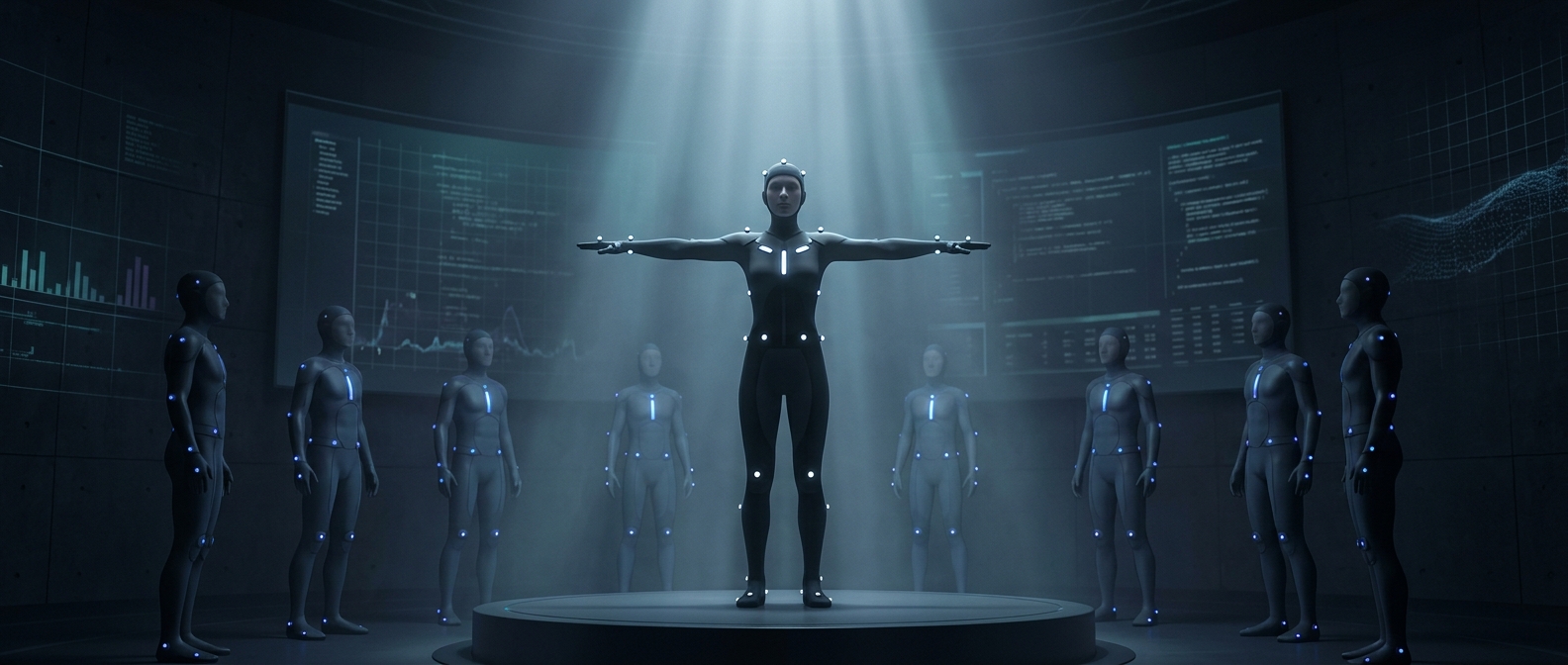
A 3D character is usually built around a rig: a digital skeleton whose joints can be moved to create animation. Artists often arrange the character in a T-pose while setting up that rig. With the arms held straight out, the joints are easy to see and adjust, and the software can map the character’s mesh—the visible surface—onto the skeleton.
That setup pose can also serve as a fallback. A game normally plays an animation clip, a stored sequence of joint movements, to make the rig walk, gesture, or fight. If the clip is missing or fails to play, the character may remain in its basic pose instead of moving as intended.
From setup error to comic effect
The result looks less like a character making a deliberate choice than a model caught mid-production. It may appear in the wrong place, stand rigidly during a scene, or loom over other characters without reacting. The mismatch between a polished game world and a figure behaving like an unfinished asset is what makes the glitch instantly funny.
Online, that stiffness became part of the joke: the character seems so confidently motionless that it must be projecting “alpha energy.” The meme turns a technical fallback into a personality. What began as a sign that an animation had not reached the character becomes a pose that looks, absurdly, like a show of dominance.