How chicken proteins can be joined
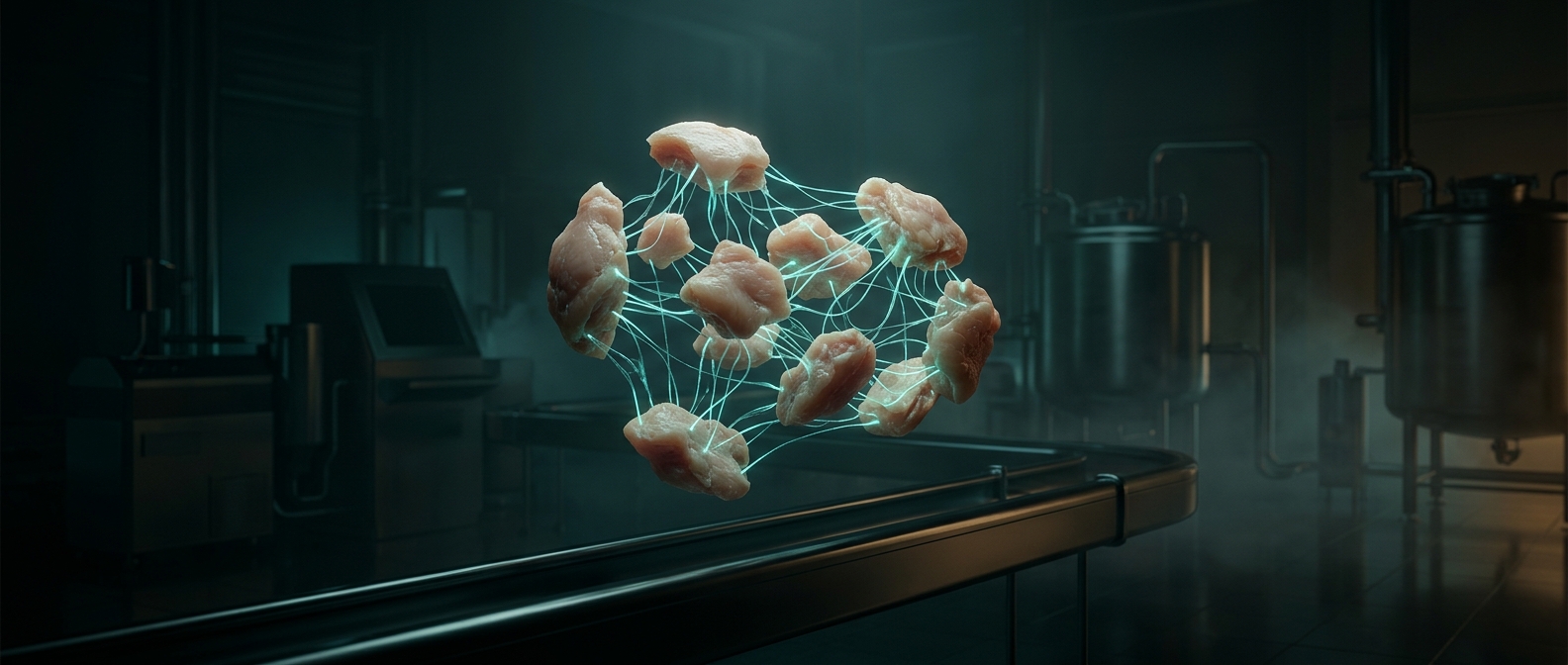
Transglutaminase is an enzyme: a protein that speeds up a chemical reaction. In ground chicken, it can connect certain proteins in neighboring pieces. Those links help the mixture behave less like loose bits and more like a single mass that holds its shape during forming and cooking.
The enzyme does not work like a layer of glue between intact chunks. It creates bonds between proteins already in the meat, so the nickname “meat glue” describes the linking effect rather than a separate adhesive.
What the enzyme changes—and what it doesn’t
The links affect the chicken’s structure, not its identity. They do not turn the meat into a different food or, by themselves, explain a nugget’s flavor or nutrition. Seasoning, other ingredients, and cooking contribute to those qualities; transglutaminase’s role is specifically to help protein-rich pieces stay together.
That distinction matters because the phrase “meat glue” can suggest a hidden substance holding whole chunks in place. In this case, the useful image is closer to protein strands being fastened to one another, allowing ground chicken to keep a formed shape instead of crumbling apart.