How L-cysteine changes dough
L-cysteine is an amino acid that can act as a dough conditioner. In bread dough, gluten proteins form links that help create an elastic network. L-cysteine can loosen some of those links, making dough less resistant to stretching and easier for industrial equipment to mix, shape, and process.
That adjustment matters on a production line, where dough may need to behave consistently through fast, repeated steps. A softer, more workable dough can also help produce bread with a tender texture. The ingredient is used in some commercial baking; it is not a standard feature of every loaf.
What “hair-derived” means
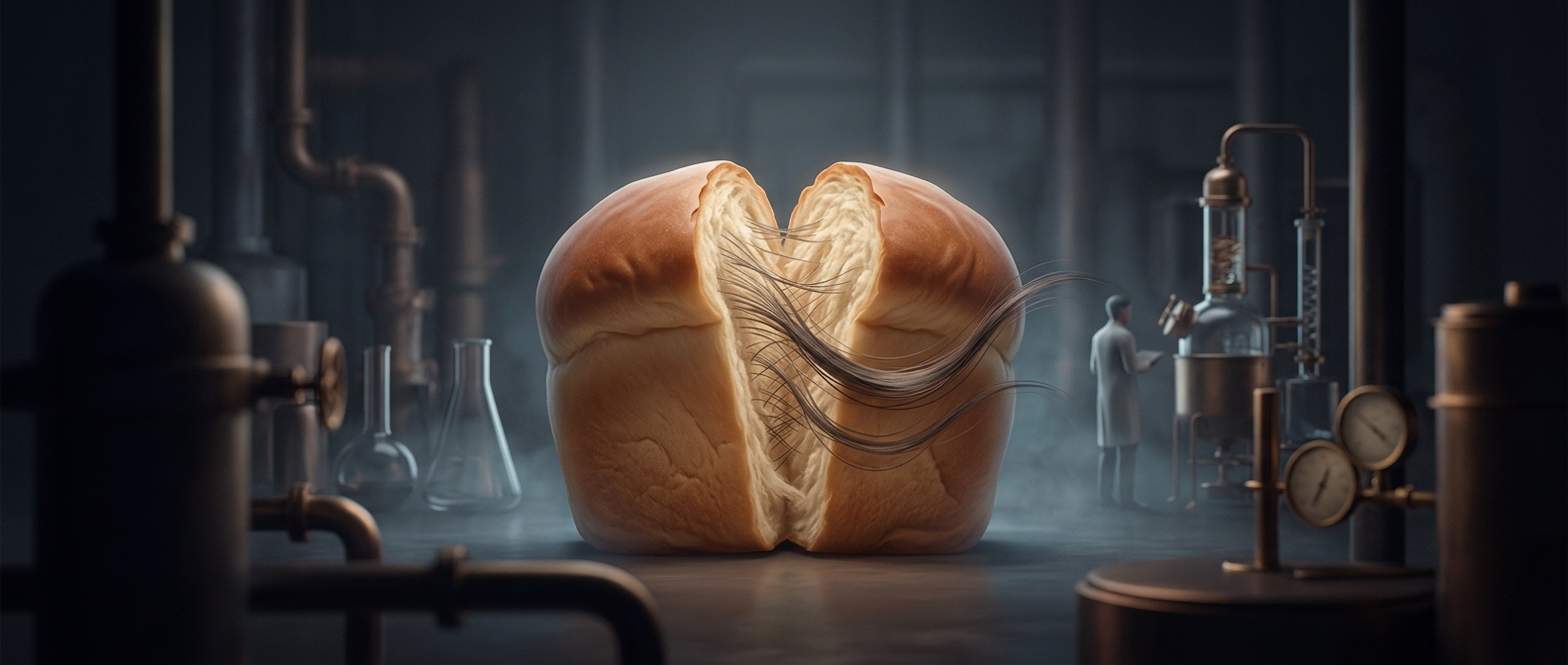
Human hair and duck feathers contain keratin, a protein that can be broken down to obtain L-cysteine. The resulting ingredient is processed and purified; it does not mean strands of hair or feathers are added to bread. L-cysteine can also come from other production methods, so its presence alone does not identify its source.
The surprising part is the connection between a protein-rich raw material and a practical baking tool: once isolated, the same amino acid can help make factory dough easier to handle. The source describes how an ingredient may be made, not what the finished bread looks like or how it behaves.