How a rough surface helps sauce cling
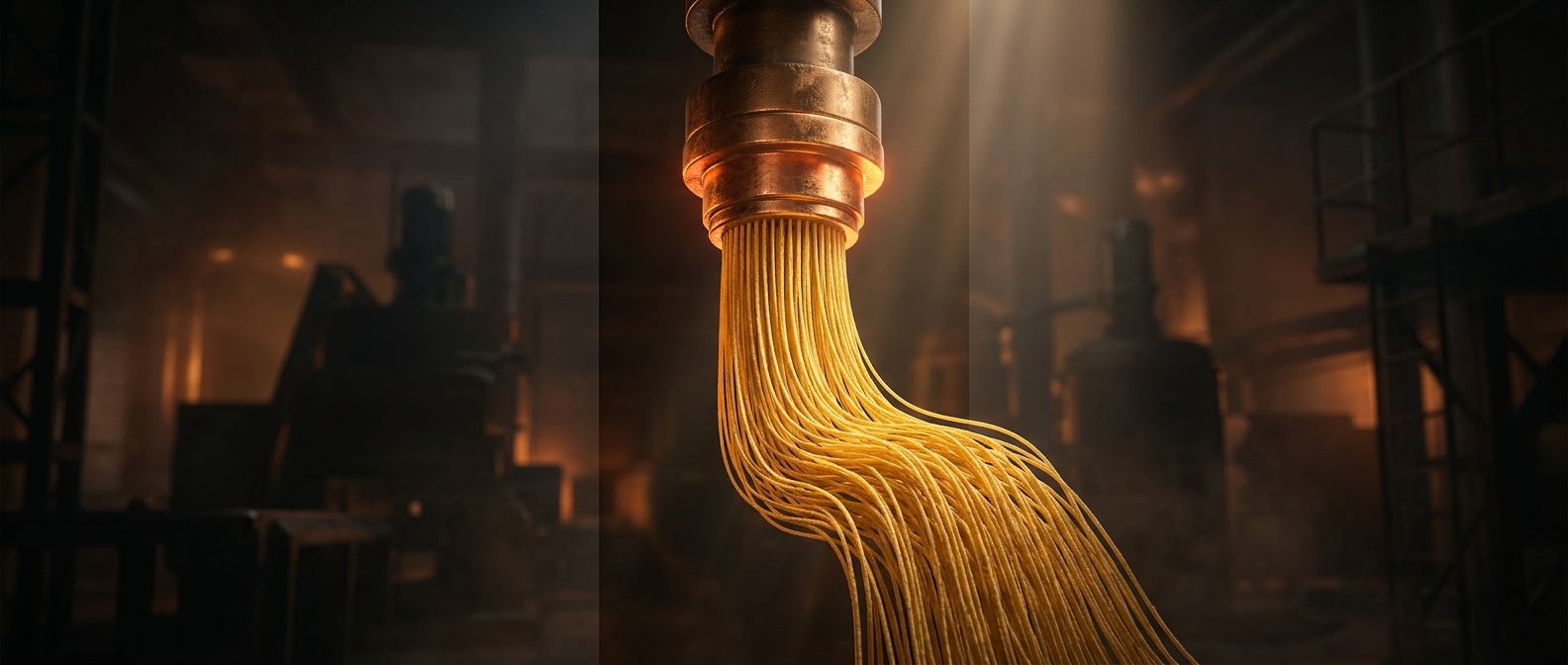
Pasta dough is pushed through a shaped opening, or die, to form each strand. Bronze dies create a less polished surface than smoother dies, leaving fine grooves and irregularities. Those tiny contours give sauce more places to settle than it would find on a slick strand.
The effect is especially noticeable with thicker sauces, which can catch in the ridges instead of sliding off as easily. As pasta cooks, some starch also enters the cooking water. When that starchy water is stirred into a sauce, it can help the sauce coat and cling to the pasta; the bronze-drawn texture gives that coating extra grip.
The tradeoff is in the texture
Bronze-die pasta often feels more textured on the tongue, not just under the sauce. That can make a simple coating of olive oil, cheese, or a light sauce feel more substantial. Smooth-die pasta is not unable to hold sauce, and the difference depends on the sauce and how the dish is prepared. But when sauce tends to slip away, those fine grooves give it somewhere to stay—so more of each bite carries the flavor.