Why a voice can feel personal
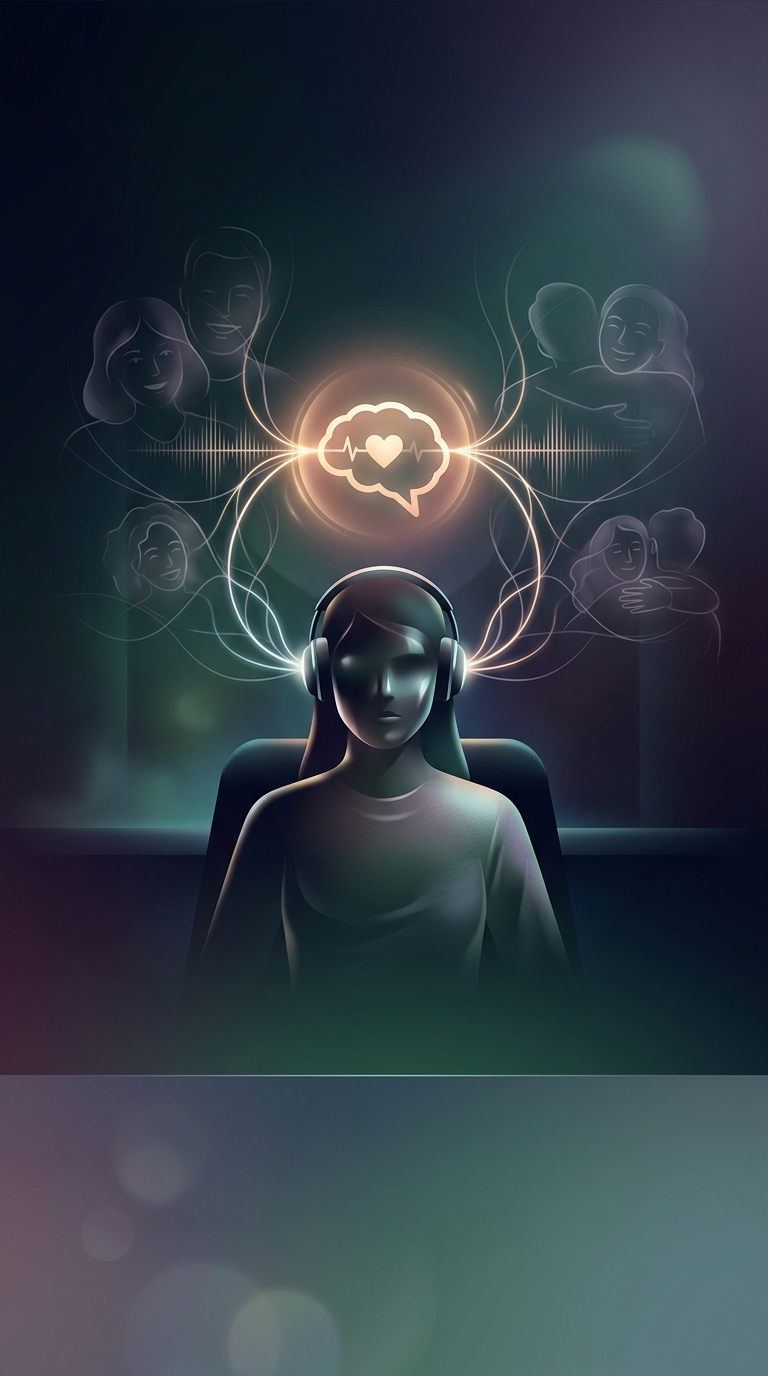
A podcast host speaks into a microphone as if talking to one listener, not addressing a crowd. The voice carries cues people use in ordinary conversation: pauses, laughter, emphasis, and shifts in tone. When a host tells a story or shares a private opinion, those cues can make the exchange feel unusually direct—even though the listener cannot answer and the host cannot hear them.
This one-sided sense of connection is called a parasocial relationship. “Parasocial” means the feeling of knowing someone who does not know you in return. It can feel warm and familiar without being mutual friendship.
Repetition turns a voice into a routine
Podcasts often arrive on a schedule, and listeners may hear the same hosts for hours while commuting, cooking, or winding down. That repetition builds familiarity: listeners learn a host’s catchphrases, habits, and reactions, much as they do with a recurring character in a show. Headphones can intensify the impression of closeness by placing the voice directly in the listener’s ears, often in a quiet, private setting.
The format also asks little of the listener. A host can keep talking through a walk or a chore, creating the feeling of company without requiring a reply. Over time, a familiar voice may become part of the rhythm of the day—and a new episode can feel a bit like checking in with someone you know.
Familiarity is real; reciprocity is not
The feeling is not evidence of a hidden bond or a malfunctioning brain. It is a social response to conversation-like signals, self-disclosure, and repeated exposure. The important difference is that the listener’s attention and affection flow one way. A podcast can feel like company while remaining a broadcast.