Why a Tiny Delay Can Decide a Match
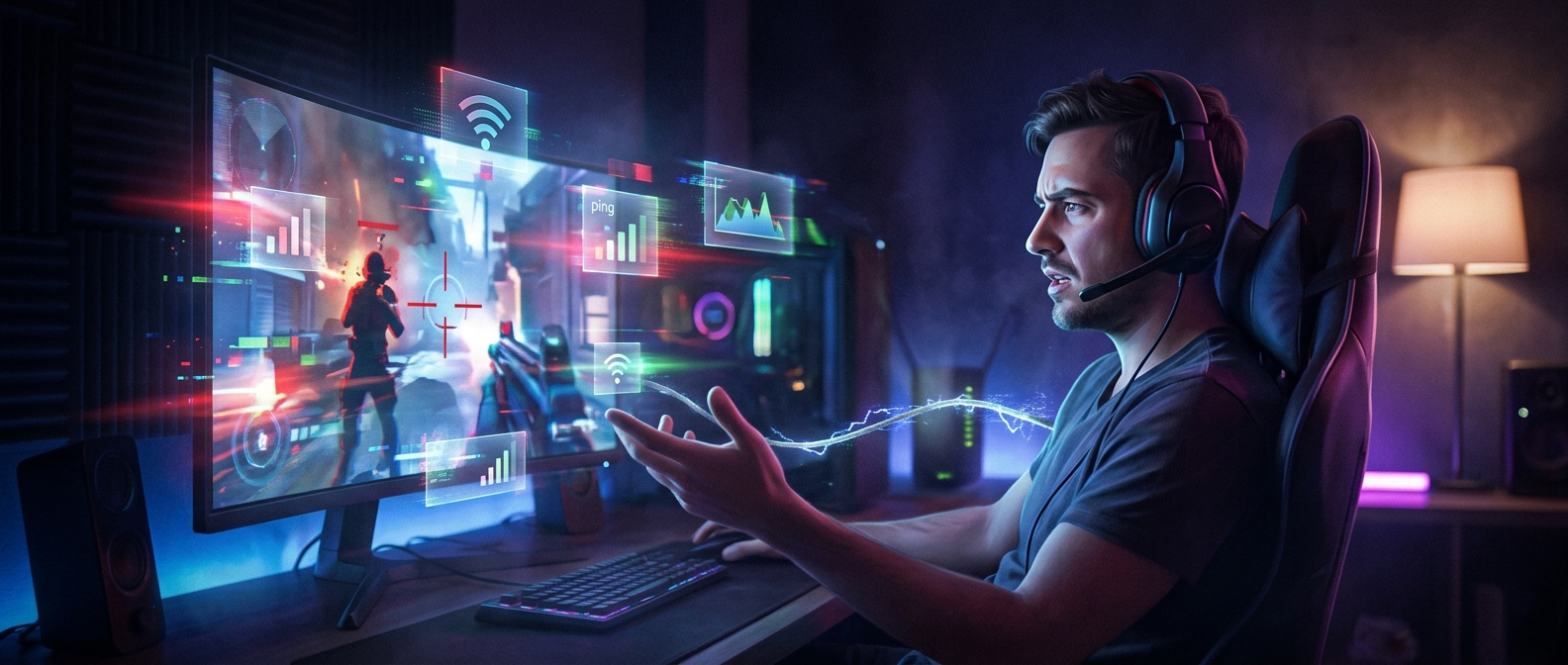
In an online game, your screen is not the game world itself. It is a local display updated with information exchanged between your device and a server—or, in some games, other players’ devices. Lag is a delay in that exchange. Your button press may register late, or the game may keep showing an old position while it waits for fresh information.
That gap is especially punishing in a fast match. A jump, dodge, or shot may depend on timing measured in fractions of a second. If your character appears to be airborne but the server has not received the jump command in time, the game may resolve the action differently from what you saw. The result feels less like an ordinary mistake than like losing control of the rules.
Why the Screen Can Seem to Freeze
Game developers try to hide network delays. A client—the game running on your device—may predict what will happen next so movement looks smooth instead of waiting for every update. When the server’s information arrives, the client corrects its guess. If the prediction was wrong, your character can snap back, stall, or appear to move in an impossible way.
The delay can come from several places: a weak or congested Wi-Fi connection, a long route between devices and the server, or a server struggling to keep up. These problems are not interchangeable, even though they can look similar on screen. A brief interruption can be enough to ruin a carefully timed action without disconnecting anyone outright.
Why It Feels So Personal
Competitive games make cause and effect immediate: press a button, see a move, win or lose. Lag breaks that link. Players can no longer tell whether a missed action was their own error, an opponent’s skill, or a network delay—an uncertainty that makes frustration easy to direct at teammates, equipment, or the service running the match.
The unfairness is most vivid at the decisive moment: the player remembers making the right move, while the game records a different outcome. In a close match, a delay lasting only a moment can turn a clean escape into a loss—and leave everyone arguing over what the screen seemed to show.