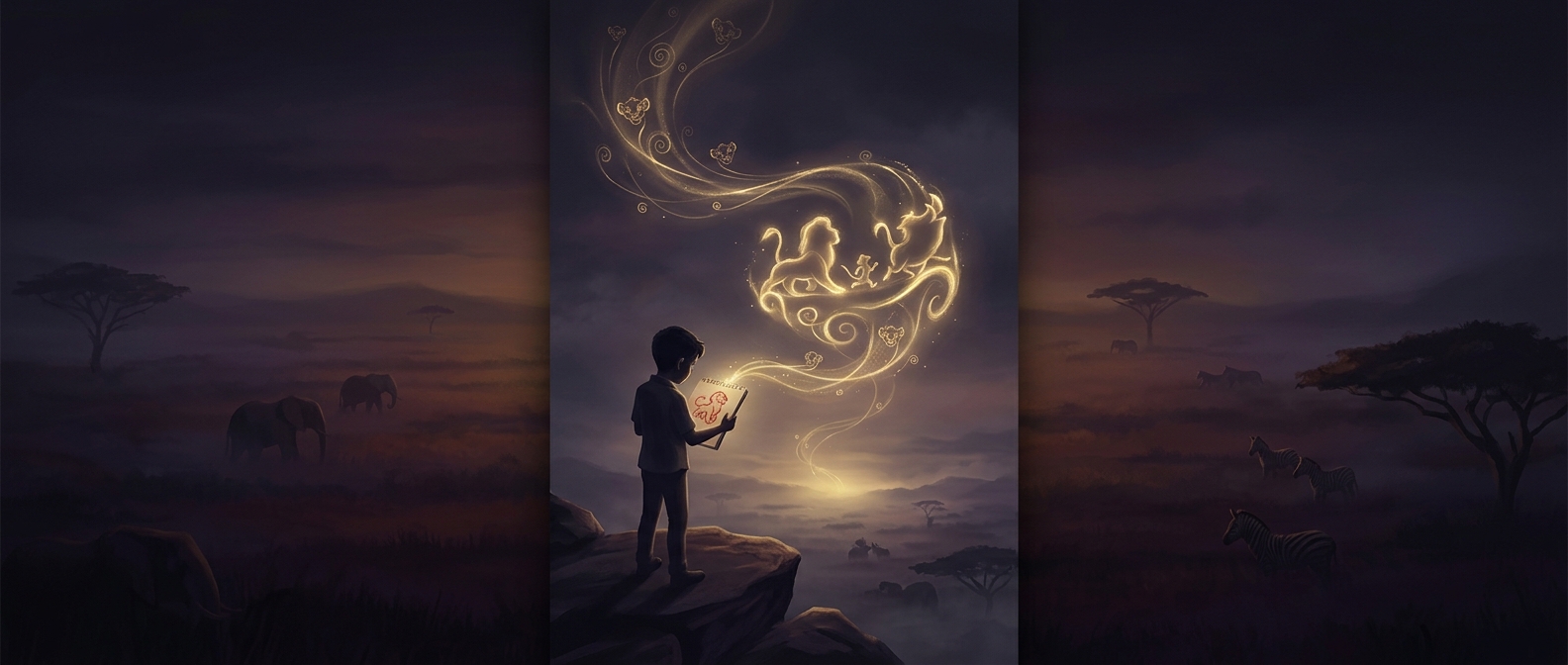
A phrase heard beyond the film set
“Hakuna matata” was not invented as a catchy movie slogan. The filmmakers encountered the Swahili phrase on a research trip to Africa, where a local guide used it. In Swahili, it means “there are no problems” or, more naturally in context, “no worries.” That real-world encounter gave the production a phrase with a sound and meaning that could travel into the story.
From saying to character philosophy
In The Lion King, Timon and Pumbaa turn the phrase into a way of life they offer Simba: stop dwelling on the past and avoid the responsibilities that come with it. That makes the song more than a cheerful pause in the plot. Its carefree promise helps explain why Simba stays away from home—and why returning later requires him to reconsider what he owes his family and kingdom.
The phrase’s meaning also gives the film a useful tension. “No worries” sounds liberating when Simba is grieving and overwhelmed, but it cannot resolve the problems he has left behind. The same words can be comfort, comic relief, and an excuse to avoid responsibility.
A cultural encounter becomes a brand
The phrase moved from a guide’s everyday speech into a scripted scene and a widely recognized song. Disney later trademarked it for merchandise, carrying it beyond the film as a commercial identifier. Its path is a reminder that a memorable line can have two lives: in the story, where it shapes a character’s choices, and in the marketplace, where it becomes part of the film’s identity.