How the Zaouli dancer separates speed from stillness
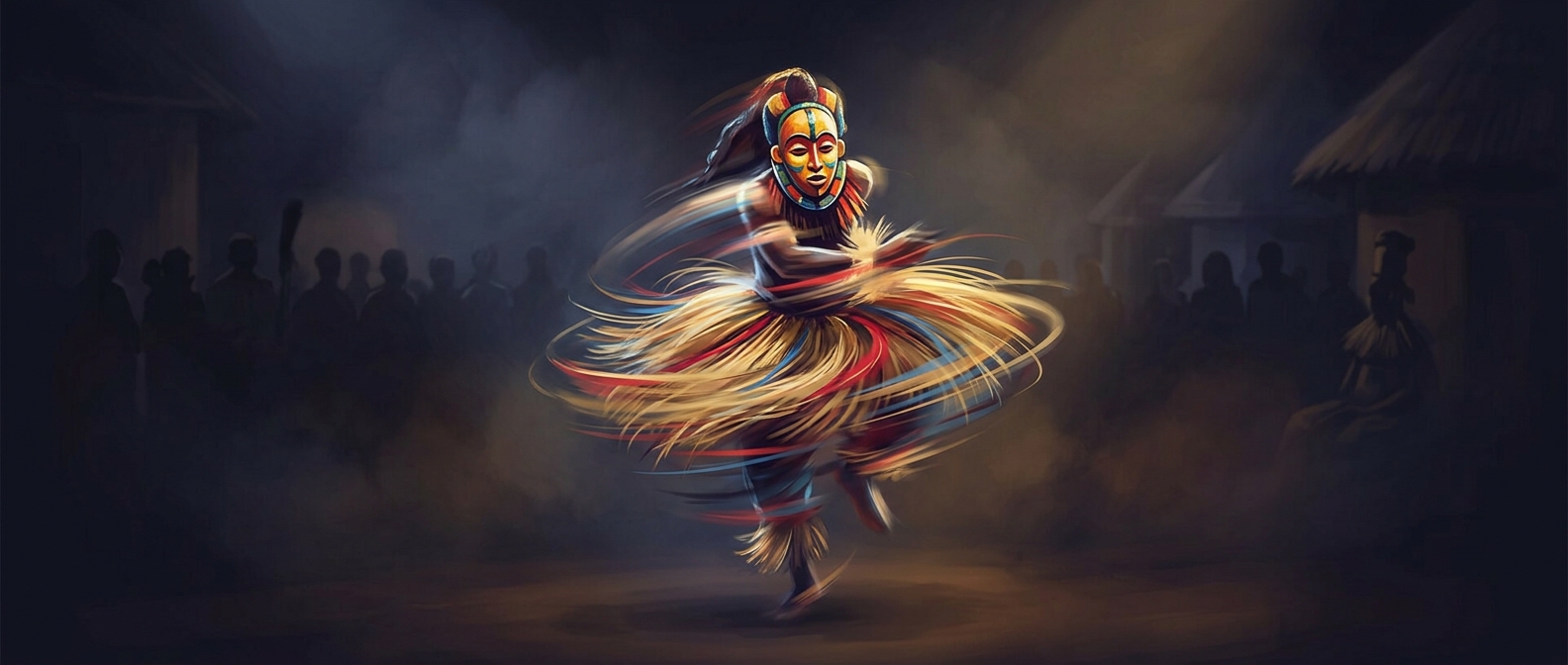
The masked dance known as Zaouli comes from the Guro communities of central Côte d’Ivoire. Its startling effect depends on contrast: the dancer’s feet flick and stamp in quick patterns while the torso stays comparatively steady, making the movement look almost mechanically divided.
That stillness is an active skill, not a lack of motion. The dancer keeps the body’s center controlled while shifting weight rapidly from one foot to the other. A compact, upright upper body makes each change below more visible; the mask and costume add to the striking silhouette, but the footwork supplies the illusion of extraordinary speed.
A community performance, not just a display of agility
Zaouli is performed to live music and is part of Guro cultural life. The masked figure is not simply a costume for an individual entertainer: the dance is a shared performance, with musicians and community members shaping its rhythm and setting. Its popularity has also carried it beyond local gatherings, where audiences often first notice the astonishing feet.
The memorable trick is really a feat of coordination: the dancer makes the upper body a steady reference point, so the feet seem to move even faster than they do. Watch the shoulders, then the ankles—and the apparent separation between them becomes the dance’s central effect.