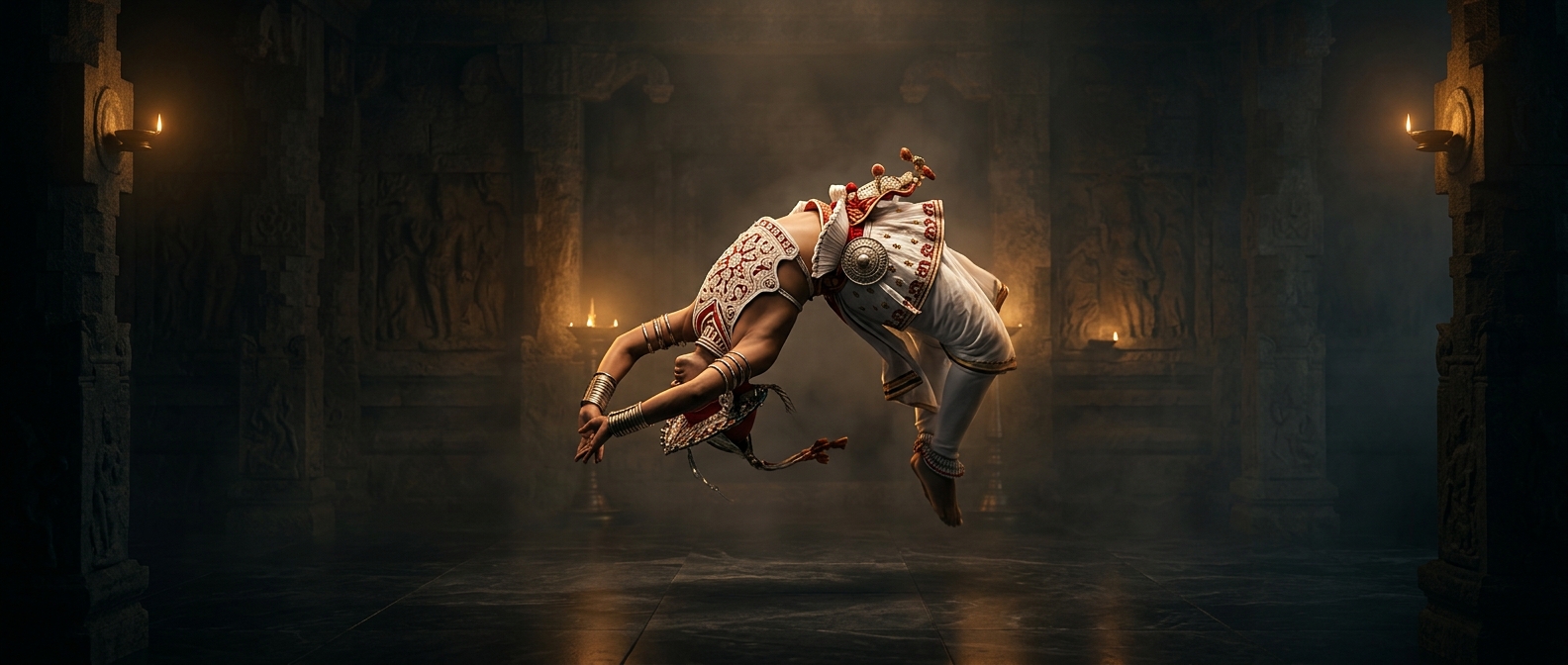
A Dance Built Around the Drum
Kandyan dance comes from the central highlands of Sri Lanka, especially the region around Kandy. Its movements are closely tied to percussion: a drummer’s changing patterns give dancers cues for shifts in pace and energy. The geta bera, a double-headed barrel drum associated with Kandyan performance, can mark a steady pulse while sharper strikes accent a leap, turn, or landing.
That rhythm makes an acrobatic passage more than a display of strength. A dancer must time the takeoff and landing to the beat while keeping the movement legible to the audience. Spinning leaps and backflips are demanding feats, but they also fit a form in which precise footwork, posture, and rhythmic control matter alongside spectacle.
The Headdress Signals a Tradition
The elaborate costume, including its bright metal headdress, is associated with the ves style of Kandyan dance. The costume is not simply decoration: its distinctive silhouette helps identify the performance as part of a recognized dance tradition. It also makes balance and controlled movement more challenging, so the dancer’s athleticism is visible even in the way they hold their body between tricks.
Today, visitors may encounter Kandyan dance in staged performances as well as at cultural events. A short acrobatic sequence can make an immediate impression, but the drums reveal the structure underneath: the dancer is not flipping at random. Each movement unfolds within a musical exchange between performer and percussionist.