From penciled coordinates to a physical grid
The game’s central challenge is a search conducted through coordinates. Each player hides a fleet on a grid, then calls out squares on the opponent’s grid, trying to locate ships without seeing their placement. A pencil-and-paper version could track guesses with marks; the later plastic board made those marks physical.
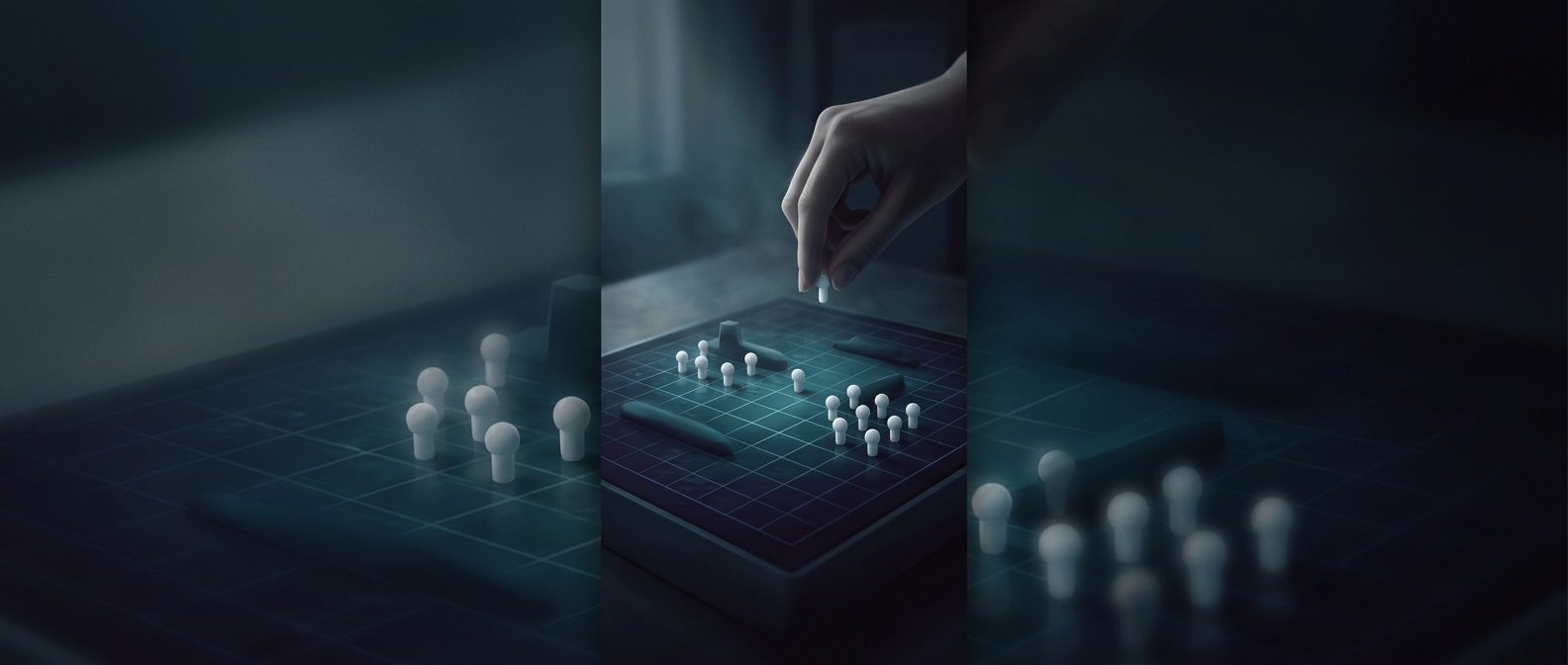
That shift changed the feel of play without changing its basic logic. A peg records a shot in a specific square, so players can scan a growing pattern of misses and hits instead of relying on handwritten notes. The opposing fleets remain hidden, while the visible board turns each guess into a small piece of evidence for the next one.
What the plastic board made possible
The pegs also made the game easier to reset and replay: remove them, set up the fleets again, and the grid is ready for another match. The board separates the two players’ information, too. Each person can track their own guesses while keeping their fleet’s location concealed from the opponent.
That is the useful design change behind Battleship’s familiar equipment. The plastic did not create the strategy; it gave the strategy a durable, legible place to live. A search that once depended on paper marks became a tabletop contest of hidden positions, remembered evidence, and increasingly informed guesses.