How a liquid solvent becomes a fire hazard
A solvent does not have to be boiling to release vapor. Molecules escape from its surface at ordinary room temperatures; warmer conditions and a larger exposed surface can speed that process. The vapor mixes with air, sometimes spreading beyond the open container before anyone can see or smell how far it has traveled.
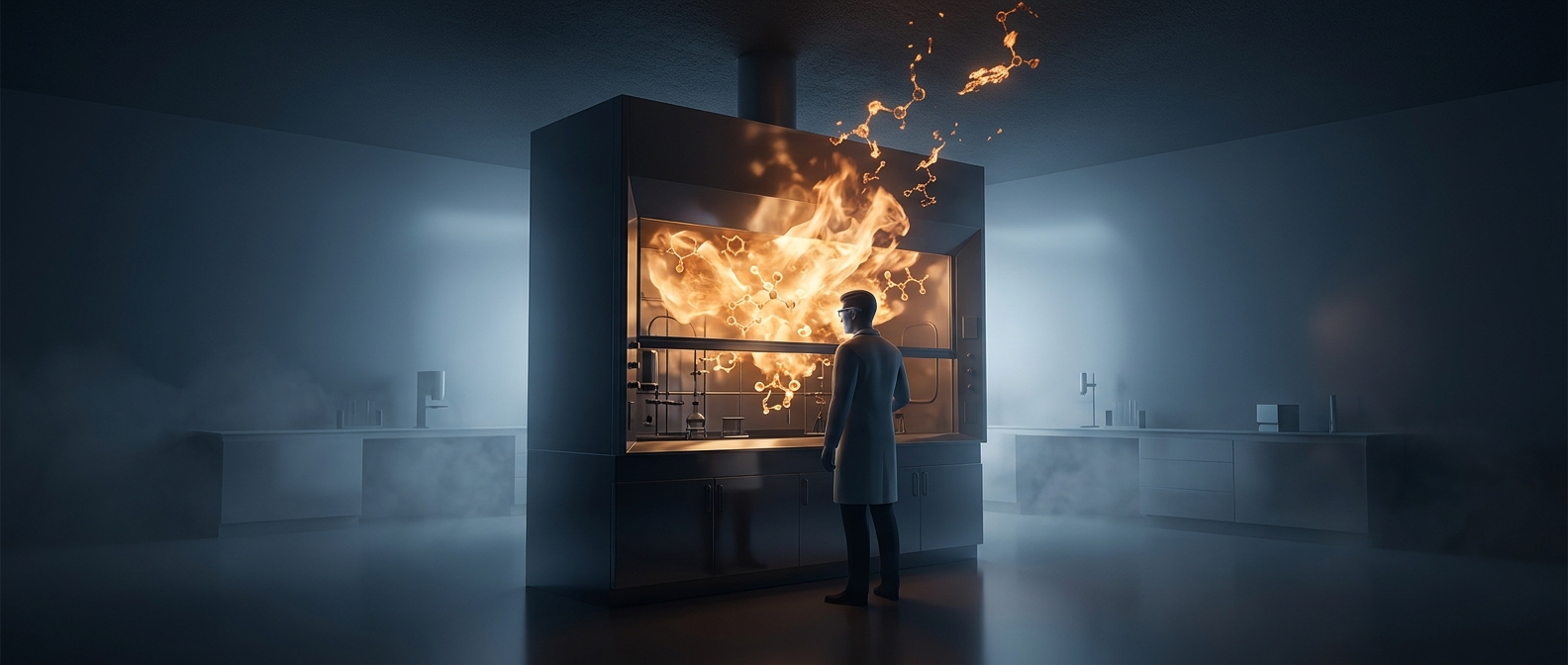
A fire can start only when the vapor–air mixture is within a flammable range: too little fuel or too much fuel can prevent it from catching. But where the mixture is just right, a small ignition source—a spark, hot surface, or flame—can set it alight. The flame may race through the vapor cloud and briefly flare across a work area, even if the original liquid remains in its container.
Why the hazard is easy to miss
The visible liquid is not the whole danger. Vapors can move away from it, and different solvents behave differently, so a container’s appearance does not reveal where an ignitable mixture may have formed. A flash fire is also different from a vessel bursting: it is rapid flame travel through vapor, though the heat and resulting fires can still cause severe injuries.
Control the path from vapor to ignition
Lab safety works by interrupting that chain: keep containers closed when possible, use appropriate ventilation to capture vapor, and keep ignition sources away. A fume hood is designed to draw air—and airborne chemicals—away from the worker, but it is not a substitute for correct handling or for keeping flames and sparks out of the work area. Eye protection guards against splashes; preventing a vapor fire requires controlling the vapor and its route to ignition.