How an electric field carries a push
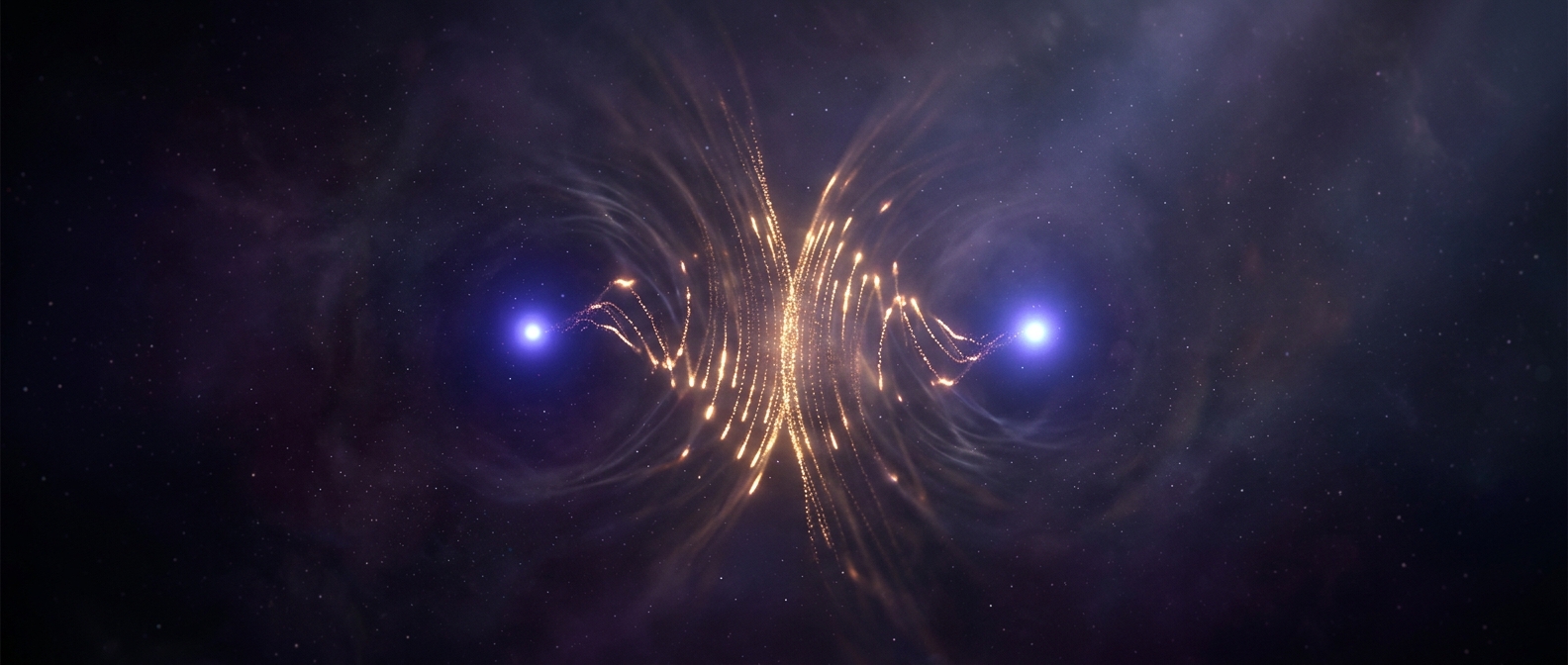
An electron does not need to make contact with another electron to affect it. Each electron has electric charge, and that charge creates an electric field: a pattern of influence extending through the space around it. A second electron in that region experiences a force. Because both charges are negative, the force points away from the first electron, so the two repel.
The field is not a stream of particles or a material tether stretched between the electrons. It is part of the physical description of how electric forces exist in space. The electrons can remain separated while the field at one location determines the force on a charge there.
What happens as the gap changes
For two stationary point charges, the electric force grows stronger as the distance between them shrinks, and weaker as it grows. This relationship is described by Coulomb’s law. It helps explain why the space between the electrons matters: changing the separation changes the strength of the interaction, even though neither electron has to touch the other.
In a simple picture, one electron’s field is already present where the other sits. The second electron responds to the field at its own position. That local cause-and-effect description replaces the idea that one object must reach across the gap and physically shove another.
The field is not instantaneous news
A change in an electric field does not spread everywhere at once. Changes propagate at the speed of light, so if an electron moves, a distant electron responds to the updated field only after that change has had time to travel across the intervening space. The familiar notion of an immediate pull or push is a useful approximation when the charges move slowly and are close enough for the delay to be negligible.
So the gap is not empty of physical significance: it is where the field exists and through which changes in that field travel.