How a familiar animal can become hard to recognize
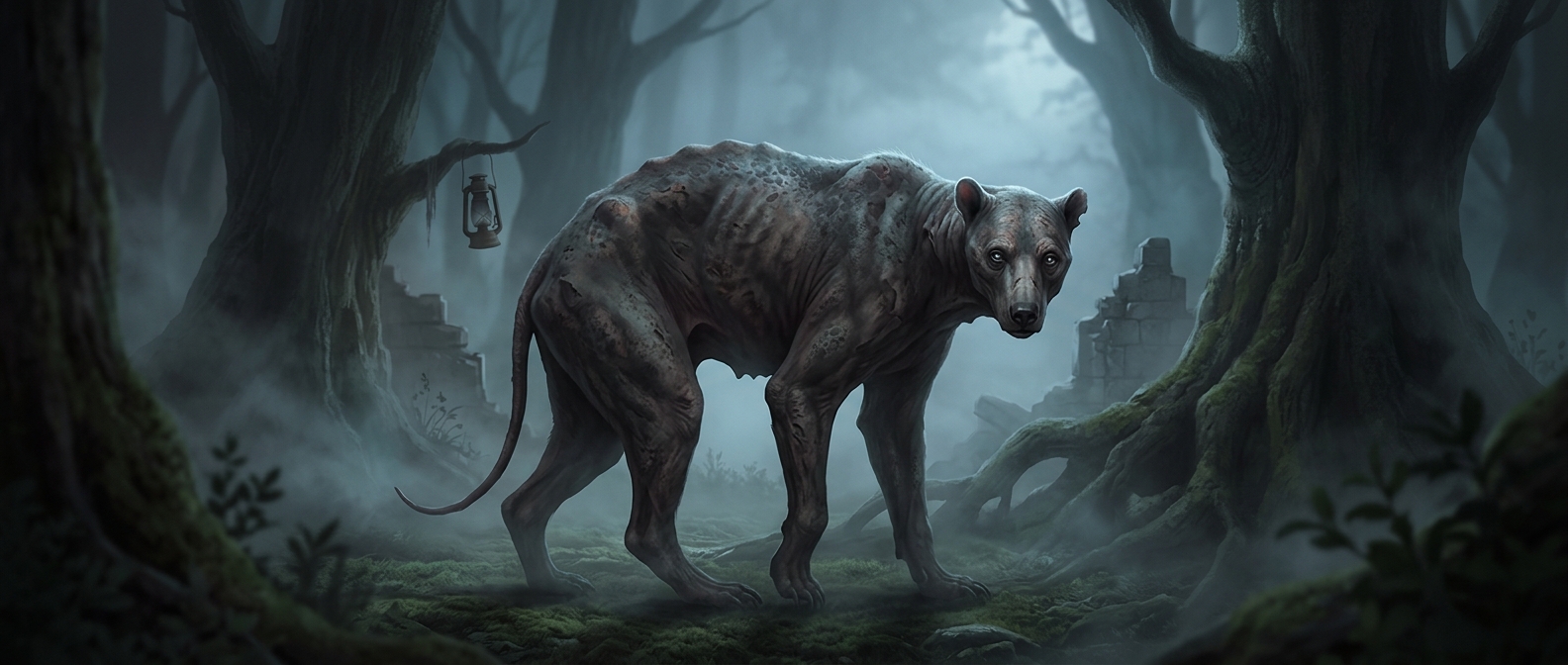
Mange is a skin disease caused by tiny parasitic mites. In coyotes, the mites burrow into the skin, triggering intense irritation and scratching. As the skin becomes inflamed and damaged, fur can fall out—sometimes across much of the body. The result is an animal whose outline and proportions look unfamiliar, especially when its exposed skin is roughened or crusted.
That change can make an ordinary coyote seem like something else. Fur normally softens the shape of the ears, muzzle, and body; without it, those features stand out starkly. A sick animal may also move or hold itself differently, adding to the impression that a brief glimpse shows an unusual creature.
Why darkness makes the mistake easier
At night, people receive less visual detail. A distant animal may register as a silhouette, while shadows hide the cues that would identify its species. The brain then has to interpret an incomplete picture. If the animal is already unusually hairless, familiar details are missing, and an observer may settle on a more dramatic explanation before getting a clearer look.
Mange can also be serious for the coyote. Persistent itching and damaged skin can leave an animal weakened, and severe cases may make it harder to stay warm or find food. So the startling appearance is not just a visual trick: it can reflect a genuine illness. A supposed monster seen briefly at the edge of a road may be a recognizable wild animal transformed by disease and poor visibility.