How a Bear’s Shape Can Become a Bigfoot Sighting
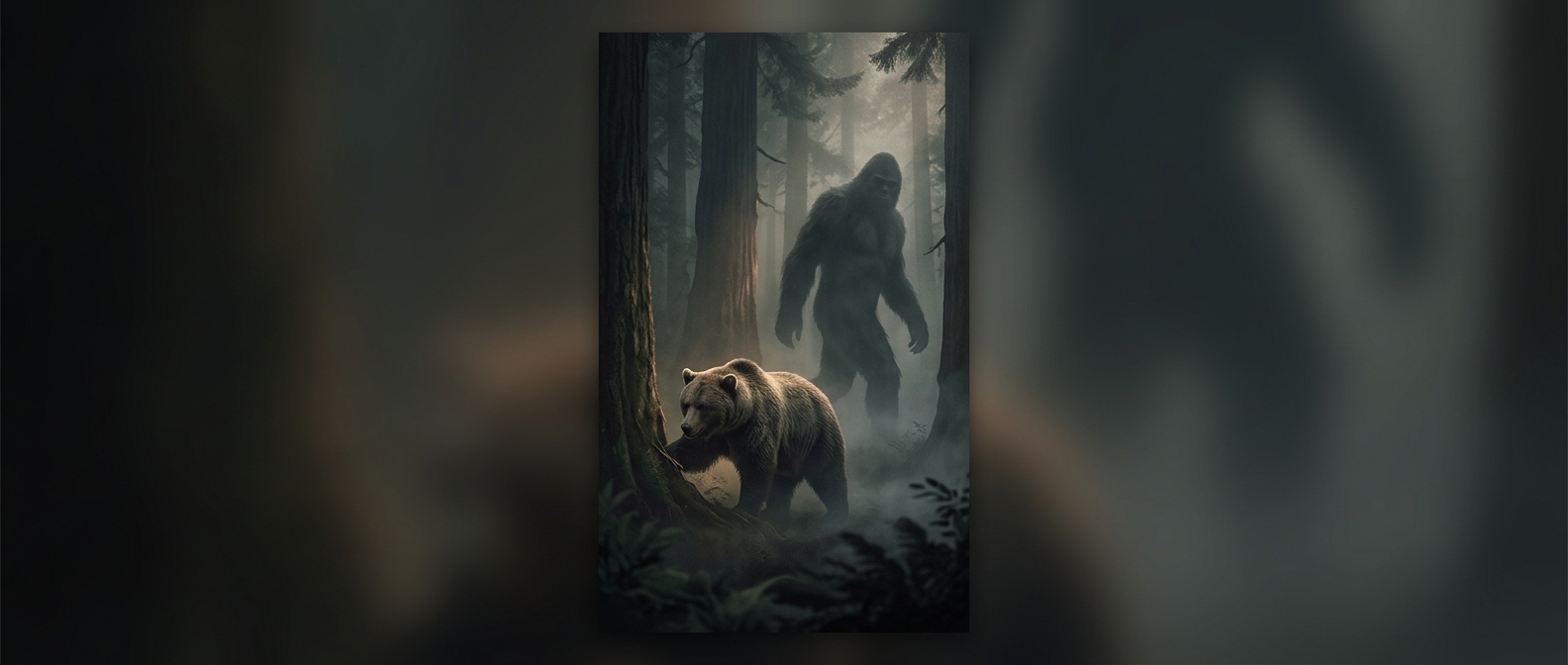
A black bear standing upright is usually investigating something, not walking around like a person. It may rise to sniff the air, look over vegetation, or get a better view. From a distance, though, a glimpse of its broad shoulders and long forelimbs can suggest a tall, two-legged figure—especially when branches hide its lower body or distort its outline.
The encounter may last only seconds. In dim woods, a witness has few reliable clues about an animal’s size, posture, or distance. A bear that is closer than it seems can look enormous; if it drops back onto all fours or disappears into cover, there may be no clear view to resolve the impression. That makes the first, startling interpretation difficult to check.
What an Overlap on a Map Can—and Cannot—Show
Black bears live across broad areas, so reports of a large, dark figure in those same places are ecologically plausible: a bear could be present even if no one recognizes it as one. The overlap helps explain how an ordinary animal might supply the shape behind some accounts. It does not establish that every report has the same cause, or that a map can identify what any particular witness saw.
That distinction matters because a sighting is an interpretation made under uncertain conditions, not simply a clear view of an animal. In bear country, a momentary upright silhouette can leave a memory of a biped—and a story that travels farther than the bear itself.