A palace designed to look like a storybook past
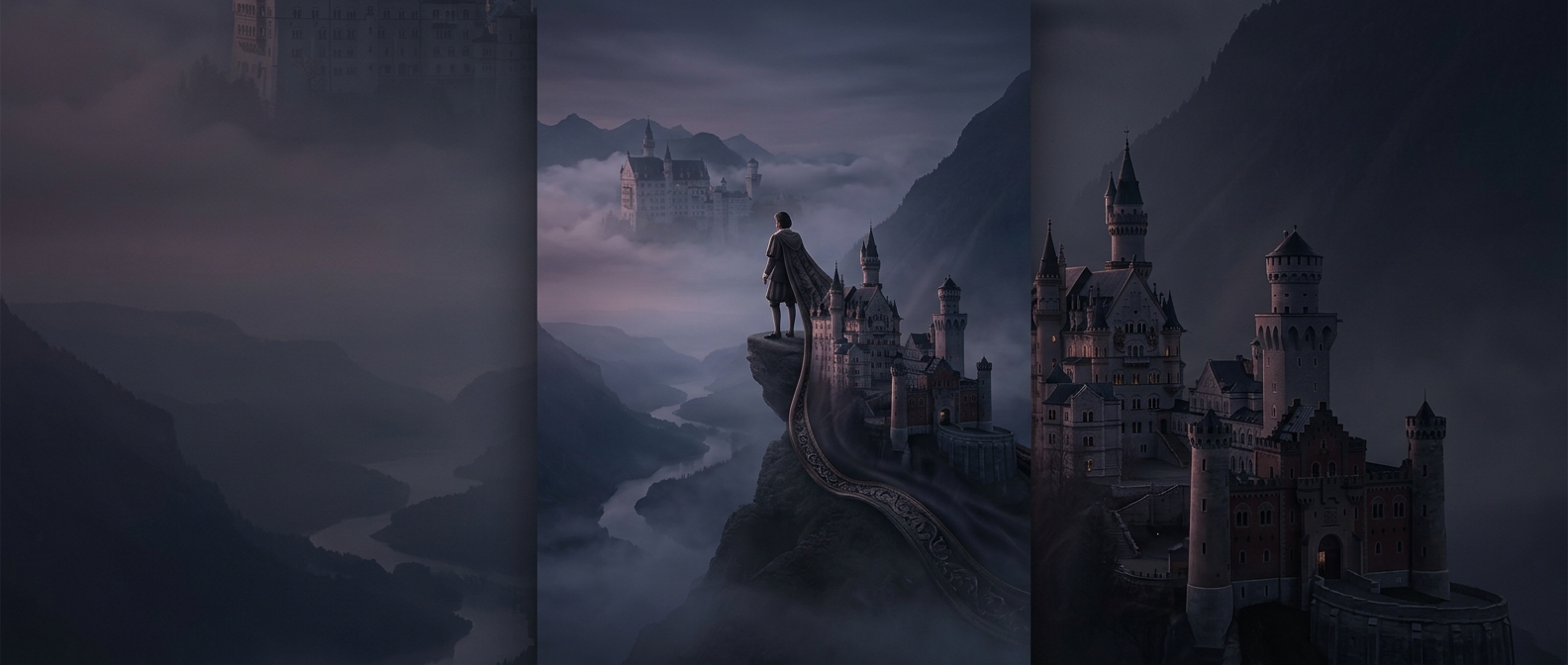
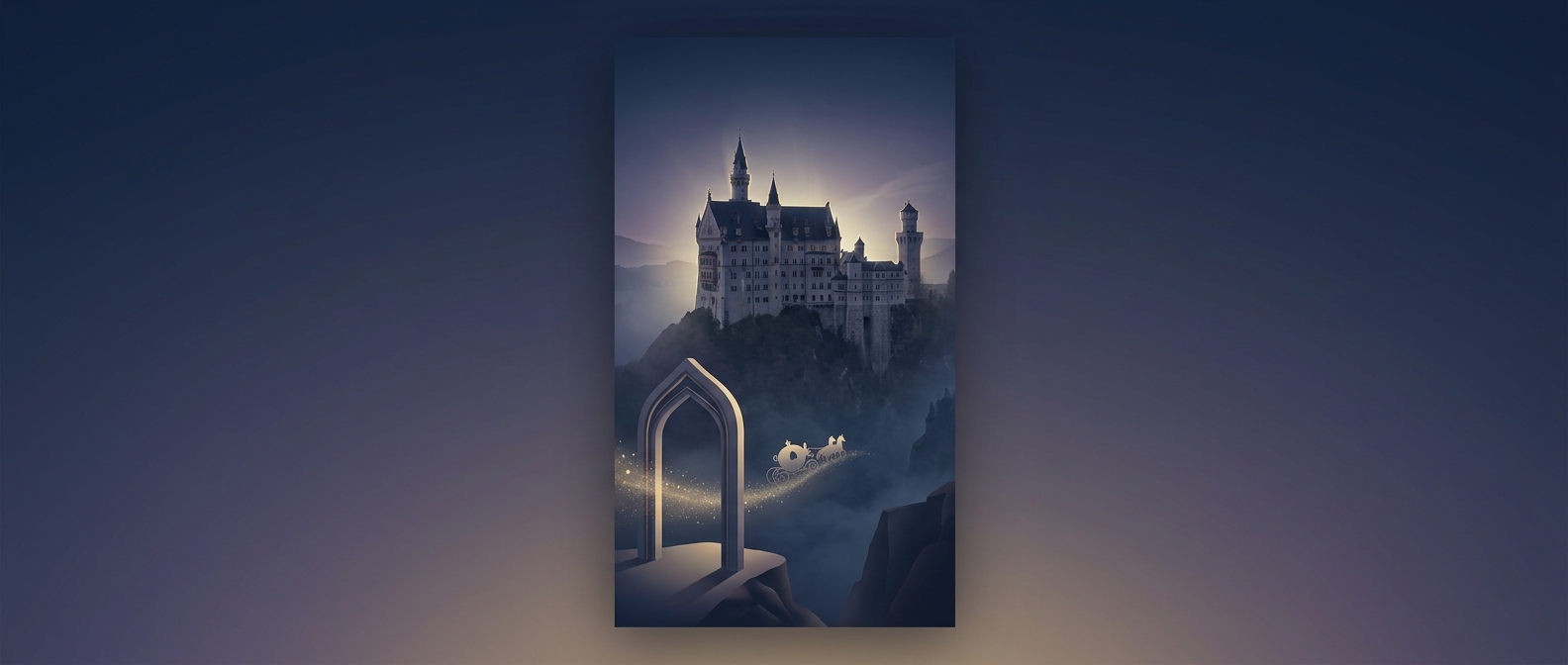
Neuschwanstein rises above a narrow valley in Bavaria, its pale walls and pointed towers set against the Alps. Yet it was not an authentic medieval stronghold. Commissioned by King Ludwig II in the 19th century, it used medieval-looking forms to create an imagined past—one shaped by romantic legends, opera, and royal spectacle.
That distinction helps explain its visual force. A real fortress is built around defense: thick walls, practical entrances, and positions that control the surrounding land. Neuschwanstein instead presents a theatrical silhouette. Its towers and steep roofs make it recognizable from a distance, while its mountain perch turns the approach into part of the scene.
From Bavarian landmark to animated shorthand
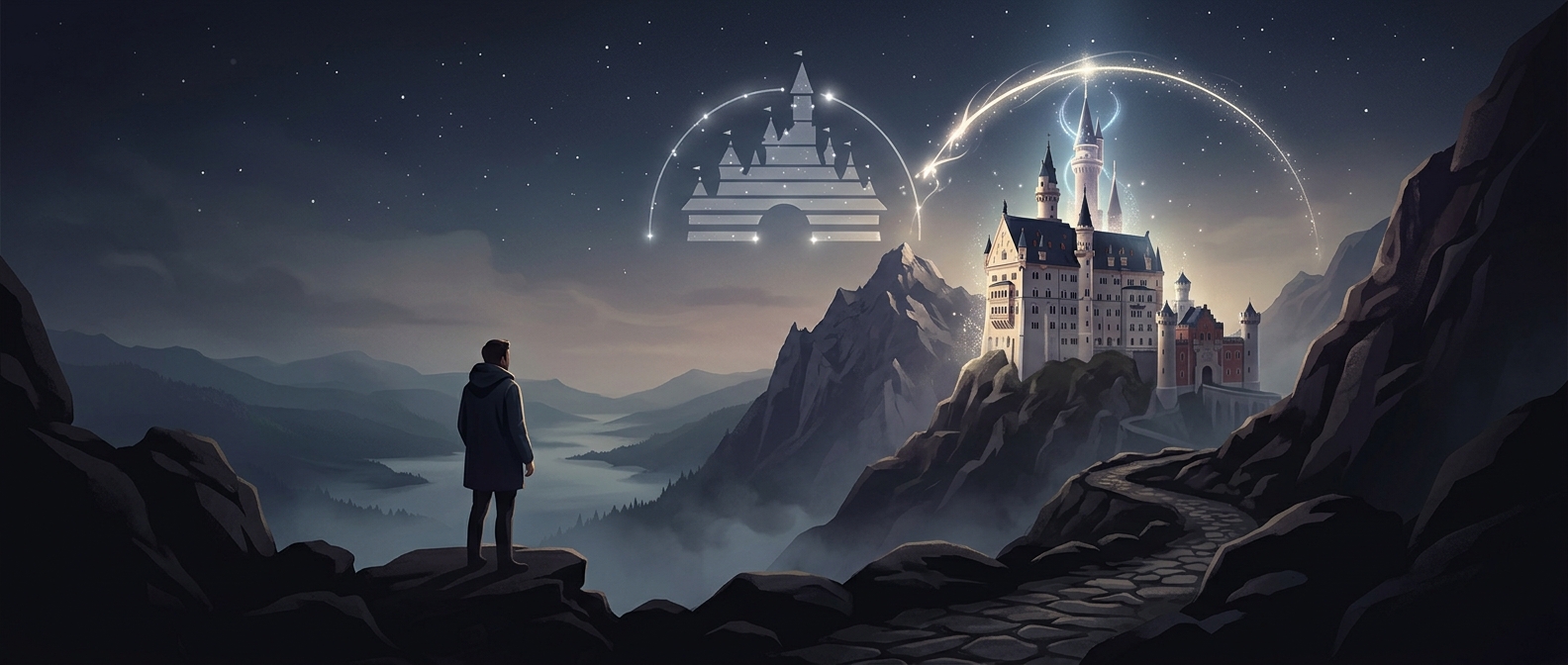
Animation benefits from exactly that kind of clarity. A castle needs to read instantly as a place of wonder, even when it appears briefly or at a distance. Neuschwanstein’s clustered towers and dramatic setting offer a compact visual vocabulary that can be simplified into a few memorable shapes. Disney’s fairy-tale castles drew on that vocabulary, especially in the design associated with Sleeping Beauty.
The palace also carried a useful story in its architecture: it looked as though it belonged to a legend, even though it was a modern creation for its time. That made it more than a convenient picture reference. It showed how a building could manufacture the feeling of a fairy tale—and how the same silhouette could travel from a Bavarian mountainside into animation.