Why Houska Castle’s layout feeds the legend
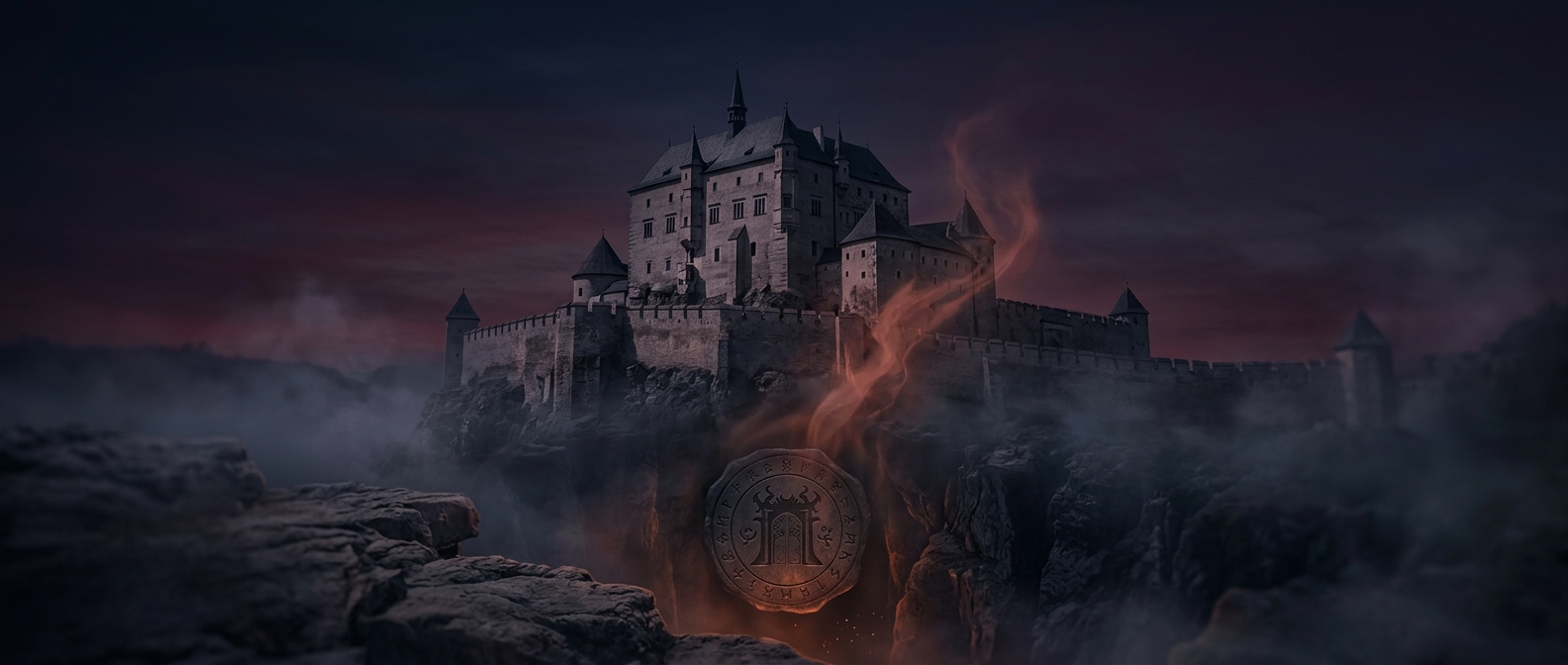
Houska Castle stands in a wooded part of northern Bohemia, in today’s Czech Republic. Built in the 13th century, it is striking not because it dominates a major city or guards an obvious border crossing, but because its arrangement feels unusual: the castle’s chapel sits within the complex, close to the spot that local legend identifies as a dangerous opening in the ground.
That placement gives the story its force. In a conventional fortress, walls and towers protect people from threats outside. In the tale of Houska, the chapel becomes part of an inward-facing defense: a sacred building placed above a supposed fissure to hold danger down. The architecture does not prove the legend, but it gives visitors a physical place around which to picture it.
From an odd place to a memorable story
A pit said to reach the underworld turns an unexplained feature into a clear narrative: something is below, something might climb out, and the castle exists to prevent it. That is a different kind of suspense from a ghost story set in an abandoned ruin. Here, the building itself seems to have a job, and every enclosed courtyard or chapel doorway can feel like part of the containment system.
The legend is folklore, not evidence that a supernatural gateway exists. Its lasting appeal lies in how neatly it transforms an unusual castle into a dramatic puzzle. At Houska, the most unsettling question is not simply what might be beneath the chapel, but why the building’s layout makes that question so easy to imagine.