A medieval-looking castle built for a modern king
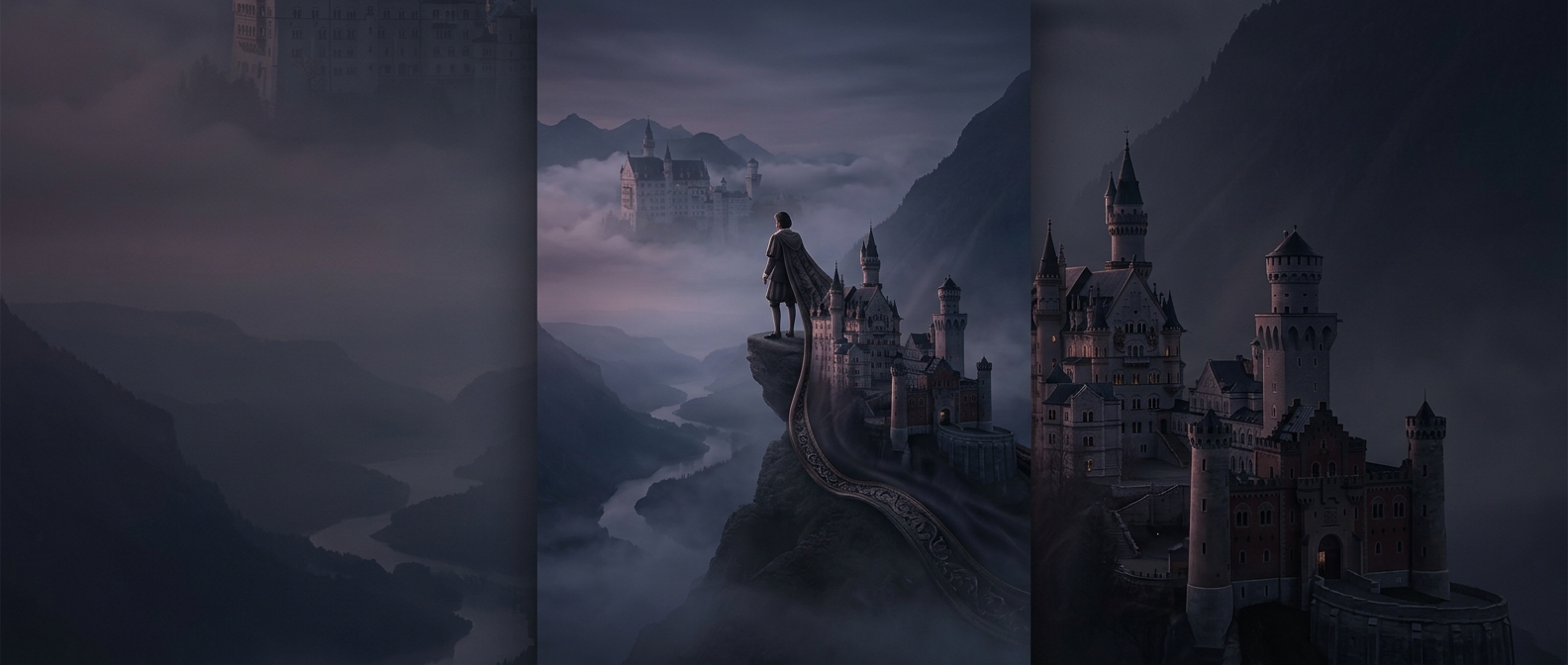
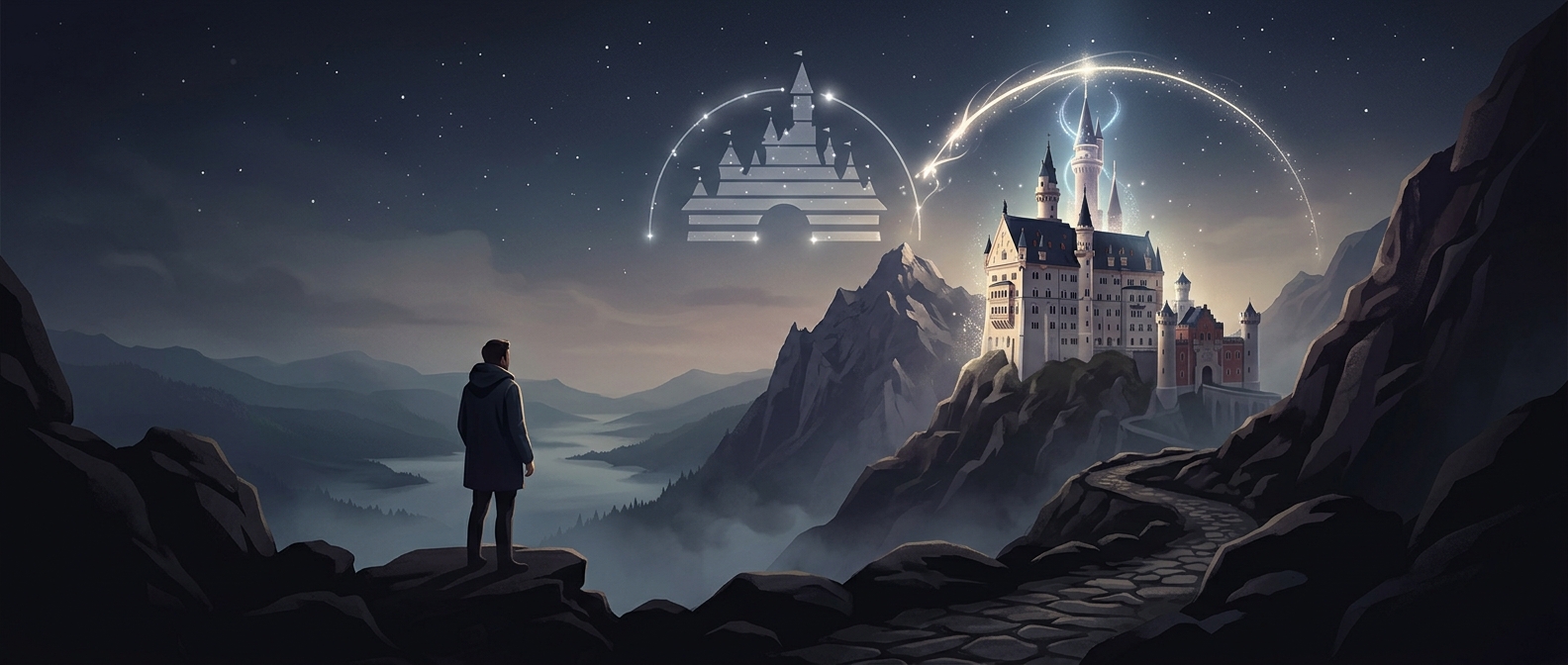
Neuschwanstein rises above the village of Hohenschwangau in Bavaria, but it was not designed as a working medieval fortress. King Ludwig II commissioned it in the 19th century as a private retreat shaped by romantic visions of the Middle Ages. Its towers, pale stone walls, and dramatic mountain setting turn that vision into a striking silhouette—the kind of outline that can suggest a fairy tale at a glance.
Fantasy made architectural
The castle’s design draws on medieval styles, but its rooms also reflect Ludwig’s fascination with German legends and the operas of composer Richard Wagner. The result is less a practical stronghold than a carefully staged world: architecture and decoration meant to make the king feel surrounded by the stories he admired.
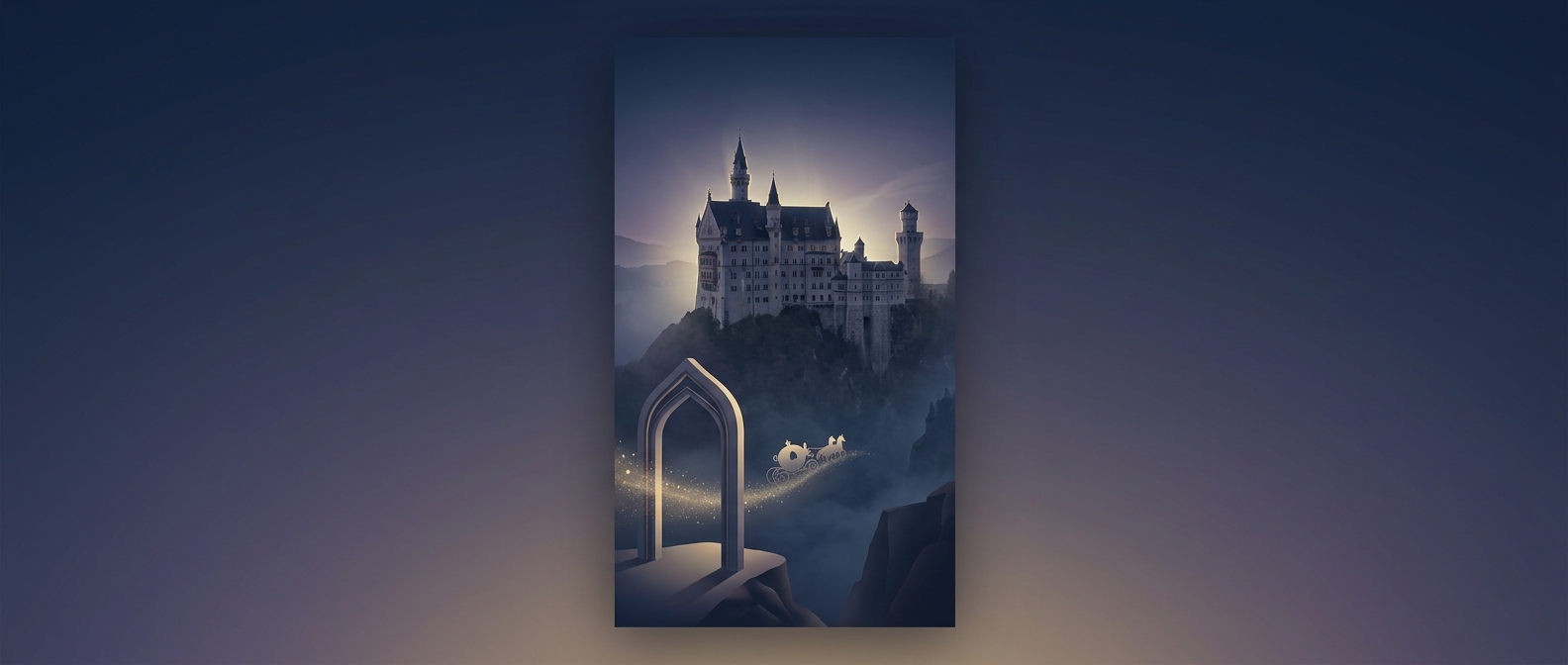
That blend of towers, storybook imagery, and theatrical setting is why Neuschwanstein is often associated with Disney’s castle logo. The connection is visual rather than a claim that the logo reproduces the building exactly: the castle offers a ready-made image of what a fairy-tale castle should look like.
An unfinished private dream becomes a public landmark
Construction began in 1869, and the castle was still incomplete when Ludwig died in 1886. It soon opened to visitors, transforming a project intended for one king into a destination seen by millions. Its appeal rests partly on the contrast between the fantasy it presents and the real history behind it: a 19th-century creation, perched above a Bavarian village, that came to stand for an imagined medieval world.