A fortress that became a home
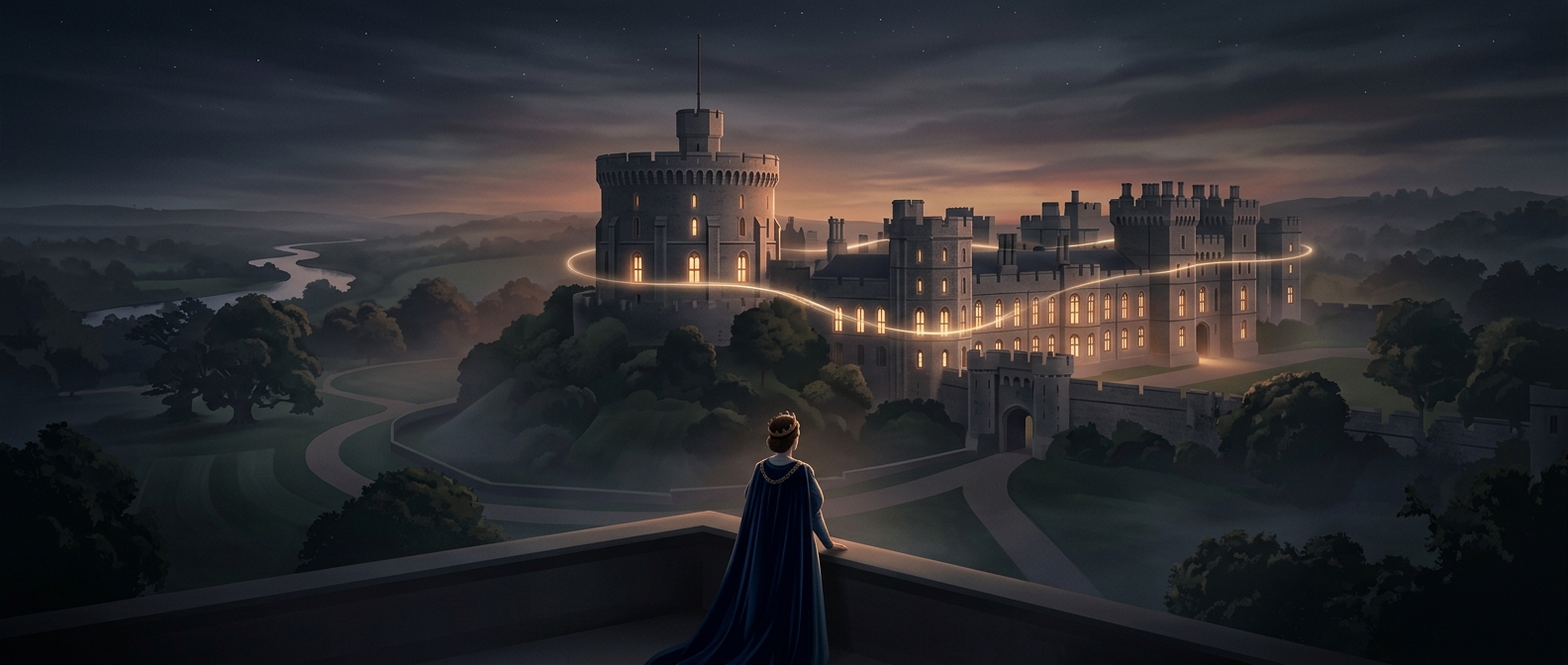
Windsor Castle began as a defensive stronghold above the River Thames, built after the Norman Conquest in the 11th century. Its position helped guard an important route west of London. But a fortress meant to control territory could also serve as a royal residence: its walls offered security, while its rooms gave the monarch a base near the capital.
Each reign left a different castle
Windsor was not preserved as a single, unchanged medieval building. Monarchs expanded and refitted it to suit changing needs and tastes. A defensive complex gradually gained grand state rooms for ceremonies and visitors, as well as private apartments for everyday life. Later work could modernize a residence without erasing the older layers around it.
That pattern is why the castle feels less like a period piece than a working royal home built up over centuries. Its long occupation depends on adaptation: rooms can be altered, restored, or repurposed while the wider residence remains in use.
Continuity in a living place
The distinction between a palace and a museum matters here. Windsor’s historic rooms and collections preserve the past, but the castle has also continued to function as a royal residence. Its architecture records that practical balance: a fortress’s protective foundations, ceremonial spaces for public duties, and domestic quarters for life behind the scenes.
The result is a building where the story of monarchy is visible not only in portraits and furnishings, but in the accumulated renovations themselves—each generation making an old stronghold usable for its own time.