Why the Knight Can Slip Through a Crowded Board
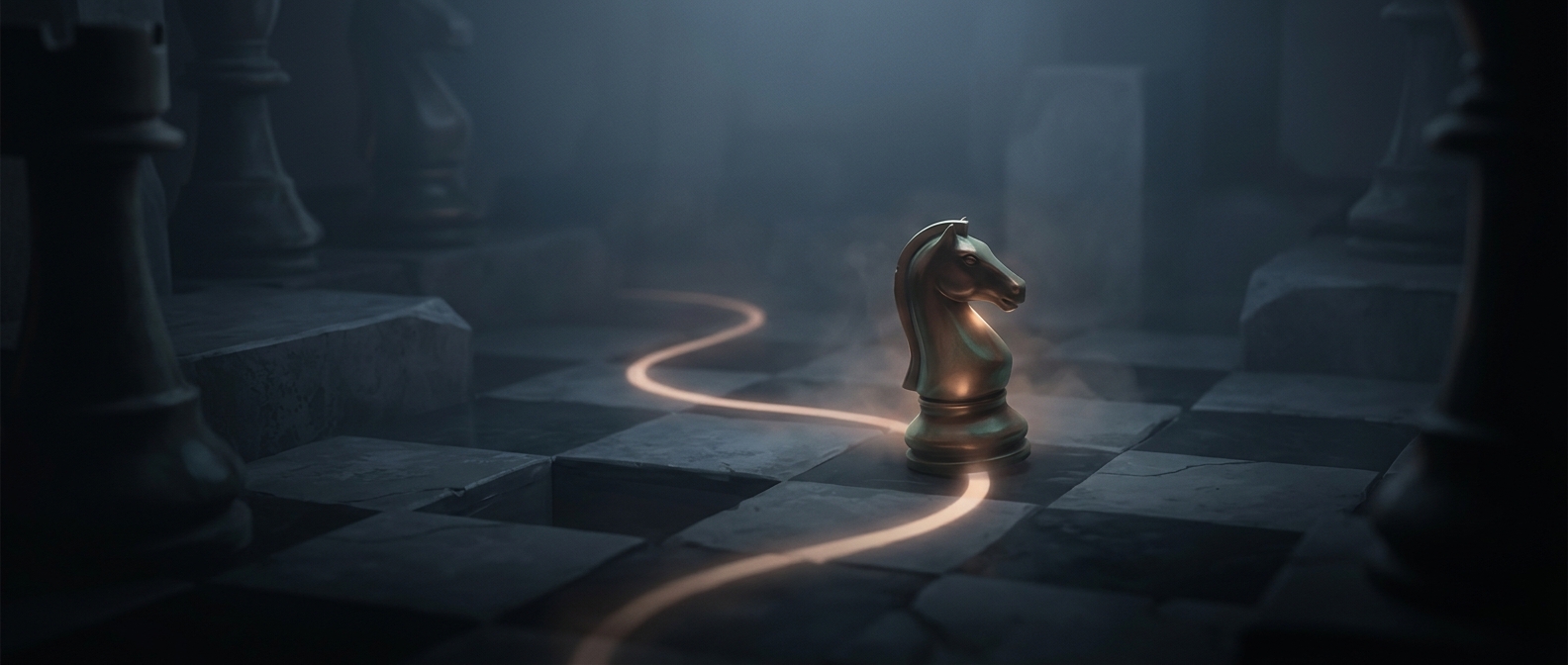
A knight moves two squares in one direction, then one square at a right angle, tracing an L. The squares between its starting point and destination do not matter: it can pass over pieces in the way. But it must land on an empty square or capture an opponent’s piece; it cannot land on one of its own.
That makes the knight’s route fundamentally different from the paths of bishops, rooks, and queens. Those pieces travel along straight lines, and another piece blocks the line. A knight’s move is a single jump, so a screen of pawns or other pieces can hide a target from a rook while leaving it reachable to a knight.
The Jump Changes What Squares Are Safe
The knight’s unusual reach makes it valuable in crowded positions, especially early in a game, when pawns limit the movement of other pieces. It can also attack pieces that seem protected by distance or by intervening defenders. A move that threatens two targets at once is called a fork; knights are particularly suited to forks because their destinations and attacks do not follow straight lines.
The tradeoff is that a knight cannot sweep across the board in one long move. From a given square, it has at most eight possible destinations, and its arrival square matters more than the route it takes. So the same jump that lets it bypass a wall of pieces can also leave it stranded if the square where it lands is poorly defended.