A hero designed to resist admiration
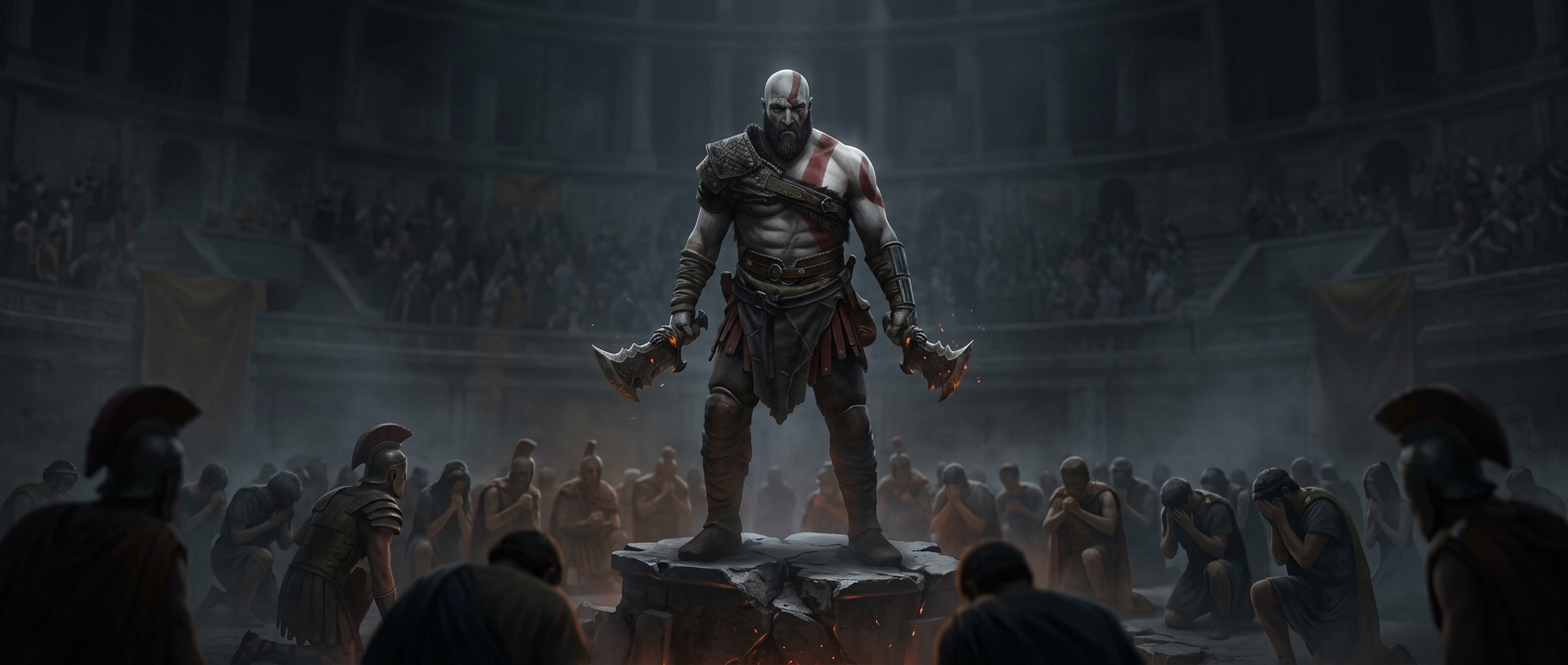
Kratos’s appearance makes a deliberate first impression: he does not look like a polished champion waiting to be celebrated. His pale, ash-covered skin and stark red markings give him a severe, almost wounded look, setting him apart from the clean, noble image often associated with heroic leads. The design makes the game’s break from that tradition visible before he says or does anything.
Backstory made visible
The markings also help turn Kratos into an instantly recognizable figure. Red against ash-white skin creates a strong contrast, while the stripped-down palette keeps his body readable amid the action. His epithet, the Ghost of Sparta, fits that ghostly appearance; the color and texture suggest a past that clings to him rather than a heroic image he can simply put on.
That visual choice shapes how players read him. Instead of reassuring them that they are controlling a conventional savior, the design signals a harsher character whose presence is meant to feel intimidating. Kratos’s look is not decoration around the character; it is part of how the game introduces him.