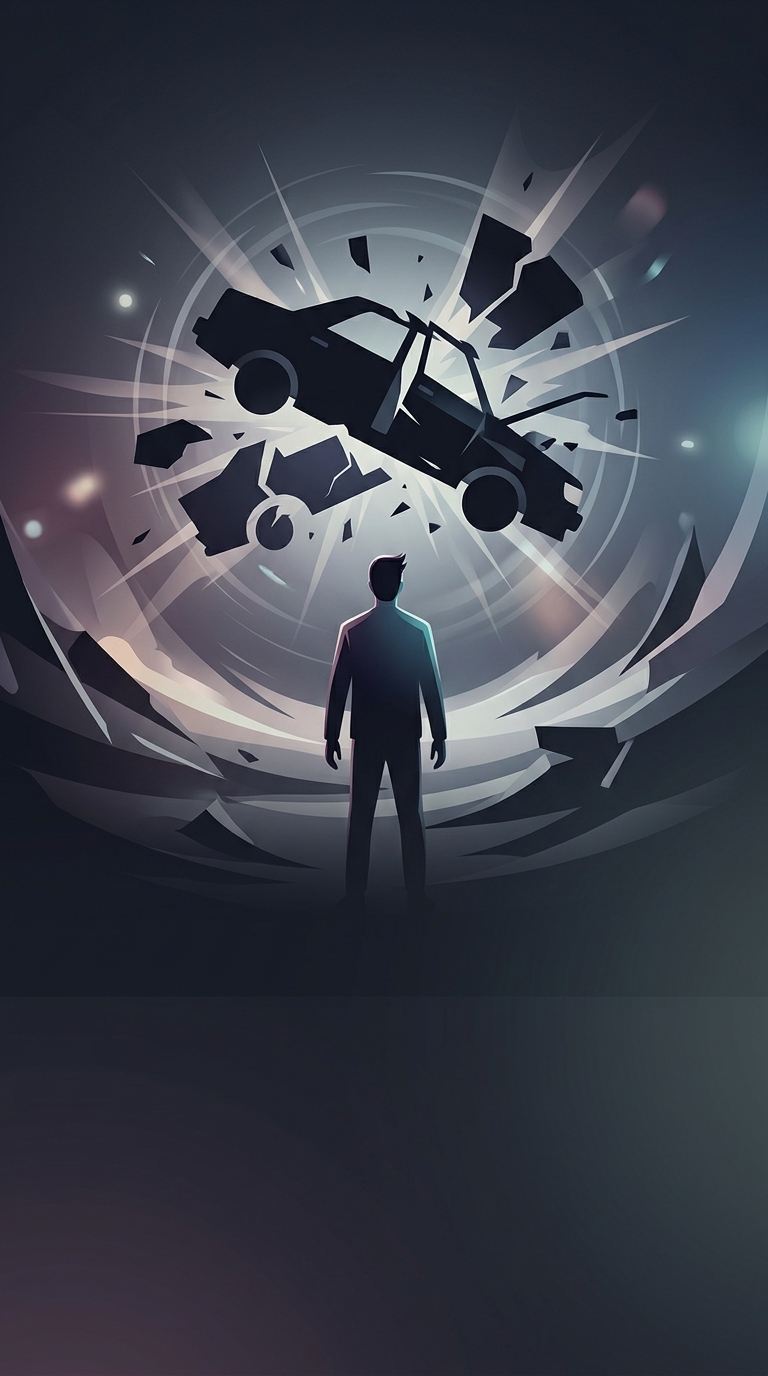
Why a crash can feel stretched out
In a sudden threat, the brain rapidly shifts into a high-alert state. Attention locks onto potentially important details—an approaching vehicle, a jolt, the direction of movement—while the body prepares to react. Because more of the moment is noticed and later remembered, the event can seem to have lasted longer than it really did.
A fuller memory can mimic slow motion
The sensation is often clearest in hindsight. A frightening episode may leave a dense, vivid memory, packed with details that ordinary moments never make it into awareness. When we look back, that richness can make the interval feel unusually long, much as a busy trip can seem longer in memory than a routine one.
That does not mean the brain literally recorded the crash at a higher speed. Research on perceived time in emergencies does not show that people suddenly gain slow-motion vision or reliably detect more frames of action. The experience is better understood as a change in attention and memory—and in how duration is judged.
The moment itself may feel different, too
High alert can alter the sense of time while an event is happening, but that feeling is not a dependable stopwatch. Fear, surprise, and intense focus can make a few seconds seem expansive, even as the body is still operating within ordinary physical time.
So a crash may replay in the mind as a long sequence, not because the outside world slowed down, but because the brain treated the moment as important and stored it with unusual intensity. That vivid replay is one reason a brief emergency can remain startlingly detailed for years.