Why an Alcohol Flame Can Be Hard to See
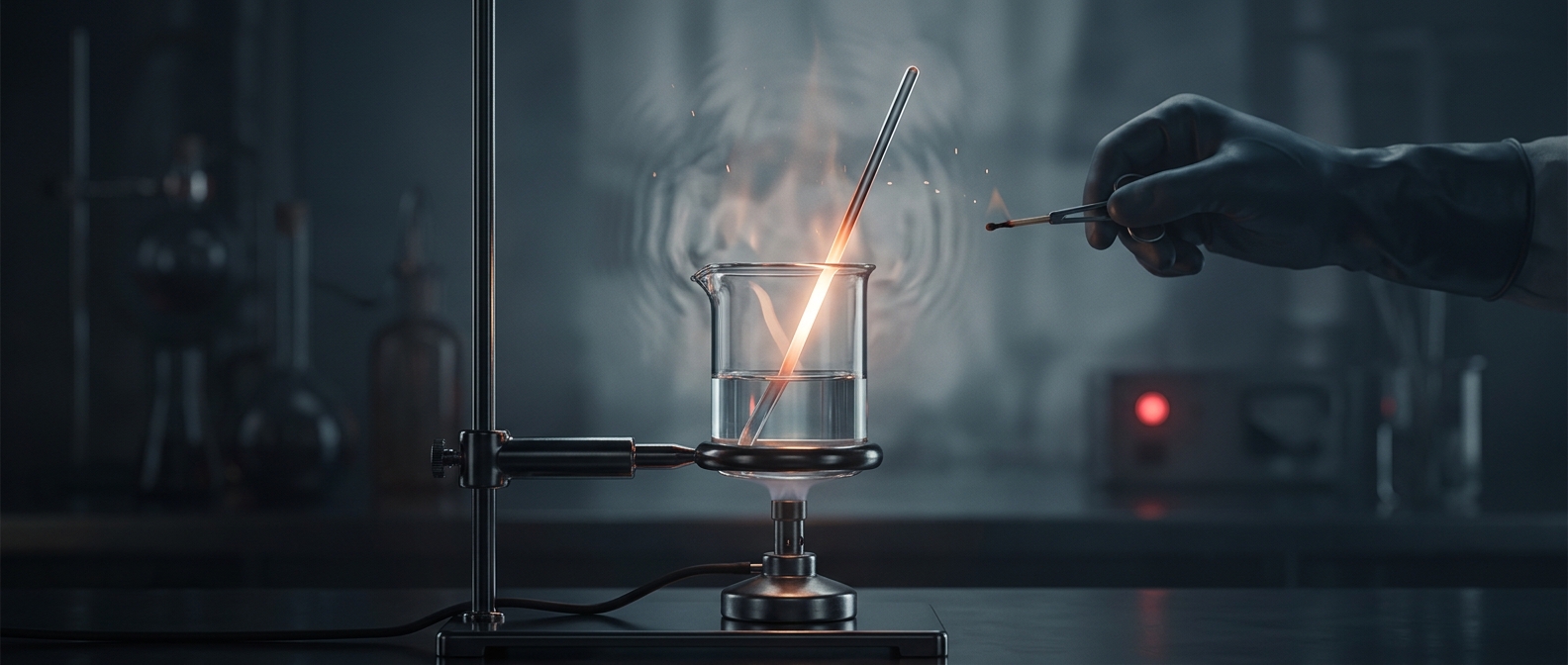
A flame’s familiar yellow glow comes largely from tiny carbon-rich particles—soot—heated until they shine. Many fuels release enough soot to make their fires conspicuous. Alcohol, such as ethanol, tends to burn more cleanly, producing far fewer glowing particles. Its flame therefore gives off much less visible light, often appearing pale blue rather than bright yellow.
The Fire Is Still Releasing Heat
Burning alcohol is a chemical reaction between fuel and oxygen. The reaction releases heat, but heat and visible brightness are not the same thing: a hot flame can be dim if it contains few particles that radiate strongly in visible wavelengths. The blue light that remains can be difficult to distinguish from the bright, scattered light of daytime, especially against a light-colored background.
That makes visibility a poor guide to whether alcohol is burning. A person may not notice the flame until heat reaches nearby material, or until smoke or another object reveals the fire’s presence. Alcohol fires can also spread as liquid fuel runs or spills, carrying the flame to new surfaces.
Why This Matters Around Spilled Fuel
The practical danger is a missing visual cue: people may approach or try to handle a container because they cannot see the fire between them and it. If alcohol is suspected to be burning, checking by reaching toward it or moving the fuel is unsafe. A flame that seems absent may still be hot enough to ignite nearby combustible material; the lack of a bright yellow glow does not mean the fire has gone out.