Why a Frilled Shark’s Pregnancy Takes So Long
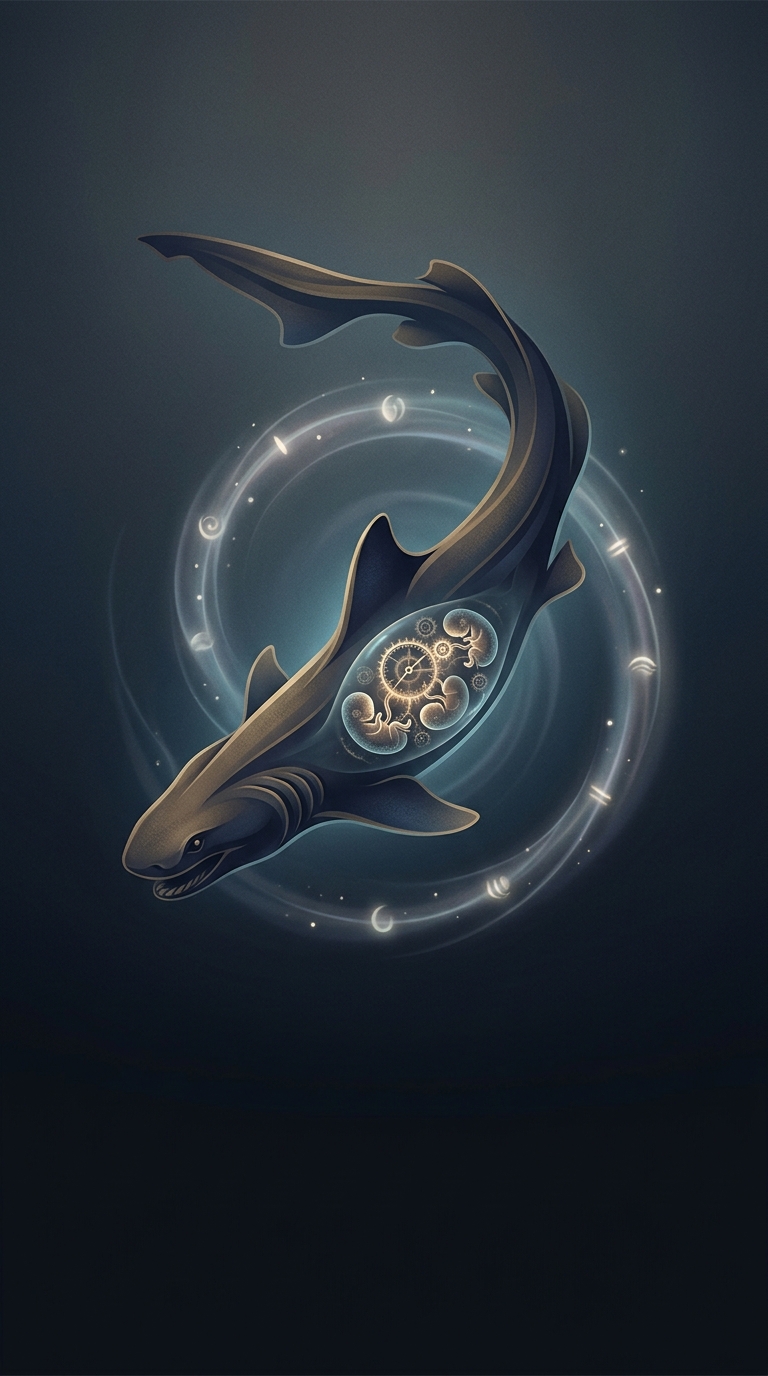
The frilled shark lives in cold, deep water, where food is scarce and encounters with researchers are rare. Those conditions make its reproduction difficult to observe directly—and may help explain why its embryos develop so slowly. The often-cited estimate of about three and a half years is inferred from the embryos’ development and the shark’s low body temperature, not from researchers following one pregnancy from conception to birth.
Cold Water Slows Development
A shark embryo develops inside an egg case retained within the mother. Unlike mammals, sharks do not all nourish embryos in the same way: in frilled sharks, the developing young rely on yolk stored in their egg cases. The mother’s body supplies a protected environment, but the embryos still depend on energy accumulated before birth.
At low temperatures, chemical reactions in the body—including those that drive growth—tend to proceed more slowly. A long gestation gives the embryos time to develop in the frilled shark’s cold habitat. It is a tradeoff: the mother must carry the developing young for years, while the offspring emerge at a more advanced stage than they would after a shorter pregnancy.
A Long Wait Can Produce Several Pups
A lengthy pregnancy does not mean the shark gives birth to just one pup. Frilled sharks can carry multiple embryos, and shark species vary substantially in both litter size and how they nourish their young. In this case, the long gestation is best understood as a consequence of slow development in a cold environment—not as evidence that every shark follows the same reproductive schedule.
Because the species is so difficult to study, the precise timing remains an estimate. Even so, a pregnancy measured in years makes clear how profoundly the deep sea can shape the pace of animal life.