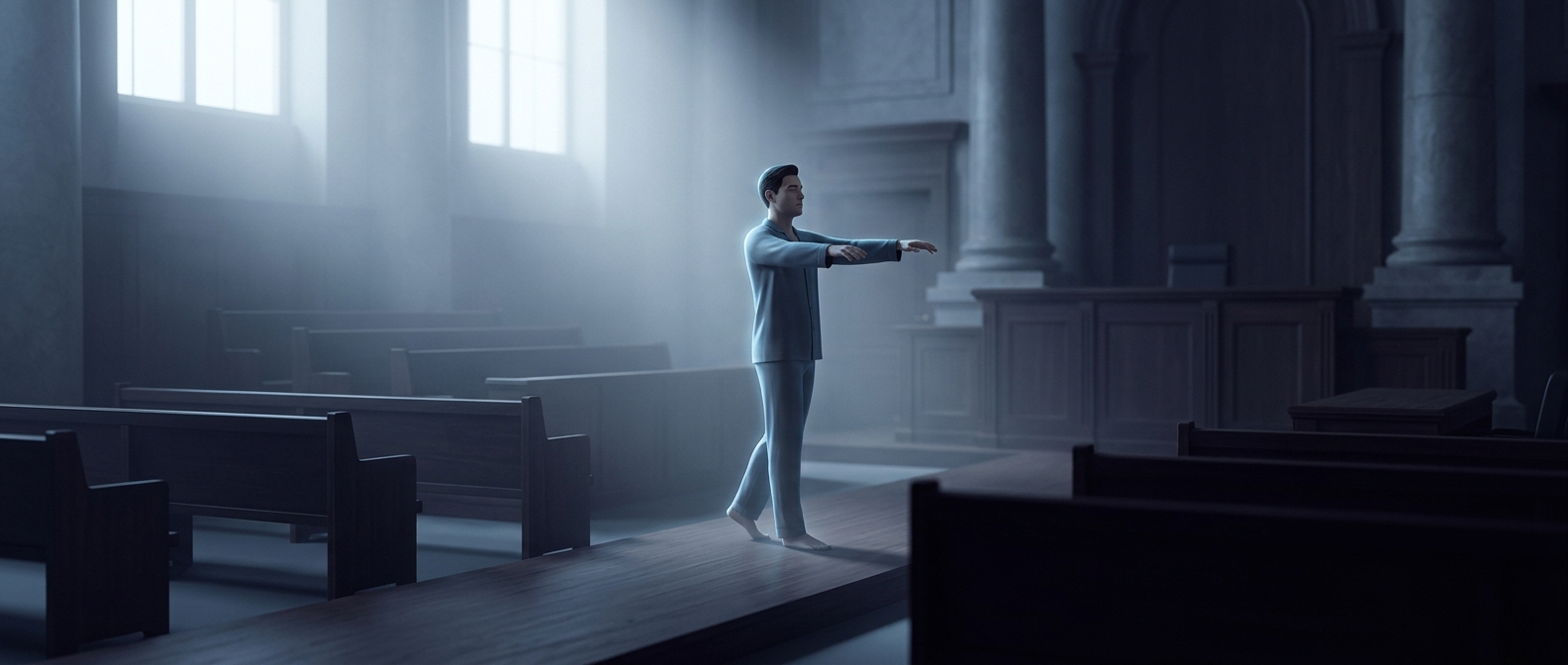
Why a child can move without waking
Sleepwalking is a partial awakening from deep sleep, not a dream acted out on purpose. The brain does not switch from sleep to wakefulness all at once: circuits that control movement and familiar routines can become active while the systems that support awareness, judgment, and memory remain largely asleep. A child may therefore sit up, walk around, or handle a door without understanding the surroundings as they would when fully awake.
Why childhood makes these episodes more likely
Children spend more time in deep sleep than adults, and their developing sleep-wake systems may be more prone to incomplete transitions between states. That combination creates more opportunities for movement to begin before full awareness catches up. As children mature, these episodes often become less common; the behavior is not evidence that a child is deliberately ignoring instructions or responding to a vivid dream.
What the mixed state means in practice
Because awareness is limited, a sleepwalking child may be hard to engage and may have little or no memory of the episode afterward. The practical concern is less what the child says or does than whether the route is safe: an unlocked door or nearby stairs can turn an otherwise brief episode into a hazard. The striking part is how ordinary the movements can look even while the person is still largely asleep.