A World Built to Change as You Travel
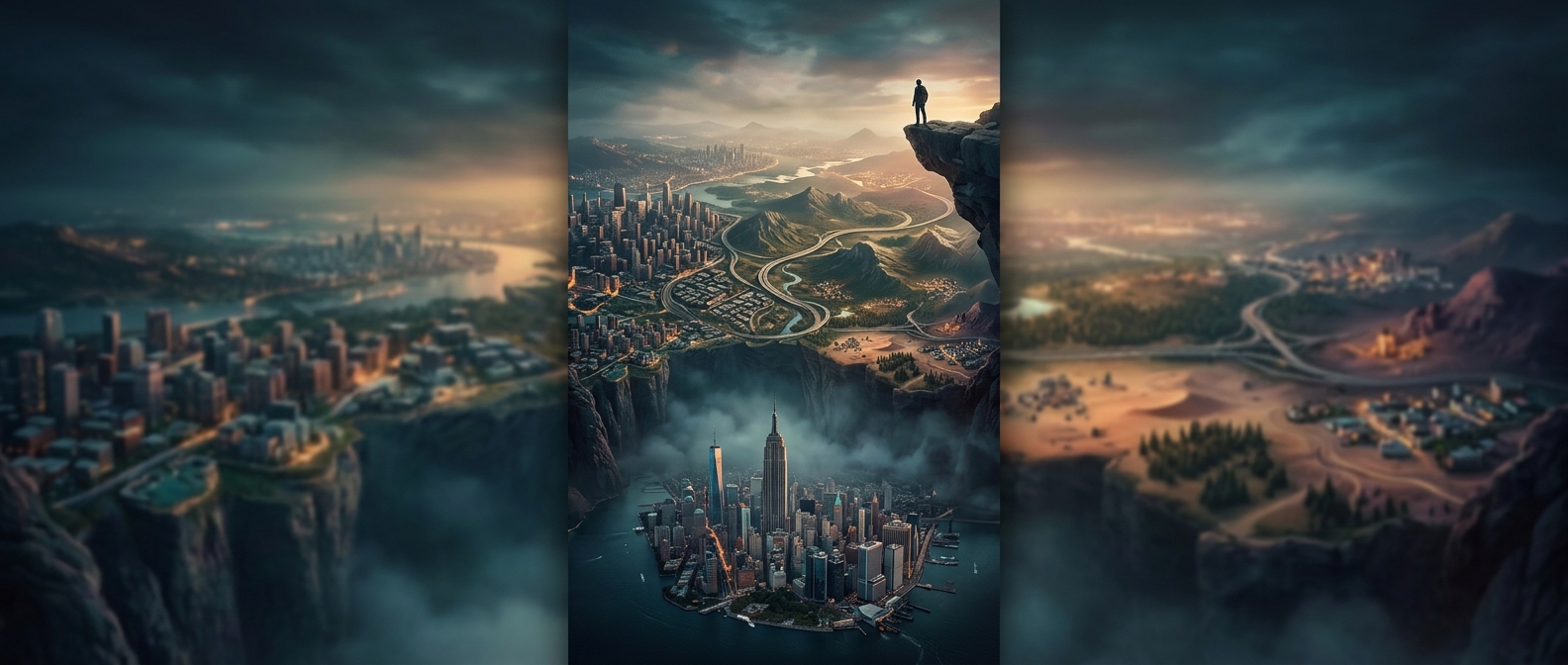
GTA V’s map is more than a large patch of land: it is designed to make a long drive feel like a journey through distinct places. Los Santos, the fictional city at its center, gives way to suburbs, farmland, desert, mountains, and coastline. That variety lets the same basic act—driving across the map—produce changing scenery, traffic, and opportunities for missions.
How the Game Keeps It Seamless
The game does not need to hold every building, road, and distant hillside in full detail at once. It loads and updates parts of the world as the player moves, while drawing far-off scenery in simpler form. This technique, called streaming, helps a large environment feel continuous without demanding that every detail be processed simultaneously.
The result is a practical design compromise: nearby streets can be intricate enough for driving and exploration, while distant terrain helps make the horizon feel expansive. A mountain can guide the eye long before the player reaches it; a highway can turn that visual promise into a route across the world.
Space That Serves Play
A huge map would be tedious if it were only empty distance. GTA V uses changes in terrain and settlement to break travel into different experiences: congested city streets, open roads, steep climbs, and quieter stretches where the landscape takes over. Those contrasts also give missions room to shift from urban chases to rural escapes without leaving the same game world.
So the scale matters not just as a comparison with real cities. It gives the game enough room to make a trip across its fictional state feel like crossing several kinds of place—and lets the scenery change before the destination arrives.