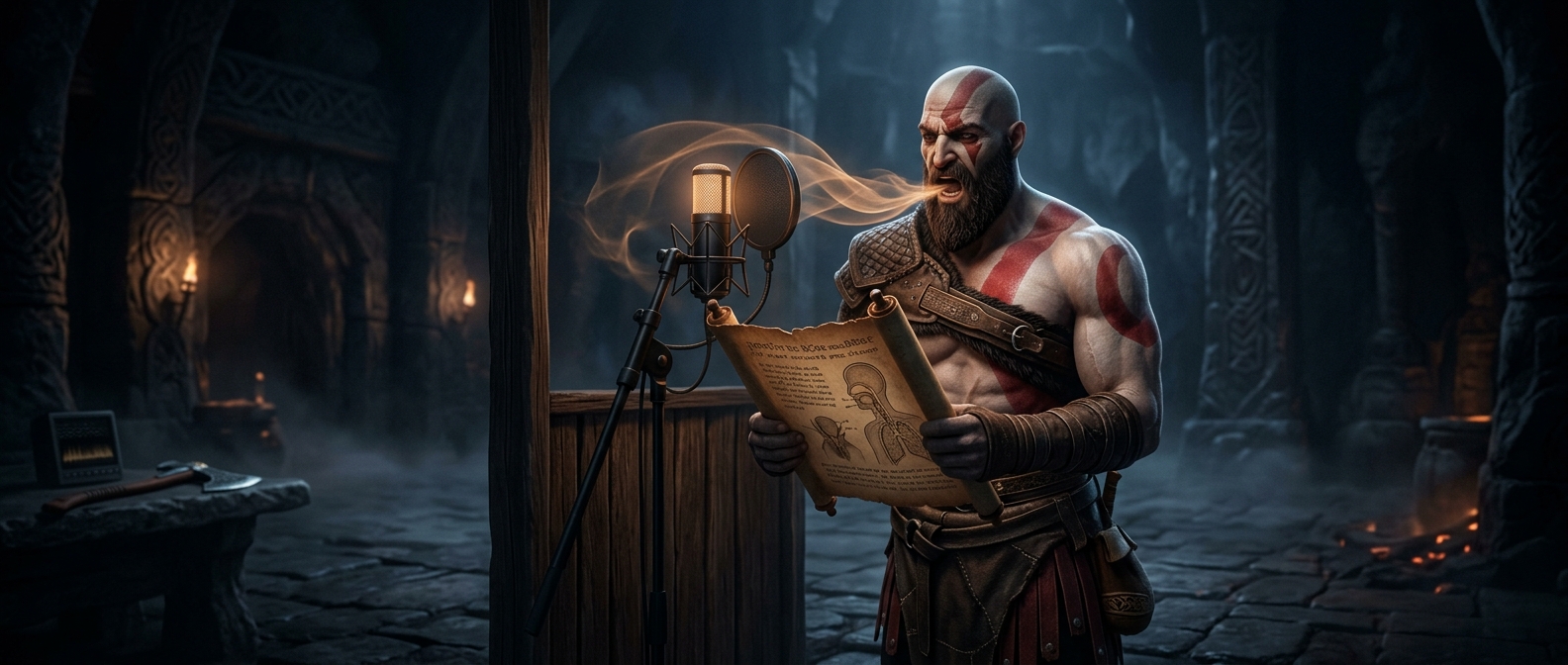
How a grunt can carry a scene
Kratos’s low, resonant grunt is more than a sound effect. It gives the character a way to react when a full line of dialogue would feel too deliberate: a brief exhale can suggest strain, while a sharper vocal burst can signal anger or surprise. The actor’s task is to make those sounds feel like the same person—and to give them enough variation that they do not all mean the same thing.
Performance built from small differences
A grunt has no words to explain its meaning, so listeners read details such as pitch, force, duration, and breath. A rough, pressed sound can communicate effort; a quieter, controlled one can suggest restraint. The voice actor shapes those differences with breath and vocal tension, keeping the performance recognizable without making every reaction identical.
That matters especially in a game, where the character may exert himself, take a hit, or respond to another person repeatedly. Nonverbal sounds can connect those moments without interrupting play with dialogue. They also help Kratos feel present between spoken lines: the player hears not only what he says, but how the effort of the moment affects him.
The work behind a wordless reaction
The best grunt is concise, but not interchangeable. It has to fit the physical action and the character’s emotional state at once. When a single vocal sound can register anger, agreement, or exhaustion, it gives the performance unusual range—and lets a few seconds of breath do the work of a sentence.