A bubbling cauldron made a small trick look like alchemy
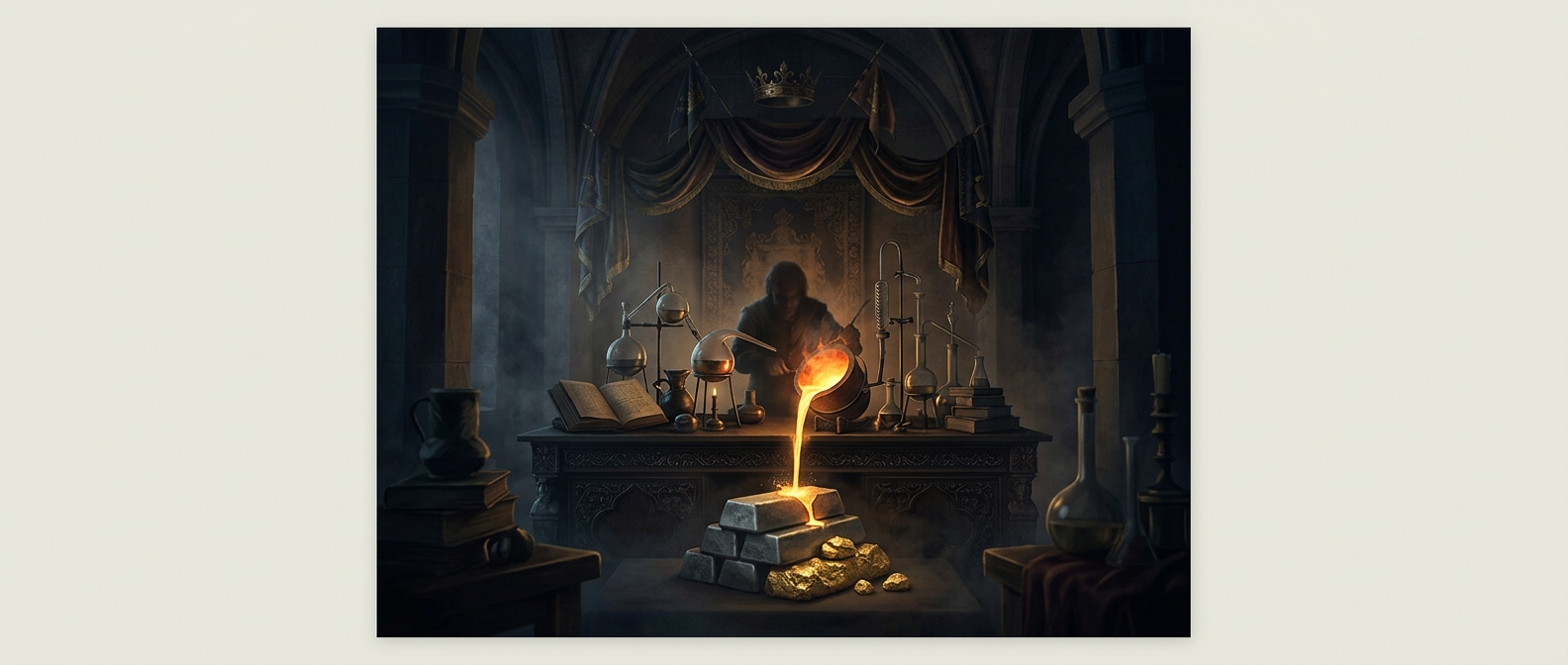
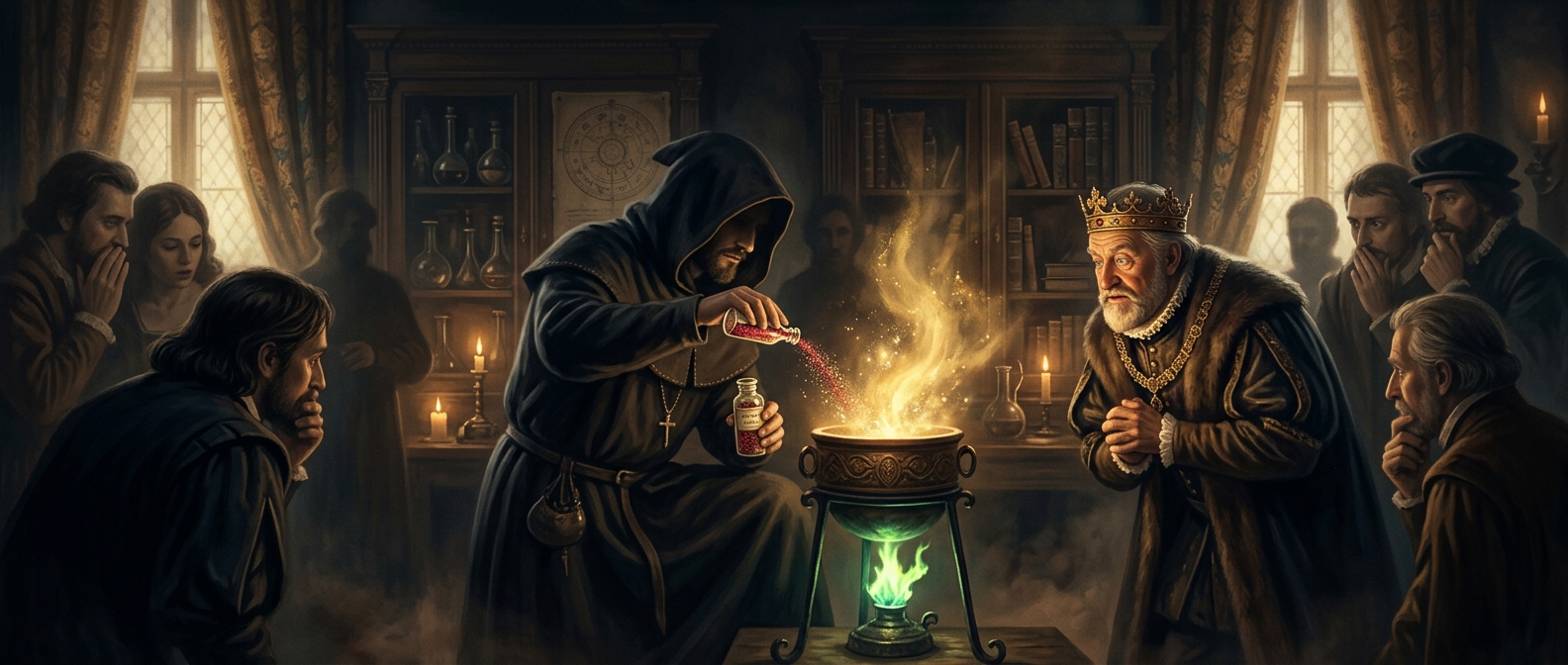
At Rudolf II’s court, Edward Kelley presented himself as someone who could make gold from less valuable metals. The trick attributed to him depended not on changing one metal into another, but on controlling what observers could see: while a cauldron bubbled, he slipped real gold into the mixture. The sudden appearance of gold seemed to confirm that a secret powder had transformed the metal.
The deception exploited a gap between what the audience witnessed and what it could verify. A bubbling vessel, a concealed addition, and the promise of a rare formula could make an impressive demonstration without showing that the starting material had actually become gold. The powder provided a plausible explanation for the result while directing attention away from the sleight of hand.
The emperor’s demand changed the test
A striking demonstration could satisfy curiosity, but Rudolf eventually wanted production on a larger scale. That demand raised the stakes: Kelley would have to produce gold repeatedly and in quantities that could not be explained by a hidden piece slipped into a single cauldron. The performance’s weakness was built into its success. It persuaded an observer who saw a result, but it offered no reliable way to reproduce that result under closer scrutiny.
Kelley stalled as expectations grew. He was eventually confined in a castle tower and fell from a window while attempting to escape. The episode shows how a courtly promise could shift from spectacle to obligation: once a ruler expected practical output, a secret that worked only as a performance was no longer enough.